
“Good digestive health begins with understanding your body. Identifying the What causes constipation is the first step toward lasting relief and better overall well-being.”
Constipation is one of the most common digestive problems, affecting people of all ages. While occasional constipation is usually not a cause for concern, frequent or persistent constipation can interfere with daily life and may sometimes signal an underlying health issue.
Many factors can contribute to constipation, including a low-fiber diet, inadequate water intake, physical inactivity, stress, certain medications, and medical conditions. The encouraging news is that many cases can be managed through simple lifestyle and dietary changes.
In this guide, we’ll explore the most common causes of constipation, understand how your digestive system works, recognize when constipation may require medical attention, and learn practical ways to promote healthier, more regular bowel movements.
What Is Constipation?
Constipation is more than simply “not going to the bathroom every day.” While bowel habits vary from person to person, constipation generally refers to having fewer than three bowel movements per week or experiencing stools that are difficult to pass.
People with constipation may experience:
- Hard, dry, or lumpy stools
- Straining during bowel movements
- A feeling that the bowel hasn’t emptied completely
- Infrequent bowel movements
- Abdominal bloating or discomfort
Some individuals naturally have bowel movements every day, while others may go every other day without any problems. What matters most is a noticeable change from your usual bowel pattern, especially when accompanied by discomfort or difficulty passing stool.
Quick Takeaway
Constipation is not defined only by how often you have a bowel movement. The consistency of your stool, the effort required to pass it, and whether you feel completely emptied are equally important.
How Does Normal Digestion Work?
- Understanding how digestion works makes it easier to understand why constipation happens.
- After you eat, food travels through the digestive system, where nutrients are absorbed and waste products are gradually formed into stool.
The process looks like this:
Food → Stomach → Small Intestine → Large Intestine (Colon) → Rectum → Bowel Movement
- The large intestine (colon) plays a particularly important role. As waste moves through the colon, water is absorbed back into the body, leaving behind solid stool.
- Normally, the muscles of the colon gently push stool toward the rectum, where it is eventually passed during a bowel movement.
- However, when stool moves too slowly through the colon, too much water is absorbed. This makes the stool harder, drier, and more difficult to pass, leading to constipation.
- Several lifestyle habits, medications, and medical conditions can slow this process, which is why identifying the underlying cause is essential for effective treatment.
What Causes Constipation?
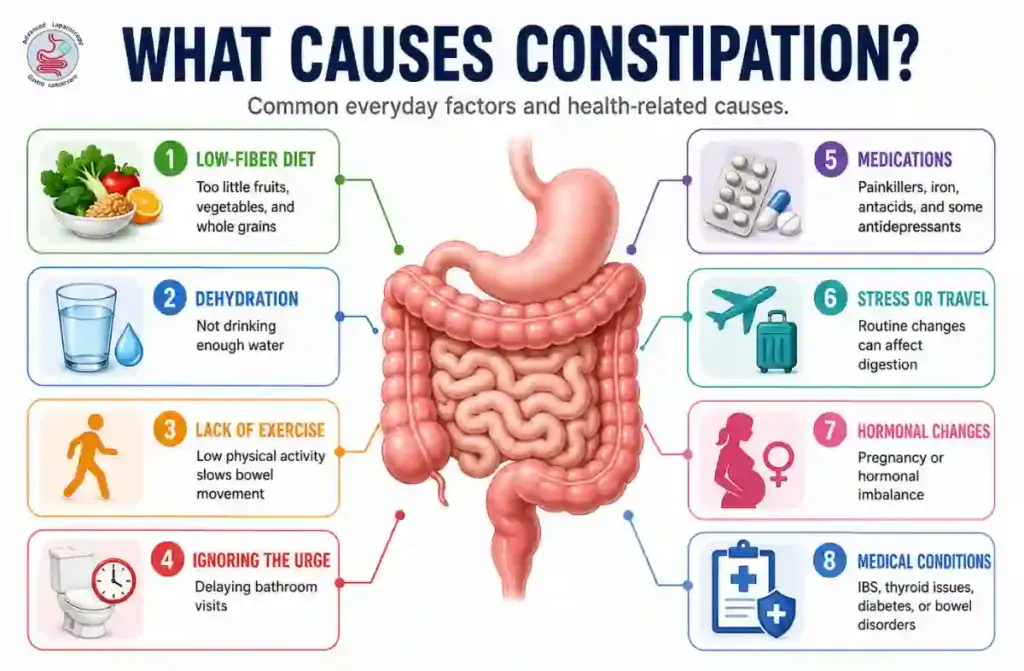
Constipation rarely has a single cause. In most cases, it develops due to a combination of dietary habits, lifestyle factors, medications, or certain medical conditions that slow the movement of stool through the intestines.
Let’s explore the most common reasons.
Not Eating Enough Fiber
- One of the leading causes of constipation is a diet low in dietary fiber.
- Fiber is the part of plant foods that the body cannot digest. Instead of being broken down, it travels through the digestive tract, adding bulk to stool and helping it move more easily through the intestines.
- When your diet lacks fiber, stools become smaller, harder, and more difficult to pass, increasing the likelihood of constipation.
Why Fiber Matters
- Adds bulk to stool, making it easier to pass.
- Helps retain water in the stool, keeping it softer.
- Supports healthy bowel movements by stimulating the intestines.
- Nourishes beneficial gut bacteria that contribute to digestive health.
Foods Rich in Fiber
Include a variety of fiber-rich foods such as:
- Fresh fruits like apples, pears, berries, and oranges
- Vegetables including broccoli, carrots, spinach, and beans
- Whole grains such as oats, brown rice, quinoa, and whole wheat
- Legumes like lentils, chickpeas, and kidney beans
- Nuts and seeds including almonds, walnuts, flaxseeds, and chia seeds
Practical Tip: Increase your fiber intake gradually rather than all at once. A sudden increase without adequate hydration may cause bloating or gas.
Not Drinking Enough Water
- Water plays an essential role in keeping stools soft and easy to pass.
- When your body doesn’t receive enough fluids, the colon absorbs more water from the waste passing through it. As a result, stools become dry, firm, and difficult to eliminate.
- Even people who consume enough fiber may still experience constipation if they don’t drink sufficient water throughout the day.
Why Hydration Is Important
- Helps soften stool by maintaining its water content.
- Supports the smooth movement of waste through the intestines.
- Works together with dietary fiber to promote regular bowel movements.
- Helps maintain healthy digestive function throughout the day.
Healthy Habit
Keep a water bottle nearby and drink fluids regularly throughout the day, especially during hot weather or after exercise.
Did You Know?
Fiber and water work as a team. Increasing fiber without drinking enough water can sometimes make constipation worse rather than better. For the best results, aim to increase both together.
Lack of Physical Activity
- Your digestive system benefits from movement just as much as the rest of your body.
- Regular physical activity stimulates the muscles of the intestines, helping move stool through the digestive tract more efficiently. Conversely, spending long hours sitting or remaining inactive can slow bowel movements and increase the risk of constipation.
- This is why constipation is more common among people with sedentary lifestyles, individuals recovering from surgery, or those confined to bed for extended periods.
How Exercise Supports Healthy Digestion
- Stimulates the natural contractions of the intestines.
- Helps stool move through the colon more efficiently.
- Supports healthy metabolism and weight management.
- Reduces the risk of chronic constipation.
Expert Tip
Aim for at least 150 minutes of moderate physical activity each week. Even a 20–30 minute walk after meals can help support healthy digestion.
Ignoring the Urge to Have a Bowel Movement
- Many people postpone using the bathroom because they’re busy, traveling, working, or simply don’t have convenient access to a restroom. Although this may seem harmless occasionally, repeatedly ignoring the urge to pass stool can contribute to constipation.
- When stool remains in the colon for longer than necessary, more water is absorbed from it, making it harder and drier over time. This creates a cycle where bowel movements become increasingly difficult and uncomfortable.
Why You Shouldn’t Ignore the Urge
- Stool becomes harder the longer it stays in the colon.
- Passing hard stools requires more straining.
- Frequent straining may increase the risk of hemorrhoids and anal fissures.
- Delaying bowel movements repeatedly can disrupt your body’s natural bowel routine.
Healthy Habit
Whenever possible, respond to the natural urge to have a bowel movement instead of delaying it. Establishing a regular bathroom routine—especially after breakfast—may help encourage consistent bowel habits.
Sudden Changes in Your Diet or Daily Routine
- Your digestive system thrives on consistency. When your eating habits or daily routine change suddenly, your bowel movements can also become irregular.
- Traveling, eating out frequently, skipping meals, consuming more processed foods, or celebrating festivals with rich, low-fiber meals can temporarily slow digestion and contribute to constipation.
- Similarly, changes in sleep schedules or work routines may disrupt your body’s natural bowel rhythm.
Why Routine Matters
- Sudden dietary changes may reduce fiber intake.
- Processed foods are often low in fiber and high in unhealthy fats.
- Changes in meal timing can affect normal bowel patterns.
- Traveling may alter hydration, physical activity, and bathroom habits.
Simple Tip
Whenever possible, maintain regular meal times, stay hydrated, and include fruits, vegetables, and whole grains even while traveling.
Certain Medications
Sometimes constipation isn’t caused by lifestyle alone. Several commonly prescribed medications can slow the movement of stool through the intestines or make stools harder to pass.
Common examples include:
- Iron supplements
- Calcium supplements
- Certain pain medications (especially opioid medicines)
- Some antidepressants
- Certain blood pressure medications
- Some antacids containing calcium or aluminum
Not everyone taking these medications develops constipation, but the risk may increase depending on the dose, duration of use, and individual health conditions.
Important: Never stop or change prescribed medications without consulting your doctor. If constipation develops after starting a new medicine, your healthcare provider may recommend dietary changes or an alternative treatment.
Pregnancy
- Constipation is a common complaint during pregnancy and can occur at any stage.
- Hormonal changes naturally slow the movement of food through the digestive tract, allowing the body to absorb more nutrients for the growing baby. As pregnancy progresses, the expanding uterus may place additional pressure on the intestines, making bowel movements more difficult.
- Iron supplements commonly prescribed during pregnancy may also contribute to constipation.
Why Pregnancy Increases the Risk
- Pregnancy hormones slow intestinal movement.
- The growing uterus places pressure on the bowel.
- Iron supplements may harden stools.
- Reduced physical activity can further slow digestion.
Most cases improve with adequate hydration, a fiber-rich diet, gentle physical activity, and guidance from a healthcare provider.
Aging
- Constipation becomes more common with age, although it is not an inevitable part of getting older.
- Several age-related factors contribute to this increased risk, including slower intestinal movement, reduced physical activity, lower fluid intake, changes in appetite, and the use of multiple medications.
Why Older Adults Are More Susceptible
- Natural slowing of digestive function.
- Reduced mobility or physical activity.
- Lower water consumption.
- Increased use of medications that may affect bowel function.
- Chronic medical conditions.
Maintaining an active lifestyle, eating fiber-rich foods, and drinking enough water can help support healthy digestion at any age.
Stress and Anxiety
Your brain and digestive system are closely connected through what’s known as the gut-brain axis. Emotional stress doesn’t just affect your mood—it can also influence how your digestive tract functions.
Periods of stress, anxiety, major life changes, or emotional strain may slow bowel movements in some people, while others may experience diarrhea instead.
How Stress Affects Digestion
- Alters communication between the brain and digestive system.
- May slow the natural movement of the intestines.
- Can change eating and hydration habits.
- May reduce physical activity and disrupt normal routines.
Managing stress through regular exercise, relaxation techniques, mindfulness, or adequate sleep can positively influence digestive health.
Underlying Medical Conditions
Although lifestyle factors account for many cases of constipation, certain health conditions can also interfere with normal bowel function.
Some medical conditions associated with constipation include:
- Irritable bowel syndrome (IBS)
- Diabetes
- Hypothyroidism
- Parkinson’s disease
- Multiple sclerosis
- Colon or rectal disorders
If constipation is persistent, severe, or accompanied by other concerning symptoms, medical evaluation is important to identify any underlying cause.
Expert Insight
Constipation is rarely caused by a single factor. In many cases, it develops from a combination of dietary habits, hydration, physical activity, medications, emotional well-being, and underlying medical conditions. Long-term relief usually comes from identifying and addressing the root cause rather than relying solely on laxatives.
Who Is More Likely to Develop Constipation?
Some people are naturally at a higher risk than others.
| Risk Factor | Why It Increases Risk |
| Older age | Digestion may slow, and medication use often increases. |
| Low-fiber diet | Produces smaller, harder stools. |
| Poor hydration | Leads to excessive water absorption from stool. |
| Sedentary lifestyle | Reduces normal intestinal movement. |
| Pregnancy | Hormonal and physical changes affect bowel function. |
| Certain medications | Some medicines slow digestion or harden stools. |
| Chronic medical conditions | May interfere with normal bowel activity. |
Common Symptoms of Constipation
Constipation affects more than bowel movement frequency. Common symptoms include:
- Fewer than three bowel movements per week
- Hard, dry, or lumpy stools
- Straining during bowel movements
- Feeling that the bowel has not emptied completely
- Abdominal bloating
- Mild abdominal discomfort or cramping
- Reduced appetite caused by fullness
If symptoms persist or worsen despite lifestyle changes, medical evaluation is recommended.
Possible Complications of Untreated Constipation
Occasional constipation is usually harmless, but persistent constipation can lead to complications over time.
Some possible complications include:
- Hemorrhoids: Repeated straining during bowel movements can cause swollen veins around the anus, resulting in pain, itching, or bleeding.
- Anal Fissures: Passing hard stools may create small tears in the lining of the anus, causing pain and bleeding during bowel movements.
- Fecal Impaction: Severe constipation may lead to stool becoming firmly lodged in the rectum, making it difficult to pass without medical treatment.
- Rectal Prolapse: In rare cases, excessive straining over a long period may contribute to a portion of the rectum protruding through the anus.
Early management can help prevent these complications.
Best Foods That Help Relieve Constipation
A balanced, fiber-rich diet is one of the most effective ways to promote regular bowel movements.
- Fruits: Apples, pears, berries, oranges, kiwi, and prunes provide fiber and natural compounds that help soften stools.
- Vegetables: Broccoli, spinach, carrots, peas, sweet potatoes, and leafy greens contribute both fiber and essential nutrients.
- Whole Grains: Oats, brown rice, quinoa, barley, and whole wheat provide long-lasting fiber that supports digestive health.
- Legumes: Lentils, chickpeas, kidney beans, and black beans are excellent sources of fiber and plant protein.
- Nuts and Seeds: Almonds, walnuts, flaxseeds, and chia seeds provide healthy fats and additional fiber.
- Probiotic Foods: Yogurt with live cultures, kefir, and fermented foods may support a healthier gut microbiome in some individuals.
- Water: Adequate hydration allows fiber to work effectively by keeping stools softer and easier to pass.
Foods That May Worsen Constipation
While no single food causes constipation in everyone, regularly consuming these foods may increase the risk in some people:
- Highly processed foods
- Fast food
- Refined flour products
- Sugary snacks and desserts
- Excessive amounts of cheese and other full-fat dairy products
- Large quantities of red or processed meat
- Alcohol when consumed excessively
The key is moderation rather than complete avoidance.
Everyday Habits That Support Healthy Bowel Movements
Healthy digestion depends on more than just diet.
Try to:
- Eat fiber-rich foods every day.
- Drink enough water throughout the day.
- Stay physically active.
- Don’t ignore the urge to have a bowel movement.
- Establish a regular bathroom routine.
- Manage stress effectively.
- Get adequate sleep.
Small, consistent habits often produce better long-term results than quick fixes.
Common Myths About Constipation
| Myth | Fact |
| Everyone should have a bowel movement every day. | Normal bowel habits vary from person to person. |
| Coffee always relieves constipation. | It may help some people but not everyone. |
| Laxatives are safe for daily long-term use. | Frequent use should only occur under medical supervision. |
| Only older adults experience constipation. | Constipation can affect people of all ages. |
| Bananas always cause constipation. | Ripeness matters—ripe bananas may actually support regular bowel movements for many people. |
When Should You See a Doctor?
Although occasional constipation is common, seek medical attention if you experience:
- Constipation lasting more than three weeks
- Severe abdominal pain
- Blood in the stool
- Unexplained weight loss
- Persistent vomiting
- Pencil-thin stools
- Constipation alternating with diarrhea
- A family history of colorectal cancer along with new bowel changes
Prompt evaluation helps identify underlying conditions and allows treatment to begin early if necessary.
Final Thoughts
Constipation is a common digestive concern, but it is often manageable with the right combination of healthy eating, adequate hydration, regular physical activity, and consistent daily habits. Understanding what causes constipation is the first step toward finding lasting relief rather than simply treating the symptoms.
While occasional constipation is usually not a cause for concern, persistent or severe symptoms should never be ignored. Identifying underlying causes—whether dietary, lifestyle-related, medication-induced, or medical—can help guide effective treatment and prevent complications.
Simple changes such as eating more fiber-rich foods, drinking enough water, staying active, responding promptly to the urge to have a bowel movement, and maintaining a regular routine can make a significant difference over time.
Remember, healthy digestion is an important part of overall well-being. If constipation becomes frequent, painful, or is accompanied by warning signs such as blood in the stool, unexplained weight loss, or severe abdominal pain, consult a healthcare professional for a proper evaluation and personalized care.
Read more: Acid Reflux Diet Plan