Appendicectomy, also called appendectomy, is surgery to remove an inflamed or infected appendix. It is commonly performed when a person develops appendicitis, especially when there is a risk of the appendix rupturing or causing infection inside the abdomen.
If you have sudden or worsening abdominal pain, particularly pain that moves towards the lower right side of the abdomen, you should seek medical evaluation promptly. Appendicitis can sometimes have unusual symptoms, so a proper examination and appropriate investigations are important before deciding on treatment.
Dr. Dinesh Ramaswamy is a Senior Consultant Surgical Gastroenterologist and GI Onco Surgeon in Chennai with more than 20+ years of surgical experience. His training includes AIIMS New Delhi, JIPMER and GB Pant, with expertise in gastrointestinal and advanced laparoscopic surgery.
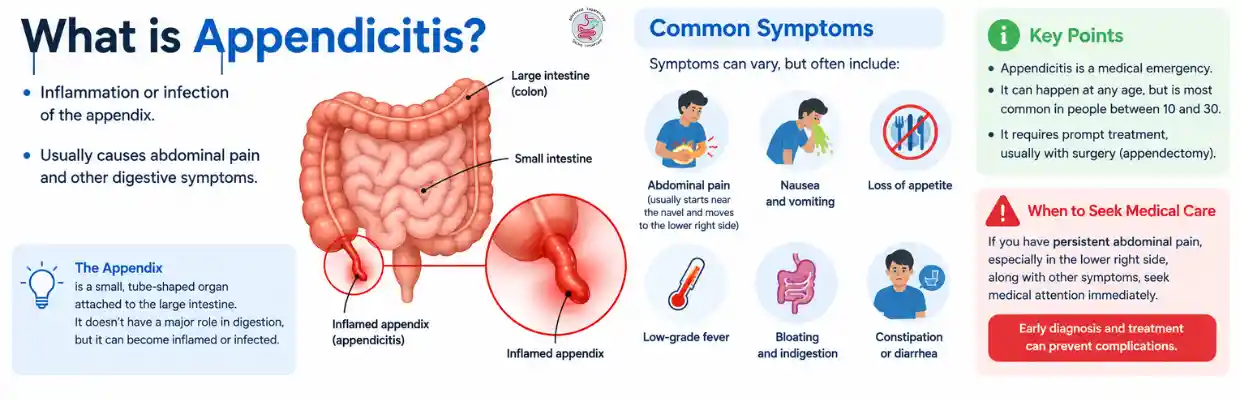
The appendix is a small, finger-shaped pouch connected to the large intestine. Although the appendix is not essential for normal digestion, inflammation or infection of the appendix can cause a condition called appendicitis.
Appendicitis may begin with discomfort around the belly button and later become more noticeable in the lower right side of the abdomen. Pain may become worse when walking, coughing or moving. Nausea, vomiting, loss of appetite and fever may also occur.
Not everyone has the typical symptoms. The location and severity of pain can vary, particularly in children, older adults and pregnant women. Because several other conditions can cause abdominal pain, appendicitis should not be diagnosed based on symptoms alone.
If appendicitis is suspected, timely medical assessment is important because an untreated appendix can perforate or rupture and lead to complications such as an abdominal abscess, peritonitis or sepsis.
Appendicectomy is commonly recommended when appendicitis is confirmed or strongly suspected and surgery is considered the appropriate treatment.
The decision depends on factors such as:
For many patients, removing the appendix treats the immediate source of infection and prevents future episodes of appendicitis.
In selected patients with uncomplicated appendicitis, antibiotic treatment without immediate surgery may be considered. However, this approach is not suitable for everyone, and appendicitis can recur after non-operative treatment. The choice should be made after evaluation by the treating medical team.
Common symptoms can include:
The pain does not always occur in exactly the same location. Some people may have less typical symptoms.
Severe or rapidly worsening abdominal pain should not be ignored. If you develop severe abdominal pain, fever, repeated vomiting, confusion, breathing difficulty or other signs of serious illness, seek urgent medical care.v
There is no single test that confirms appendicitis in every patient. Diagnosis usually begins with a detailed history and physical examination.
Your doctor may recommend:
The choice of imaging depends on factors such as age, symptoms, clinical findings and the patient's individual circumstances.
An appendicectomy is an operation to remove the appendix.
The surgery is usually performed under general anaesthesia, meaning you are asleep during the procedure. Depending on your condition and the surgeon's assessment, the appendix may be removed using laparoscopic or open surgery.
Laparoscopic appendicectomy is also called keyhole appendix surgery.
The surgeon makes several small incisions in the abdomen and inserts a camera and specialised instruments. The appendix is identified, separated from the surrounding tissues and removed through one of the small openings.
For suitable patients, laparoscopic surgery can offer advantages such as smaller incisions and potentially faster recovery compared with open surgery. However, the surgical approach depends on the patient's condition and findings during the operation.
Open appendicectomy involves a larger incision in the abdomen to access and remove the appendix.
Open surgery may be considered when laparoscopic surgery is not appropriate or when complications, extensive inflammation or unexpected findings make an open approach safer.
The priority is not simply to use the smallest incision. The surgical method should be selected according to the patient's condition and what is safest during treatment.
The general steps may include:
The exact procedure can vary depending on whether the appendix is uncomplicated, severely inflamed, perforated or associated with an abscess.
A ruptured or perforated appendix requires prompt medical treatment because infection can spread into the abdominal cavity.
Complications may include peritonitis, an abscess or sepsis. Treatment can involve surgery, antibiotics and, in selected situations, drainage of an abscess.
A ruptured appendix may require a longer hospital stay and recovery period than uncomplicated appendicitis. The treatment plan depends on the extent of infection and the patient's overall condition.
Laparoscopic appendicectomy is commonly used, but it is not automatically the right choice for every patient.
The decision may depend on:
Sometimes the surgeon may need to change from a laparoscopic approach to an open operation if this is necessary for safe treatment.
A consultation helps determine the most appropriate surgical approach for each patient.
Recovery varies according to the type of surgery and whether complications were present.
Patients who undergo uncomplicated laparoscopic appendicectomy may often return home relatively quickly, sometimes on the same day or the following day depending on their condition and hospital protocol.
Recovery may take longer after open surgery or when the appendix has ruptured.
During the early recovery period, it is common to experience:
Your doctor will provide individual instructions regarding medicines, wound care, diet, activity and follow-up.
Many people return to normal activities within a few weeks, but the timeline depends on the operation, occupation and individual recovery. People involved in heavy physical work may need more time before returning to strenuous activity.
Appendicectomy is a commonly performed operation, but every surgical procedure carries some risk.
Possible complications include:
The risk profile may be different when the appendix has ruptured or when there is extensive infection.
Your surgeon and anaesthetist should explain the relevant risks before the operation so that you can make an informed decision.
If you are looking for appendicectomy in Chennai, the first step is an accurate diagnosis rather than immediately deciding on surgery.
Dr. Dinesh Ramaswamy is a Senior Consultant Surgical Gastroenterologist and GI Onco Surgeon with more than 20+ years of surgical experience. His qualifications include MBBS, MS in General Surgery, MCh in Surgical Gastroenterology, DNB and FIAGES. His clinical work includes gastrointestinal surgery and advanced laparoscopic procedures.
Patients can discuss symptoms, scan reports, previous treatment and surgical options during consultation. The appropriate treatment depends on the diagnosis, severity of appendicitis and overall health.
Persistent or worsening abdominal pain should not be self-diagnosed. Early assessment can help determine whether the symptoms are caused by appendicitis or another abdominal condition.
If appendicitis is suspected, a Surgical Gastroenterologist can review your symptoms and investigations and explain whether observation, antibiotics, laparoscopic appendicectomy or another treatment approach is appropriate.
Book a consultation with Dr. Dinesh Ramaswamy in Chennai for evaluation of appendicitis and discussion of appropriate surgical options.
Appendicectomy is surgery to remove the appendix, usually when it has become inflamed or infected due to appendicitis.
Yes. Appendicectomy and appendectomy refer to the same operation: surgical removal of the appendix.
Laparoscopic surgery uses smaller incisions and may allow faster recovery for suitable patients. However, open surgery may be necessary in some situations. The safest approach depends on the patient’s condition and surgical findings.
The duration varies depending on the patient’s condition and the complexity of the surgery. Complicated appendicitis can require more extensive treatment.
Selected patients with uncomplicated appendicitis may be considered for antibiotic treatment. However, antibiotics are not suitable for everyone, and appendicitis may recur. The decision should be made after medical assessment.
Recovery varies. Uncomplicated laparoscopic surgery may allow a relatively quick return to normal activities, while open surgery or a ruptured appendix may require a longer recovery period.
Yes. The appendix is not required for normal digestion, and people can live normally after it has been removed.
The operation itself is performed under general anaesthesia, so you will not feel the surgery. Some abdominal or wound discomfort is expected during recovery and is usually managed with prescribed pain relief.
Stay updated with expert insights, latest trends, and helpful articles.
Take the first step toward better digestive health. Book an appointment with our laparoscopy and gastroenterology team to receive expert care, clear guidance, and advanced minimally invasive solutions tailored to your needs.