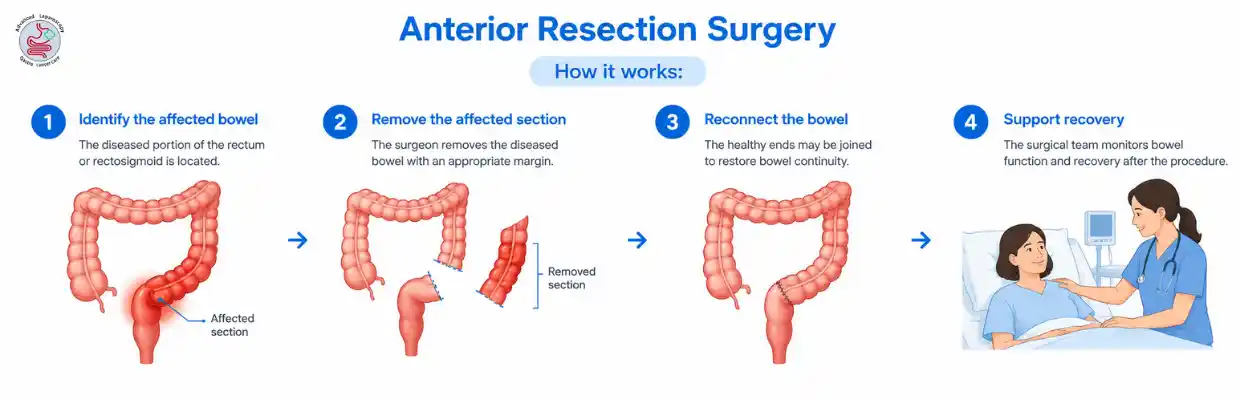
Anterior resection is a type of colorectal surgery used to remove a diseased part of the rectum or rectosigmoid colon while preserving the anal sphincter and maintaining bowel continuity when appropriate. It is commonly performed for selected cases of rectal cancer and other colorectal conditions. The treatment approach depends on the disease location, extent, scan findings, and overall health.
If you have been advised to undergo anterior resection, you may have questions about the procedure, recovery, bowel function, stoma, risks, and alternatives. Dr. Dinesh Ramaswamy, Senior Surgical Gastroenterologist and GI Onco Surgeon in Chennai, has 20+ years of surgical experience in colorectal surgery, GI cancer surgery, advanced laparoscopic procedures, and complex gastrointestinal surgery.
Anterior resection is a colorectal surgery used to remove a diseased part of the rectum or rectosigmoid colon. The affected bowel is removed along with nearby tissue when required, and the remaining bowel is usually reconnected to restore bowel continuity. It is commonly performed for selected rectal cancers and other colorectal conditions. In some cases, a temporary stoma may be created to protect the bowel connection while it heals.
Anterior resection is not recommended simply because a patient has a rectal or colorectal condition. The decision is made after a detailed assessment.
It may be considered for selected patients with:
For rectal cancer, the surgical plan depends on factors such as tumour location, tumour stage, lymph node involvement, relationship to the anal sphincter, imaging findings and response to any treatment given before surgery.
In some cases, chemotherapy or radiotherapy may be recommended before surgery. In others, surgery may be performed first. Treatment is usually planned according to the individual diagnosis rather than using the same approach for every patient.
Patients with rectal cancer do not all require the same operation. The surgical team may consider anterior resection when:
Some very low rectal cancers may require a different procedure, such as abdominoperineal resection, particularly when safe sphincter preservation is not possible.
This is why a consultation with a colorectal or surgical gastroenterology specialist is important before deciding on surgery.
Before surgery, the patient usually undergoes a detailed evaluation. This may include blood tests, colonoscopy, biopsy results, CT or MRI scans and other investigations depending on the condition.
For rectal cancer, pelvic MRI can be particularly important for assessing the local extent of disease and helping the surgical team plan treatment.
During anterior resection:
The final pathology report helps determine the exact stage and characteristics of the disease and may influence further treatment.
Anterior resection can sometimes be performed using minimally invasive surgery, including laparoscopic techniques.
Instead of one large abdominal incision, laparoscopic surgery uses several smaller incisions through which a camera and specialised instruments are introduced.
Potential advantages of a minimally invasive approach may include:
However, minimally invasive surgery is not automatically appropriate for every patient. Large tumours, complex anatomy, previous abdominal surgery, advanced disease or other medical factors may influence the choice between laparoscopic and open surgery.
The surgical approach should therefore be based on the patient's condition rather than the assumption that one technique is suitable for everyone.
A stoma is an opening created on the abdominal wall through which bowel contents leave the body into an external pouch.
After a low anterior resection, a temporary ileostomy or colostomy may sometimes be created to divert stool away from the newly formed bowel connection while it heals.
Not every patient requires a temporary stoma.
If a temporary stoma is recommended, the surgical team will explain why it is needed, how it is managed and when reversal may be considered. The timing of stoma closure depends on healing, the patient's recovery and the overall treatment plan.
A permanent stoma is a different situation and may be necessary when the tumour location or other surgical factors prevent safe preservation of the anal sphincter.
Anterior resection is major abdominal surgery, and patients should understand both the expected recovery and possible complications before making a treatment decision.
Potential risks include:
One important complication is an anastomotic leak, which occurs when the bowel connection does not heal properly. Depending on its severity, it may require antibiotics, drainage, diversion or additional surgery.
The risk varies from patient to patient and depends on factors such as the type of operation, tumour location, previous treatment, nutritional status, other medical conditions and overall health.
After surgery, the medical team monitors bowel function, pain control, nutrition, wound healing and mobility.
Patients are generally encouraged to begin moving as soon as medically appropriate. Eating and drinking are gradually resumed according to recovery and the surgeon's advice.
The hospital stay varies depending on the type of operation and individual recovery.
After discharge, patients should follow their surgeon's instructions regarding:
Recovery from major bowel surgery takes time. Returning to normal activities is gradual and differs between patients.
One important concern after rectal surgery is whether bowel habits will return to normal.
Some patients experience changes such as:
These symptoms can improve as the body adapts, although recovery differs from person to person.
Some patients develop a group of symptoms known as low anterior resection syndrome, or LARS. The severity varies, and management may include dietary changes, medication, bowel training and other supportive measures.
Discussing expected bowel function before surgery can help patients understand what recovery may involve.
Recovery depends on the surgical approach, the extent of bowel removal, the patient's general health and whether additional treatment is required.
During recovery, patients may gradually increase walking and other activities. Heavy lifting and strenuous exercise should be avoided until the surgeon confirms that they are safe.
Follow-up is an important part of recovery, especially when surgery has been performed for cancer.
Patients may require:
If you or a family member has been advised to undergo anterior resection, getting a specialist opinion can help you understand the diagnosis and available treatment options.
Dr. Dinesh Ramaswamy provides consultation for colorectal and gastrointestinal conditions in Chennai, including patients seeking evaluation for rectal cancer and other conditions that may require bowel surgery.
Consultation locations include SIMS Hospitals in Vadapalani, Gastro Care Clinic in Porur and Carewell Hospital in Kattupakkam, subject to current consultation schedules.
A specialist evaluation can help determine whether anterior resection, another surgical procedure, medical treatment or additional investigations are appropriate for your condition.
If you have been diagnosed with rectal cancer or another colorectal condition and have been advised to consider anterior resection, consult a specialist to understand your treatment options.
Dr. Dinesh Ramaswamy provides specialist evaluation and surgical care for colorectal and gastrointestinal conditions in Chennai.
Call to schedule a consultation or submit an appointment request through the website.
Anterior resection is surgery to remove a diseased portion of the rectum or rectosigmoid colon and, when appropriate, reconnect the remaining bowel. It is commonly used for selected rectal and colorectal conditions, particularly rectal cancer.
Low anterior resection is a form of anterior resection generally used for selected tumours located lower in the rectum. The exact operation depends on tumour location and other clinical factors.
Yes. Anterior resection is one surgical option for selected rectal cancer patients. The decision depends on tumour location, stage, imaging findings, sphincter involvement and other factors.
Not necessarily. When clinically suitable, anterior resection can preserve the anal sphincter and bowel continuity. Some patients may require a temporary protective stoma, while other surgical situations may require a permanent colostomy.
In selected patients, anterior resection can be performed using laparoscopic or other minimally invasive techniques. The suitability of this approach depends on the patient’s disease and overall surgical circumstances.
Recovery varies between patients. The hospital stay and return to normal activities depend on the surgical technique, extent of surgery, general health and whether complications occur. Your surgeon can provide a more personalised recovery estimate.
Some patients experience increased bowel frequency, urgency or changes in stool consistency after rectal surgery. These symptoms may improve over time. Some patients develop low anterior resection syndrome, which can be managed with appropriate medical and dietary support.
Stay updated with expert insights, latest trends, and helpful articles.
Take the first step toward better digestive health. Book an appointment with our laparoscopy and gastroenterology team to receive expert care, clear guidance, and advanced minimally invasive solutions tailored to your needs.