Medically reviewed by Dr. Dinesh Ramaswamy, MBBS, MS, MCh, DNB, FIAGES. Specialist in Surgical Gastroenterology and GI Oncology | Last reviewed: August 2026
Digestive health plays an important role in overall well-being. While many digestive problems can be managed with medication and lifestyle changes, some conditions involving the stomach, intestines, liver, gallbladder, pancreas, and bile ducts may require surgical evaluation.
Finding an experienced surgical gastroenterologist in Chennai can help patients understand their diagnosis, explore available treatment options, and determine whether surgery is necessary.
Dr. Dinesh Ramaswamy is a Senior Surgical Gastroenterologist and GI Onco Surgeon in Chennai with over 20 years of surgical experience. His areas of expertise include surgical gastroenterology, hepatopancreatobiliary (HPB) surgery, gastrointestinal cancer surgery, and advanced laparoscopic and robotic surgery.
What Is a Surgical Gastroenterologist?
- A surgical gastroenterologist is a specialist who evaluates and surgically treats selected conditions affecting the digestive system and related organs.
- The digestive system includes the oesophagus, stomach, small intestine, large intestine, rectum, liver, gallbladder, pancreas, and bile ducts. Problems affecting these organs can range from gallstones and hernias to complex gastrointestinal diseases and certain cancers.
- Depending on the diagnosis, treatment may involve medication, monitoring, endoscopic procedures, minimally invasive surgery, or open surgery. A surgical gastroenterologist helps determine which approach is appropriate for an individual patient.
- Consultation with a specialist does not automatically mean that an operation is required. The decision depends on the patient’s symptoms, examination findings, investigations, diagnosis, and overall health.
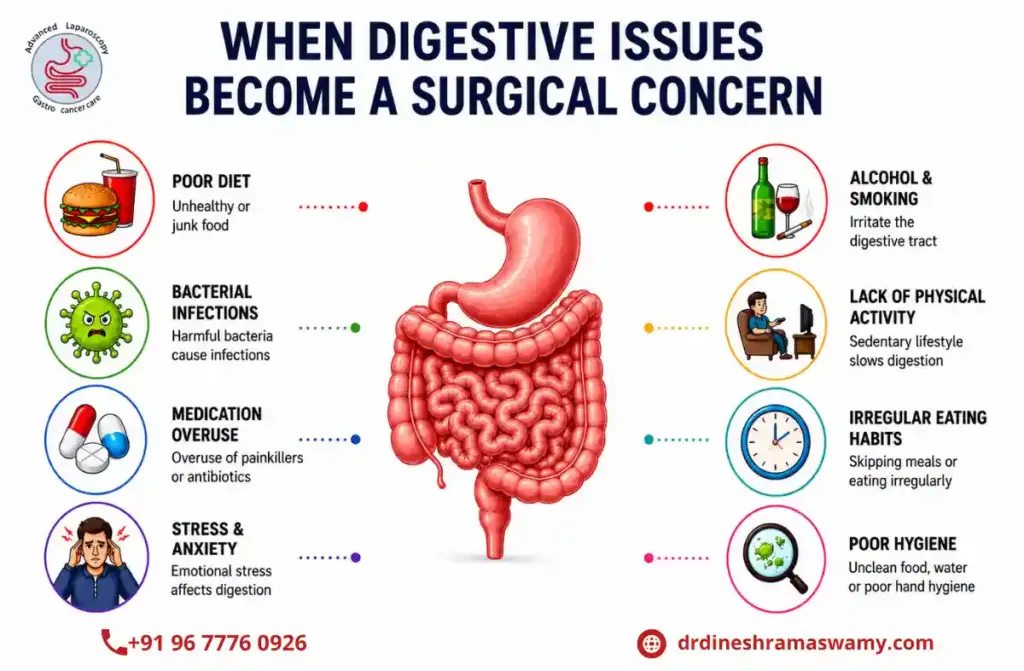
When Should You Consult a Surgical Gastroenterologist in Chennai?
You may need an assessment by a surgical gastroenterologist if you have been diagnosed with a digestive condition that could require an operation or specialist surgical management.
Common reasons for consultation include:
- Gallstones and gallbladder problems: Gallstones can cause episodes of abdominal pain and may lead to complications in some patients.
- Hernias: A hernia occurs when tissue pushes through a weakened area of the surrounding muscle or connective tissue.
- Liver conditions requiring surgical evaluation: Certain liver tumours and other selected liver diseases may require assessment by a specialist surgical team.
- Pancreatic and bile duct conditions: Some pancreatic lesions, bile duct obstructions, and related disorders require specialised evaluation.
- Gastrointestinal cancers: Cancers affecting the stomach, intestine, colon, rectum, or other digestive organs may require surgery as part of a broader treatment plan.
- Intestinal obstruction: A blockage in the intestine may require urgent assessment and, in some cases, surgical treatment.
- Selected conditions requiring laparoscopic surgery: Depending on the diagnosis, minimally invasive techniques may be an option.
Persistent abdominal pain, repeated vomiting, unexplained weight loss, difficulty swallowing, or blood in the digestive tract should not be ignored. Sudden severe abdominal pain, vomiting blood, significant gastrointestinal bleeding, or a painful hernia accompanied by vomiting warrants urgent medical attention.
Meet Our Expert – Dr. Dinesh Ramaswamy
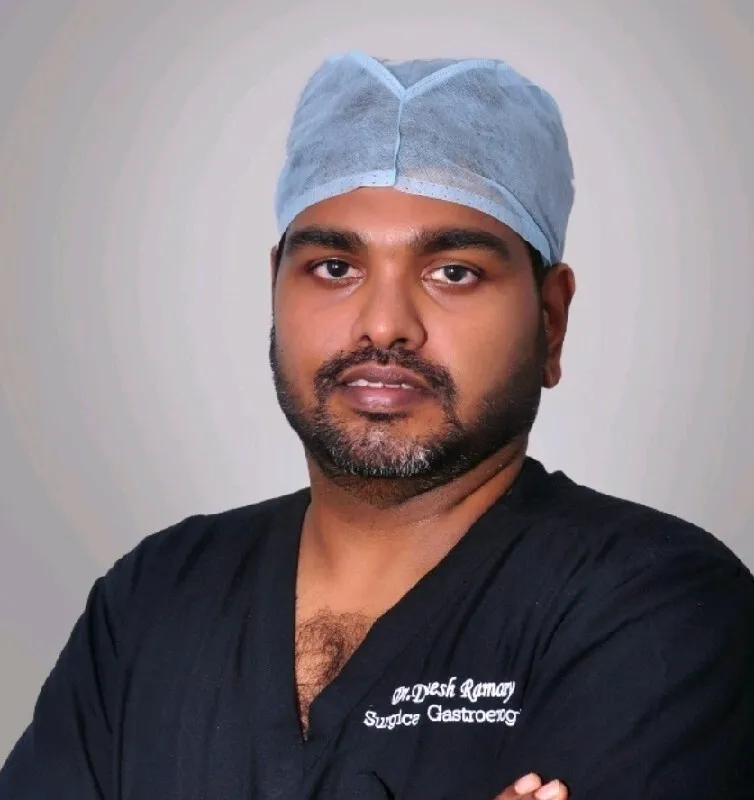
- Qualifications: MBBS, MS (General Surgery), MCh (Surgical Gastroenterology), DNB, FIAGES
- Experience: 20+ Years
Dr. Dinesh Ramaswamy is a surgical gastroenterologist and GI onco surgeon in Chennai with over 20+ years of experience in treating complex digestive and abdominal conditions. He holds MBBS, MS in General Surgery, MCh in Surgical Gastroenterology, DNB and FIAGES qualifications.
His areas of clinical interest include gallbladder surgery, hernia repair, colorectal surgery, gastrointestinal cancer surgery, liver and pancreatic procedures, and minimally invasive gastrointestinal surgery. Depending on the diagnosis, he may recommend observation, medical management, further investigation or surgery.
Dr. Dinesh focuses on explaining the diagnosis, available treatment options, possible risks and expected recovery before a treatment decision is made. This helps patients and their families participate confidently in the care-planning process.
Research Publications
- Thoracic duct injury following esophagectomy in carcinoma of the esophagus: ligation by the abdominal approach
- Long-term functional outcome after pancreatoduodenectomy for periampullary carcinoma with morphological correlation
- Correlations of portal pressure in post‐cholecystectomy benign biliary stricture
Our commitment to advancing patient care extends beyond clinical practice through active contributions to medical research. The publications listed below reflect our contributions to peer-reviewed journals and our dedication to evidence-based healthcare, innovation, and continuous professional development.
To explore the complete list of research publications and academic contributions, visit our Google Scholar profile
Conditions Managed Through Surgical Gastroenterology
Gallbladder and Bile Duct Disorders
- Gallstones may remain asymptomatic in some people, while others experience pain or complications. When treatment is needed, the appropriate approach depends on the symptoms and clinical findings.
- A surgical gastroenterologist can assess whether observation, further investigation, or an operation such as gallbladder removal is appropriate.
Liver Diseases Requiring Surgical Assessment
- The liver performs several essential functions, including processing nutrients and producing substances needed for normal body function. Certain liver tumours and other complex liver conditions may require specialist surgical assessment.
- Liver surgery involves careful evaluation of liver function, the underlying disease, general health, and suitability for a particular procedure.
- Dr. Dinesh Ramaswamy’s listed areas of expertise include liver surgery and hepatopancreatobiliary surgery.
Pancreatic and Bile Duct Conditions
- The pancreas and bile ducts play important roles in digestion. Conditions affecting these organs can sometimes require care from a specialist HPB surgical team.
- Treatment options vary according to the underlying condition and may include observation, medication, endoscopic treatment, or surgery.
Gastrointestinal Tumours and Cancers
- Some tumours of the digestive system require surgical treatment. The type and extent of surgery depend on the location of the tumour, its stage, the patient’s overall health, and the recommendations of the treating team.
- Depending on the diagnosis, treatment may also involve chemotherapy, radiotherapy, or other specialist care. A coordinated treatment plan can help patients understand their options and the purpose of each treatment.
Conditions Suitable for Laparoscopic Surgery
- Laparoscopic surgery uses specialised instruments and a camera introduced through small incisions. It may be suitable for selected abdominal and gastrointestinal procedures.
- Potential advantages can include smaller incisions and a shorter recovery period compared with some open operations. However, outcomes vary by procedure and patient, and laparoscopic surgery is not appropriate for every condition.
The surgeon should explain the expected benefits, risks, alternatives, and recovery requirements before treatment.
How to Choose the Right Surgical Gastroenterologist in Chennai
Choosing a gastrointestinal surgeon is an important healthcare decision. Consider the following factors before arranging a consultation.
- Relevant qualifications and specialist training: Check whether the doctor has appropriate qualifications and training in surgical gastroenterology and the condition being treated.
- Experience with your condition: Different digestive disorders require different forms of expertise. Ask about the surgeon’s experience with the proposed procedure and whether additional specialist input is needed.
- Clear communication: A consultation should help you understand the diagnosis, available treatment options, potential complications, and expected recovery.
- Appropriate diagnostic evaluation: Treatment recommendations should be based on clinical assessment and relevant investigations rather than symptoms alone.
- Hospital and multidisciplinary support: Complex gastrointestinal procedures may require anaesthesia, critical care, radiology, oncology, and other specialist support.
- Individualised treatment planning: The right approach depends on your medical history, diagnosis, general health, and preferences. A recommendation should account for these factors.
Why Choose Dr. Dinesh Ramaswamy, Surgical Gastroenterologist in Chennai?
Managing digestive disorders often requires a clear diagnosis and a treatment approach suited to the patient’s condition. Dr. Dinesh Ramaswamy provides surgical gastroenterology care for a range of gastrointestinal and abdominal conditions, with a focus on evaluating treatment options and helping patients understand their care at every stage.
- Specialised Surgical Experience: Expertise in surgical gastroenterology, gastrointestinal cancer surgery, and the management of selected complex digestive conditions.
- Minimally Invasive Procedures: Laparoscopic and robotic surgical techniques may be considered when appropriate for the patient’s diagnosis and overall health.
- Individualised Care: Treatment recommendations are based on clinical findings, diagnostic reports, medical history, and the patient’s specific needs.
- Coordinated Specialist Support: Collaboration with other medical specialists can help address digestive conditions that require multidisciplinary evaluation and treatment.
- Follow-Up and Recovery Guidance: Postoperative reviews and appropriate recovery advice help patients understand their progress and follow their treatment plan.
Selecting a surgical gastroenterologist involves considering specialist training, experience with the relevant condition, and clear communication about treatment choices. Dr. Dinesh Ramaswamy offers consultations for patients seeking gastrointestinal surgical assessment in Vadapalani, Chennai. A detailed evaluation can help determine the appropriate treatment options and support informed decisions about digestive health.
What Happens During a Consultation?
A consultation with a surgical gastroenterologist generally begins with a discussion of symptoms, medical history, previous treatment, and any existing reports.
Depending on the clinical situation, the doctor may review blood tests, ultrasound findings, CT or MRI scans, endoscopy reports, or other relevant investigations. Additional tests may be recommended if needed.
The specialist then explains the possible diagnosis and discusses suitable treatment options. If surgery is being considered, the discussion may cover the procedure, its benefits and risks, alternatives, preparation, hospital stay, and follow-up care.
Patients can help make the consultation more productive by bringing previous medical reports, a list of medications, details of existing medical conditions, and questions about the proposed treatment.
Consult Dr. Dinesh Ramaswamy in Chennai
Patients looking for a surgical gastroenterologist in Chennai can explore a specialist consultation with Dr. Dinesh Ramaswamy at SIMS Hospitals, Vadapalani. Consultation options are also available at Gastro Care Clinic, Porur, and Carewell Hospital, Kattupakkam.
His listed areas of expertise include surgical gastroenterology, gastrointestinal cancer surgery, hepatopancreatobiliary surgery, and advanced laparoscopic and robotic procedures. If you have persistent digestive symptoms or have been diagnosed with a condition that may require surgery, a specialist assessment can help clarify the diagnosis and available treatment options.
Also, Read as Foods to Avoid for Acidity