Medically reviewed by Dr. Dinesh Ramaswamy, MBBS, MS, MCh, DNB, FIAGES. Specialist in Surgical Gastroenterology and GI Oncology. Last medically reviewed: September 2026.
Acidity or acid reflux can cause a burning feeling in the chest, sour taste, frequent burping, or discomfort after meals. For some people, these symptoms happen occasionally, while for others they may return often and affect daily comfort.
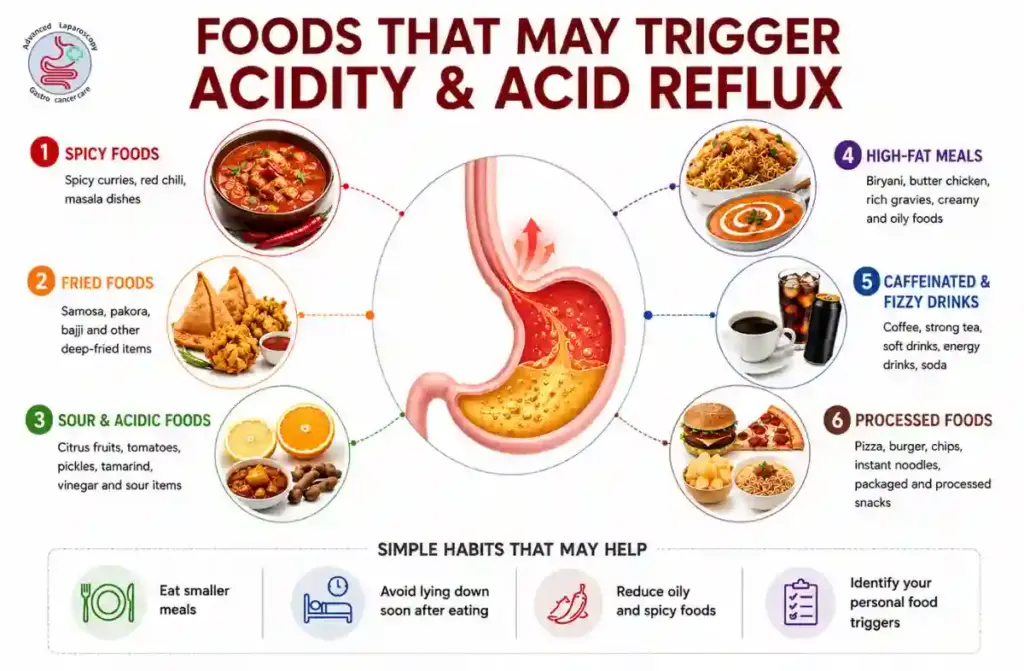
Understanding the foods to avoid for acidity can help you identify possible triggers and manage symptoms better. Fried foods, spicy dishes, fatty meals, coffee, chocolate, citrus fruits, tomatoes, and carbonated drinks may worsen acid reflux in some people. However, food triggers are different for everyone, so it is important to notice which foods affect you and adjust your eating habits accordingly.
What Is Acidity or Acid Reflux?
Your stomach naturally produces acid to help digest food. Normally, a ring of muscle called the lower oesophageal sphincter (LES) helps prevent stomach contents from moving back into the oesophagus.
Acid reflux happens when stomach contents move upward into the oesophagus. This can cause a burning sensation known as heartburn. Occasional reflux is common. However, frequent or persistent acid reflux may be associated with gastroesophageal reflux disease (GERD) and should be medically evaluated.
Common symptoms include:
- Burning sensation in the chest or heartburn
- Sour or bitter taste in the mouth
- Regurgitation of food or liquid
- Frequent burping
- Upper abdominal discomfort
- Symptoms that become worse after a large meal
- Symptoms that worsen when lying down
- Night-time heartburn
If you frequently experience these symptoms, identifying your food triggers can be a useful first step.
Foods to Avoid for Acidity
The following foods and drinks are commonly associated with worsening acid reflux symptoms. You do not necessarily need to eliminate all of them. Instead, notice how your body responds and reduce the foods that consistently cause symptoms.
1. Fried Foods
Deep-fried foods are among the first foods worth reducing if you frequently experience acidity.
Examples include:
- Samosas
- Pakoras and bajjis
- Poori
- French fries
- Potato chips
- Fried chicken
- Fried fish
- Fried fast food
Fried foods usually contain large amounts of fat. High-fat meals can take longer to leave the stomach and may make reflux more likely in some people. Instead of deep frying, try steaming, boiling, baking, grilling, or preparing foods with smaller amounts of oil.
2. High-Fat Foods
Not every fatty food needs to be removed from your diet. However, very heavy or high-fat meals can trigger reflux in some individuals.
Foods to watch include:
- Butter-heavy dishes
- Cream-based gravies
- Fatty meat
- Large amounts of cheese
- High-fat desserts
- Rich restaurant curries
- Fast food
Portion size also matters.
A small quantity may cause no problem, while eating a large portion of the same food may lead to heartburn. Choosing lean protein and lighter cooking methods can help reduce the overall fat content of meals.
3. Very Spicy Foods
Spicy food does not cause reflux in everyone. But it is a common symptom trigger for some people who already experience heartburn.
Common examples include:
- Red chilli-heavy curries
- Spicy chutneys
- Chilli sauces
- Schezwan dishes
- Very spicy biryani
- Spicy street foods
- Hot pickles
You do not always need to make your food completely bland.
Try reducing the amount of chilli first and see whether your symptoms improve. You can still add flavour using herbs and mild spices that you tolerate well.
4. Tomato and Tomato-Based Foods
Tomatoes are nutritious, but their natural acidity can worsen heartburn in some people.
Possible triggers include:
- Tomato sauce
- Tomato ketchup
- Tomato chutney
- Tomato-based gravies
- Pizza sauce
- Pasta sauce
- Tomato juice
Cooked tomato dishes can also contain oil, chilli, garlic, and other ingredients. This combination may make symptoms more noticeable.
If tomatoes consistently trigger heartburn, reduce the amount and observe whether you feel better.
5. Citrus Fruits and Juices
Citrus fruits are another commonly reported trigger.
Examples include:
- Orange
- Lemon
- Lime
- Grapefruit
- Citrus juices
These foods are naturally acidic and may irritate an already sensitive oesophagus in some individuals.
You do not need to stop eating fruit altogether.
Try less acidic fruits such as:
- Banana
- Melon
- Pear
- Apple, if tolerated
- Papaya
Your individual response is more important than following a rigid list.
6. Chocolate
Chocolate may worsen acid reflux symptoms in some people.
Chocolate products may contain a combination of cocoa, fat, sugar, and sometimes caffeine, which can make them a trigger for certain individuals.
This includes:
- Chocolate bars
- Chocolate cake
- Chocolate ice cream
- Chocolate milkshakes
- Cocoa-rich desserts
If you regularly develop heartburn after eating chocolate, try reducing your portion or avoiding it for a short period and monitor the difference.
7. Coffee and Other Caffeinated Drinks
Coffee is a common concern among people with acidity. Some people can drink one cup without symptoms, while others experience heartburn even after a small amount.
Sources of caffeine include:
- Coffee
- Strong tea
- Energy drinks
- Cola
- Some chocolate drinks
There is no need for everyone with reflux to completely stop caffeine.
If you suspect coffee is causing symptoms, reduce the amount and observe your response. Also pay attention to what you add to it. Large amounts of full-fat milk, cream, or sugar may contribute to digestive discomfort.
8. Carbonated Drinks
Carbonated beverages can cause the stomach to expand temporarily and increase belching.
Examples include:
- Soft drinks
- Soda
- Cola
- Fizzy drinks
- Carbonated energy drinks
For some people, this increased stomach pressure may make reflux symptoms more noticeable. Water is usually a simpler choice if carbonated beverages regularly cause discomfort.
9. Alcohol
Alcohol can worsen acid reflux in some people and may also irritate the digestive tract. The effect varies depending on the type and amount consumed.
If you notice heartburn or regurgitation after drinking alcohol, reducing or avoiding it may help control symptoms. Alcohol close to bedtime can be particularly troublesome for people who experience night-time reflux.
Indian Foods to Avoid for Acidity
Indian food itself does not cause acidity. The issue is usually the ingredients, cooking method, portion size, and your individual tolerance.
Common Indian foods that may trigger symptoms include:
- Samosa
- Pakora and bajji
- Poori
- Chole bhature
- Very spicy biryani
- Oily gravies
- Butter-rich curries
- Chaat
- Spicy pickles
- Chilli-heavy chutneys
- Fried parotta
- Deep-fried street foods
- Very spicy noodles
- Rich cream-based curries
You do not necessarily have to completely avoid these foods forever.
Try reducing the portion, oil, chilli, and frequency first. For example, instead of having a large oily dinner, choose rice or chapati with dal, vegetables, and a lighter protein preparation.
Foods to Avoid for Gas and Acidity
Gas, bloating, and acid reflux can occur together, but they are not exactly the same problem. Certain foods may increase bloating in some people, which can make abdominal discomfort feel worse.
Potential triggers include:
- Carbonated drinks
- Very fatty meals
- Large fried meals
- Large portions of beans or lentils in sensitive individuals
- Certain onions and garlic
- Heavily processed foods
- Large amounts of rich dairy products in people who do not tolerate lactose well
Do not automatically remove healthy foods such as beans or vegetables simply because they can produce gas. If you notice a clear pattern, reduce the portion and gradually test your tolerance.
What Foods Can You Eat When You Have Acidity?
Managing acid reflux is not only about avoiding foods. Building balanced meals around foods you tolerate well is equally important.
Options may include:
Whole Grains
Try:
- Oats
- Brown rice
- Whole-wheat chapati
- Millets
- Other minimally processed grains
Whole grains provide fibre and can be part of a balanced diet.
Vegetables
Include a variety of vegetables according to your tolerance.
Examples include:
- Carrot
- Beans
- Cucumber
- Spinach
- Bottle gourd
- Pumpkin
- Broccoli
Steamed, boiled, or lightly cooked vegetables may be easier to tolerate than heavily fried preparations.
Non-Citrus Fruits
Consider:
- Banana
- Papaya
- Melon
- Pear
- Apple
Choose fruits that do not personally trigger your symptoms.
Lean Protein
Protein options may include:
- Lentils
- Dal
- Tofu
- Eggs
- Fish
- Skinless chicken
Prefer grilling, steaming, boiling, or lightly cooking them rather than deep frying.
Simple Indian Meal Ideas for People With Acid Reflux
You do not need a complicated “acidity diet.”
A simple meal pattern can work well.
Breakfast
You could choose:
- Oatmeal with banana
- Idli with a mild accompaniment
- Vegetable upma prepared with limited oil
- Plain dosa with less oil
- Whole-grain toast with a suitable protein source
Lunch
A balanced lunch could contain:
- Rice or chapati
- Dal
- Cooked vegetables
- Lean protein
- Curd if you tolerate dairy well
Avoid making every component oily or very spicy.
Evening Snack
Instead of fried snacks, try:
- Fruit
- Roasted chickpeas
- A small handful of nuts if tolerated
- Lightly prepared sprouts
Dinner
Keep dinner relatively light.
Options include:
- Chapati with vegetables
- Rice with dal and vegetables
- Grilled fish or chicken with vegetables
- Light khichdi
The exact foods matter less than choosing balanced portions that do not trigger your symptoms.
Eating Habits That Can Reduce Acid Reflux
Food choice is only one part of reflux management. How and when you eat can be just as important.
- Eat Smaller Meals: Eating large meals can put extra pressure on the stomach and may worsen acid reflux. Choose smaller, moderate portions and avoid eating until you feel overly full.
- Avoid Lying Down Immediately After Eating: Lying down soon after eating can make it easier for stomach contents to move upward. Try to finish your last meal 2 to 3 hours before bedtime, especially if you have night-time heartburn.
- Eat Slowly: Eating too quickly can lead to overeating and digestive discomfort. Eat at a relaxed pace, chew your food well, and stop when you feel comfortably full.
- Maintain a Healthy Weight: Excess body weight can increase pressure on the abdomen and contribute to acid reflux. If you are overweight, gradual and healthy weight loss may help improve GERD symptoms.
- Reduce Large Late-Night Meals: Heavy meals close to bedtime may increase the chance of night-time reflux. Choose a lighter dinner and try to eat earlier rather than having a large meal just before sleeping.
Should Everyone Avoid the Same Foods?
No.
This is one of the most important things to understand about foods to avoid acidity. There is no perfect GERD diet that works for everyone.
For example, one person may develop severe heartburn after drinking coffee but tolerate tomatoes without any problem. Another may drink coffee comfortably but experience reflux after tomato-based dishes. Instead of removing many nutritious foods unnecessarily, identify the foods that repeatedly cause your symptoms.
Keep a Food and Symptom Diary
A simple food diary can make trigger identification easier.
For one or two weeks, record:
- What you eat
- Approximate portion size
- When you eat
- Drinks consumed
- When symptoms occur
- Severity of symptoms
- Whether symptoms happen after lying down
You may start noticing patterns.
Once you identify a possible trigger, reduce it temporarily and see whether symptoms improve. This is more useful than following an extremely restrictive diet without knowing which foods actually affect you.
When Is Acidity More Than a Food Problem?
Occasional heartburn after a heavy meal is different from frequent acid reflux.
You should consider medical evaluation if symptoms:
- Occur frequently
- Continue despite dietary changes
- Regularly disturb your sleep
- Require frequent use of medicines
- Affect your ability to eat normally
Medical assessment can help determine whether symptoms are related to GERD or another digestive condition.
Warning Signs That Need Medical Attention
Do not assume every episode of chest or upper abdominal discomfort is simply acidity.
Seek medical advice if reflux-like symptoms occur with:
- Difficulty swallowing
- Pain while swallowing
- Persistent vomiting
- Blood in vomit
- Black or bloody stools
- Unexplained weight loss
- Loss of appetite
- Persistent or severe chest pain
Severe or new chest pain may have causes unrelated to the digestive system and should not be self-diagnosed as acidity.
Conclusion
Managing acidity and acid reflux does not mean completely avoiding all your favourite foods. The key is to identify the foods that trigger your symptoms and make simple changes to your eating habits. Limiting fried, fatty, spicy, or other personal trigger foods, eating moderate portions, and avoiding meals close to bedtime may help reduce reflux.
If acidity occurs frequently, keeps returning despite dietary changes, or is accompanied by difficulty swallowing, persistent vomiting, bleeding, unexplained weight loss, or severe chest pain, seek medical attention. Proper evaluation can help identify the underlying cause and guide the right treatment for long-term digestive health.
Read more: IBS நோயாளிகளுக்கான உணவுமுறை