
Indigestion is something almost everyone has felt at least once in their life. That uncomfortable bloated feeling, the burning in your chest, the heaviness after a meal, it can ruin your whole day. The good news is, knowing how to cure indigestion fast does not require complicated medicines or expensive treatments. With the right knowledge, most people can find quick relief using simple habits, natural remedies, and a few smart food choices. This guide covers everything you need to know clearly and practically.
What is Indigestion and why does it Happen?
- Indigestion, also known as dyspepsia in medical terms, is not a disease on its own. It is a group of symptoms that appear in the upper part of your stomach area. You may feel full very quickly, experience a burning pain in the upper belly, feel nauseous, or notice uncomfortable belching after eating.
- The stomach releases acid to help digest food properly. When this acid irritates the lining of your stomach or the tube connecting your mouth to your stomach (the oesophagus), it creates indigestion symptoms. Common triggers include eating too fast, eating oily or spicy food, drinking carbonated drinks, stress, smoking, and irregular meal timings.
- Some people experience indigestion frequently because of an underlying digestive issue called gastritis, where the stomach lining is inflamed. Heavy meals and late night eating habits may trigger indigestion in some people. Although the condition is usually temporary, understanding the main reason behind it helps in better management. This helps you pick the right remedy and avoid repeating the same habits that caused the problem.
7 Proven Ways to Cure Indigestion Fast
1. Drink Warm Water or Ginger Tea Immediately
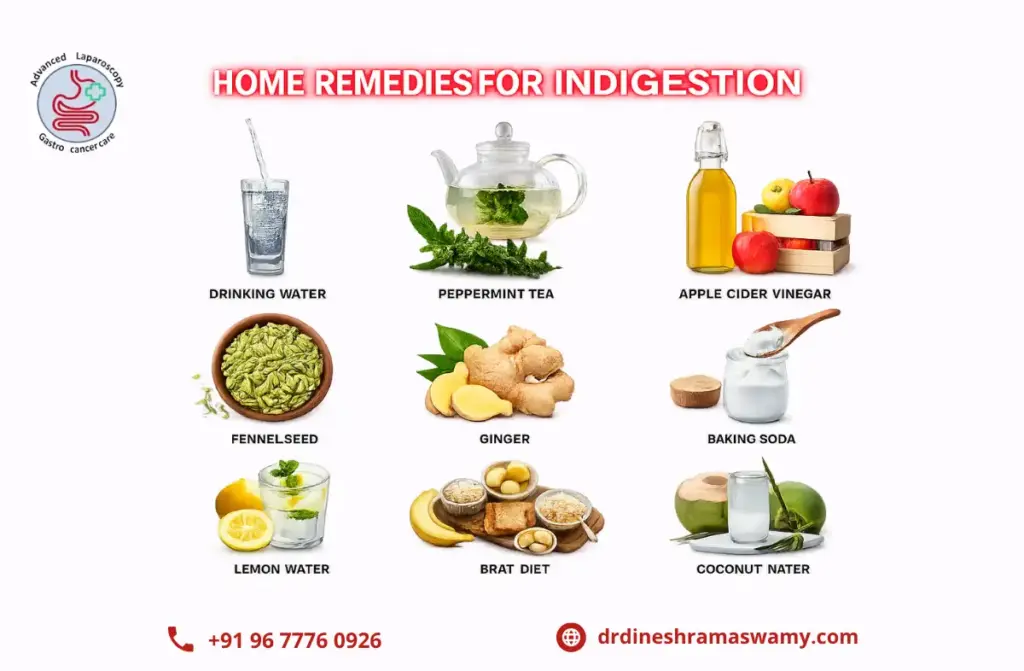
- One of the quickest and most effective ways to relieve indigestion is to drink warm water. Cold water can slow digestion and make symptoms worse. Warm water helps the digestive system relax and pushes food through more comfortably.
- Ginger tea is even more powerful. Ginger contains natural compounds called gingerols and shogaols that stimulate digestive enzymes and calm stomach irritation. Boil a small slice of fresh ginger in water for about five to seven minutes, mix in a little honey, and sip it slowly. Within 20 to 30 minutes, most people notice a clear difference in their bloating and discomfort.
- This is one remedy that has been used for centuries across India, especially in Tamil Nadu households, where ginger and honey are a trusted combination for any stomach problem.
2. Try the Correct Body Position
- This is something most people completely ignore. Avoid resting flat right after eating a meal.
- When you lie flat, stomach acid can travel back up into the oesophagus more easily, which worsens indigestion and causes heartburn.
- After your meal, try sitting upright or walking slowly for at least 20 to 30 minutes. Walking gently activates the muscles of the digestive tract and helps food move through your stomach faster. Even a 10 minute slow walk after dinner can significantly reduce indigestion frequency over time.
- If you feel the need to rest, try lying on your left side. Research shows that lying on the left side reduces acid reflux symptoms because of how the stomach is positioned anatomically on the left side of the body.
3. Use Ajwain (Carom Seeds) for Instant Gas Relief
- Ajwain, called omam in Tamil, is a powerful natural remedy for indigestion and gas. It contains thymol, an active ingredient that helps stimulate digestive juices in the stomach. This directly helps with bloating, flatulence, and stomach cramping.
- Take half a teaspoon of ajwain seeds with a pinch of rock salt. You can either chew them directly or add them to a glass of warm water and drink it. Most people experience noticeable gas relief within 15 to 20 minutes.
- This is a completely safe, natural option that has been trusted in Indian homes for generations. It is especially useful after eating heavy, oily, or fried food.
4. Avoid these Foods Immediately After Symptoms Start
- When indigestion strikes, what you eat next matters a lot. Certain foods worsen the situation quickly. You should avoid:
- Spicy curries, pickles, and chutneys that irritate an already sensitive stomach lining. Carbonated drinks like soda that increase gas pressure inside the stomach. Milk in large amounts, because even though it feels soothing initially, full-fat milk increases acid production over time. Coffee and tea on an empty or sensitive stomach, as caffeine relaxes the valve between the oesophagus and stomach, allowing acid to flow back up. Fried snacks like bajji, puri, and vada that are heavy and slow to digest.
- Instead, eat plain rice with a light rasam, or try a banana, which is alkaline and helps neutralize excess stomach acid naturally.
5. Apple Cider Vinegar in Small Doses
- This might sound strange because vinegar is acidic. But apple cider vinegar works differently for many people. Sometimes indigestion happens not because of too much stomach acid but because of too little. Low stomach acid can slow digestion, allowing food to remain in the stomach longer and leading to gas and bloating.
- Mix one teaspoon of raw, unfiltered apple cider vinegar in a glass of warm water and drink it before your meal or at the first sign of indigestion. For people whose indigestion is caused by low acid levels, this works very well.
- However, people with ulcers, severe acid reflux, or gastritis should avoid this remedy. When in doubt, consult a doctor first before trying vinegar as a remedy.
6. Practice Deep Breathing or Abdominal Massage
- Stress is one of the most underrated causes of indigestion. When you are anxious or stressed, your body shifts blood flow away from the digestive system. This slows digestion dramatically and leads to cramping, bloating, and nausea.
- Deep breathing activates the parasympathetic nervous system, which is the body’s “rest and digest” mode. Try inhaling slowly through your nose for 4 counts, holding for 4 counts, and exhaling through your mouth for 6 counts. Repeat this 10 times while sitting comfortably.
- You can also try a gentle clockwise abdominal massage. Using your fingertips, apply light pressure and massage in slow circles around your navel. This helps stimulate bowel movements and relieve trapped gas. Clockwise direction is important because it follows the natural direction of the large intestine.
7. Fennel Seeds (Saunf) After Every Meal
- Fennel seeds, known as sombu in Tamil, are a classic Indian remedy for digestion that has strong scientific backing. They contain compounds like anethole, fenchone, and estragole that have antispasmodic and anti-inflammatory effects on the smooth muscles of the intestine.
- Chewing a small pinch of fennel seeds after every meal relaxes the stomach muscles, reduces bloating, and prevents gas buildup. Fennel seed tea is also a wonderful option. Prepare a warm fennel drink by boiling one teaspoon of fennel seeds in water for around five minutes before consuming it.
- This is one of the safest, most accessible remedies and works well for both adults and children when used in small amounts.
Lifestyle Habits that Prevent Indigestion Regularly
- Quick remedies help when indigestion is already there. But the real solution is building habits that stop it from happening too often.
- Eat smaller meals more frequently instead of two or three very large meals. Chew your food slowly and completely. Most digestive problems begin with eating too fast and swallowing air in the process. Stay away from eating food less than two hours before bedtime. Your digestive system slows down significantly during sleep.
- Drink enough water throughout the day. Dehydration thickens digestive juices and slows the movement of food through your intestines. Reduce your intake of very oily, processed, and packaged foods. These take much longer to digest and stay in the stomach for extended periods, increasing acid production.
- Regular light exercise like walking, yoga, or cycling improves gut motility and reduces stress-related digestive problems.
When to See a Doctor
- Certain symptoms related to indigestion should not be ignored. If indigestion lasts for more than two weeks, occurs along with unexplained weight loss and stomach discomfort, includes blood in vomit or bowel movements, causes severe chest pain, or makes swallowing difficult, immediate medical attention is important.
- Persistent indigestion may sometimes be linked to underlying health conditions such as stomach ulcers, urinary tract problems, or kidney related pressure that require proper medical evaluation and treatment. Early consultation with an experienced doctor can help identify the exact cause and prevent complications.
- People experiencing repeated digestive discomfort along with urinary symptoms should consider consulting a specialist for detailed evaluation and proper care. Understanding the connection between digestive health and kidney health can help patients manage symptoms more effectively and improve overall wellbeing.
Conclusion
Although indigestion can cause discomfort and inconvenience, it is usually a condition that can be controlled with proper care. By understanding what triggers it and knowing exactly how to cure indigestion fast, you take back control of your own comfort and health. Simple changes like eating slowly, choosing the right foods, drinking ginger or fennel tea, and managing stress can make a huge difference in your daily life. If indigestion keeps coming back despite your best efforts, do not ignore it. Consult a trusted medical professional who can guide you with the right diagnosis and care.
Read more: Early Signs of Digestive Disorders