When a person hears that a part of the colon may need to be removed, the first reaction is usually fear. That is normal. But with modern gastrointestinal surgery, the goal is not only to remove disease safely, but also to help patients return to eating, walking, working, and living with confidence. Hemicolectomy Surgery in Chennai is commonly recommended for selected patients with colon cancer, large polyps, bowel obstruction, severe inflammation, or damaged colon tissue. Under the care of the Best Surgical Gastroenterologist in Chennai, treatment is planned after detailed tests, careful risk assessment, and a clear discussion with the patient and family.
Hemicolectomy is a colon resection surgery where the surgeon removes the diseased right or left side of the large intestine. The colon is part of the large intestine and helps absorb water, form stool, and move waste out of the body. The large intestine is made up of several sections, including the cecum, ascending colon, transverse colon, descending colon, sigmoid colon, and rectum.
When disease affects one side of the colon, removing only that affected section can prevent further spread, blockage, bleeding, infection, or perforation. In most cases, the healthy bowel ends are joined again through a connection called an anastomosis. In a few complex cases, a temporary or permanent stoma may be required depending on safety, infection, blood supply, and the patient’s condition.
Colon illustration suggestion: Add a clean medical illustration showing the cecum, ascending colon, transverse colon, descending colon, sigmoid colon, and the parts removed during right and left colon surgery.
Right Hemicolectomy
Left Hemicolectomy
Extended Hemicolectomy
Hemicolectomy treatment in Chennai is recommended only for specific bowel conditions and is not necessary for every digestive problem. It is usually considered when medicines, endoscopic removal, or conservative care cannot safely solve the disease.
Some patients reach the hospital after months of ignoring small warning signs. For example, a 55-year-old patient may notice blood in stool and blame piles. Another patient may have repeated abdominal pain and assume it is only acidity. When symptoms persist, proper evaluation matters.
Patients may need surgical assessment if they experience:
Experiencing these symptoms does not necessarily mean that surgery is needed. But they do mean the colon should be evaluated by a specialist, especially in adults above 45 or anyone with a family history of colorectal cancer.
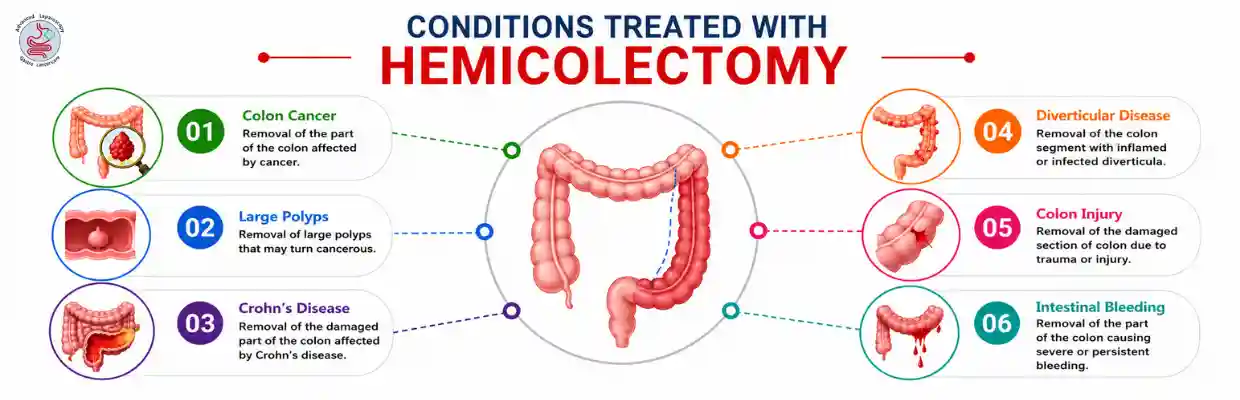
The need for colon surgery can develop slowly or suddenly. Common causes include colon cancer, large polyps, genetic disorders such as familial polyposis syndromes, Crohn’s disease, ulcerative colitis-related complications, trauma, and severe diverticulitis.
In cancer cases, the operation is planned to remove the tumour-bearing segment and lymph nodes. In inflammatory bowel disease, surgery is usually considered only when medicines fail or complications become unsafe. In trauma or perforation, the priority is infection control and saving life.
A good surgical outcome begins before the operation. Diagnosis is not just about confirming disease; it is about mapping the location, severity, spread, fitness for anesthesia, and safest surgical route.
Common tests include:
This complete workup helps the surgeon decide whether laparoscopic, robotic, or open surgery is safest.
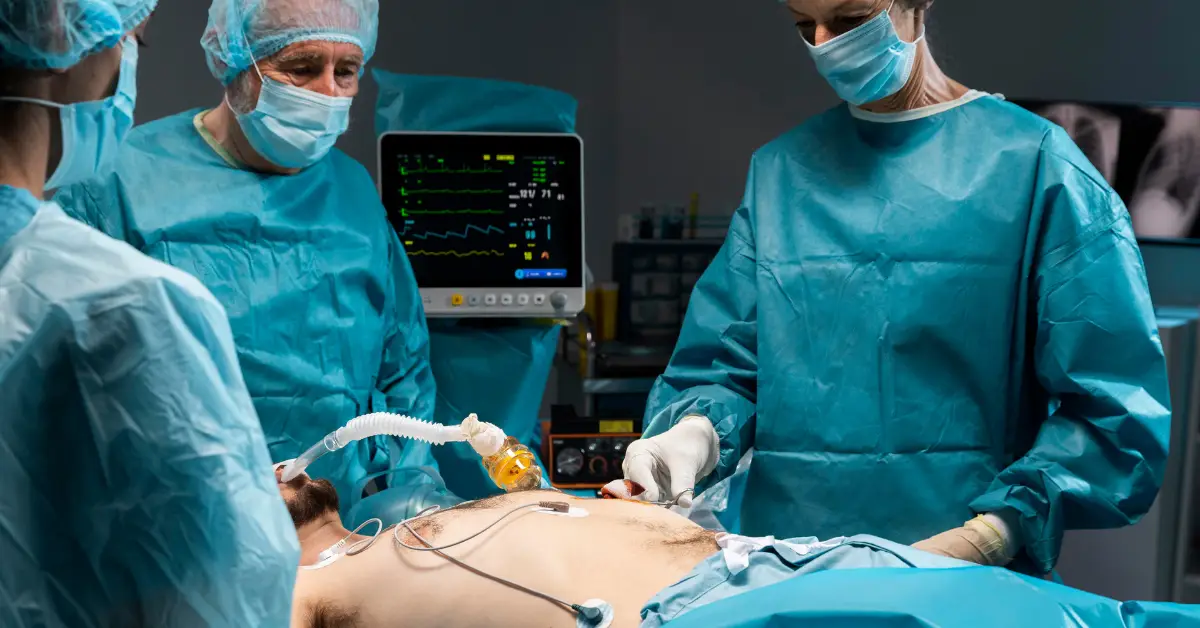
Hemicolectomy is performed under general anesthesia. The patient is asleep, pain-free, and continuously monitored by the anesthesia team. The operation can be done through laparoscopic, robotic, or open technique depending on diagnosis, previous surgeries, infection, cancer stage, obesity, emergency condition, and patient safety.
Minimally invasive colectomy uses several small incisions, a camera, and specialized instruments. Robotic surgery adds 3D vision, wristed instruments, and better precision in selected complex cases. Open surgery uses a larger incision and may be needed for emergency cases, advanced disease, severe adhesions, perforation, or unstable patients.
| Feature | Laparoscopic | Robotic | Open |
| Incision | Small | Smaller / precision ports | Large |
| Pain | Less | Often least | More |
| Recovery | Fast | Often faster | Slow |
| Blood Loss | Low | Often lowest | High |
| Hospital Stay | Short | Short | Longer |
| Surgical View | Camera-based | 3D magnified view | Direct open view |
| Best Used For | Many planned cases | Complex planned cases | Emergency or advanced cases |
The best technique is not about trend. It is about choosing what is safest for that patient on that day.
When correctly indicated, surgery can solve problems that medicines cannot. Benefits may include:
Honest counselling is important. Every major abdominal operation has risks, even when performed by an experienced surgeon. The purpose of preoperative testing and careful technique is to reduce risk, not pretend it does not exist.
Possible risks include bleeding, infection, anastomotic leak, bowel obstruction, blood clots, temporary ileus, hernia, wound complications, chest infection, urinary infection, and rarely injury to nearby organs. Anastomotic leak means the bowel join does not heal properly and can cause serious infection. Temporary ileus means the bowel takes time to “wake up” after surgery.
Patients should call the surgical team urgently if they develop high fever, worsening abdominal pain, repeated vomiting, swollen abdomen, heavy bleeding, breathing difficulty, wound pus, or inability to pass stool or gas after discharge.
Recovery is a journey, not a one-day switch. Some patients bounce back quickly; others need more time due to age, cancer treatment, diabetes, anemia, infection, or previous surgeries.
Diet after colon surgery should be simple, soft, and easy to digest in the early phase. The bowel needs time to settle. Small frequent meals usually work better than heavy plates.
| Foods to Eat ✅ | Why It Helps |
| Rice | Soft, low-residue, easy to digest |
| Idli | Light South Indian option during recovery |
| Curd | Gentle protein and gut-friendly texture |
| Banana | Soft, filling, and easy on the bowel |
| Soup | Hydration with mild nutrition |
| Boiled Vegetables | Easier than raw vegetables initially |
| Soft Fruits | Gentle source of calories and vitamins |
| Lean Protein | Supports wound healing and strength |
| Foods to Avoid ❌ | Why to Avoid Initially |
| Fried Food | Can worsen bloating and digestion |
| Alcohol | Delays healing and may interact with medicines |
| Carbonated Drinks | Can increase gas and discomfort |
| Spicy Food | May irritate the bowel early after surgery |
| Red Meat | Heavy to digest during early recovery |
| High-Fiber Foods Initially | Can cause gas, cramps, or loose stools too soon |
As healing improves, foods are slowly reintroduced. The right plan depends on bowel function, cancer treatment, diabetes, kidney health, and personal tolerance.
Choosing the right surgeon matters because colon surgery is not only about removing a diseased segment. It is about safe planning, precise surgery, cancer clearance when needed, bowel preservation, and long-term quality of life.
Dr. Dinesh Ramaswamy is known for gastrointestinal and GI onco surgery expertise, advanced laparoscopic surgery, robotic surgery experience, and colon cancer-focused surgical planning. Patients looking for Hemicolectomy Treatment in Vadapalani or nearby areas can benefit from a patient-centered approach that explains diagnosis, surgery options, recovery expectations, and follow-up in simple language.
Key strengths include:
For patients comparing Hemicolectomy Surgery in Porur, the priority should be clear: choose a team that balances advanced technology with honest judgement.
Hemicolectomy is an important surgery for treating colon cancer, large polyps, bowel obstruction, severe inflammation, and other serious colon conditions. With advanced laparoscopic and robotic techniques, many patients can experience less pain, smaller scars, and faster recovery. Early diagnosis, proper surgical planning, and expert care play a key role in achieving better outcomes. If you are looking for safe and personalized colon surgery care, consult Dr. Dinesh Ramaswamy for the right guidance and treatment plan.
Hemicolectomy carries risks like infection, bleeding, anastomotic leakage, and bowel obstruction. However, these risks are minimized under the care of an experienced surgeon like Dr. Dinesh Ramaswamy.
Recovery typically takes 4-8 weeks. Patients undergoing laparoscopic surgery generally experience a quicker recovery, often resuming normal activities within 4 weeks, while open surgery may require 6-8 weeks for full recovery.
In most cases, patients do not require a permanent colostomy or ileostomy. However, if the bowel cannot be immediately reconnected, a temporary ostomy may be necessary. Dr. Ramaswamy will discuss this during preoperative consultations.
A hemicolectomy is recommended to treat conditions affecting the colon, including:
The aim is to remove the affected part of the colon while preserving as much healthy bowel as possible.
Hemicolectomy surgery generally takes 2 to 4 hours, depending on the complexity of the procedure, the patient’s condition, and whether it is performed using laparoscopic, robotic, or open surgical techniques.
Most patients stay in the hospital for 3 to 7 days after surgery. The duration may vary depending on the type of surgery performed, recovery progress, and any underlying medical conditions.
Your diet will be introduced gradually after surgery. You will typically begin with clear liquids, followed by soft foods, and then return to a regular diet over the next few weeks as advised by your surgeon. Recovery varies from person to person.
Most patients recover within 4 to 8 weeks. Those who undergo laparoscopic or robotic surgery may return to normal daily activities sooner, while complete healing may take several weeks.
If the surgery is performed for colon cancer, removing the affected section significantly reduces the risk of recurrence. However, cancer can recur in some cases. Regular follow-up appointments, colonoscopies, and imaging tests are important for long-term monitoring.
Stay updated with expert insights, latest trends, and helpful articles.
Take the first step toward better digestive health. Book an appointment with our laparoscopy and gastroenterology team to receive expert care, clear guidance, and advanced minimally invasive solutions tailored to your needs.