Chennai Laparoscopy

Dr. Dinesh Ramaswamy

Diagnostic Laparoscopy

This keyhole surgical technique helps doctors closely evaluate abdominal organs for precise diagnosis and timely treatment strategy development.
Diagnostic Laparoscopy in Chennai

Diagnostic Laparoscopy in Chennai is a modern, minimally invasive surgical technique used to accurately identify abdominal conditions when scans, blood tests, or clinical examinations do not provide clear answers. It allows surgeons to directly visualize internal organs through small keyhole incisions, offering unmatched diagnostic precision. This approach reduces unnecessary open surgeries, shortens hospital stays, and accelerates treatment decisions. With advancements in imaging, optics, and surgical expertise, diagnostic laparoscopy has become a trusted tool for timely diagnosis and effective care, especially in complex or unclear abdominal conditions requiring expert evaluation.

What is Diagnostic Laparoscopy?

Diagnostic Laparoscopy is a minimally invasive procedure that allows doctors to examine the organs inside the abdomen and pelvis using a thin, lighted instrument called a laparoscope. A small incision is made, usually near the navel, through which the camera is inserted. The real-time visuals allow doctors to detect issues that may not be clearly seen on ultrasound, CT scans, or MRI imaging. 

For example, a patient in Chennai experiencing persistent lower abdominal pain may undergo multiple imaging tests with inconclusive results. In such cases, laparoscopy can directly reveal issues like early appendicitis, internal bleeding, or pelvic inflammation—helping doctors take timely action.

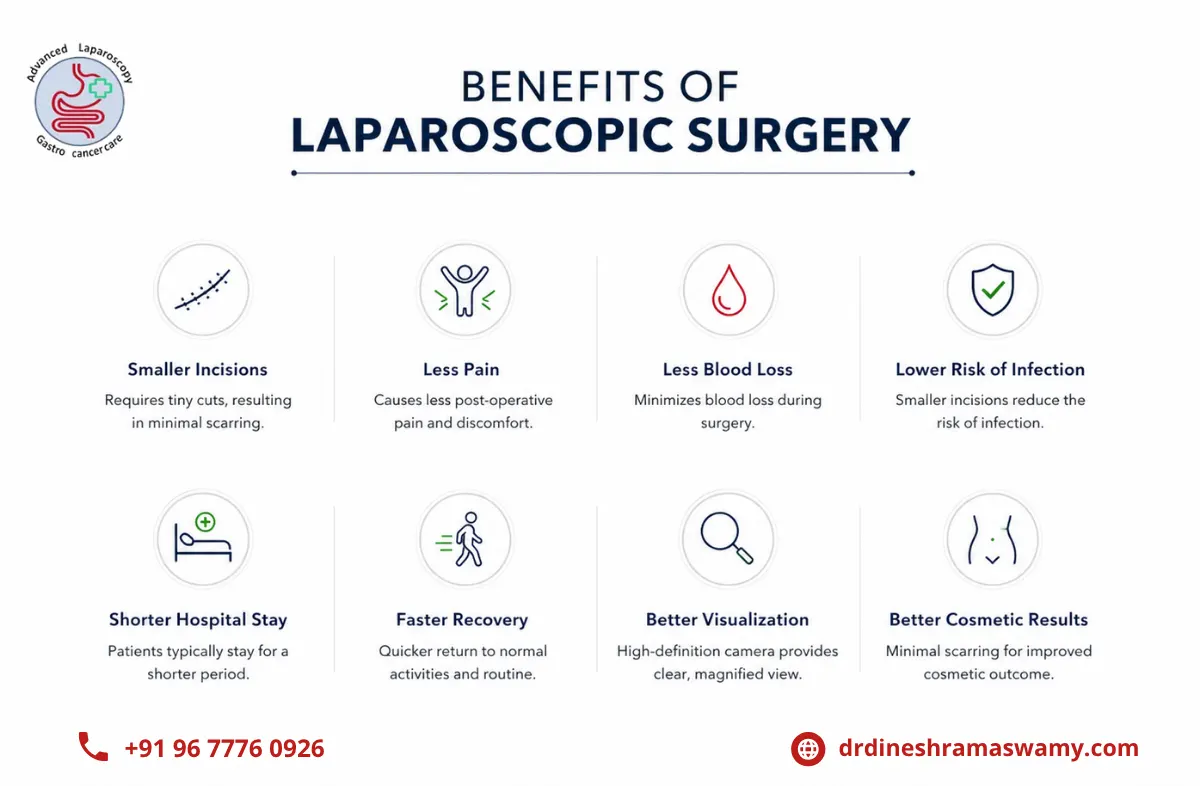
Benefits of Laparoscopic Surgery

Laparoscopic surgery has transformed the way many conditions are treated, offering a safer and more comfortable experience for patients. With smaller incisions and advanced technology, it reduces the physical stress of surgery while improving recovery outcomes. These benefits make it a preferred option for both doctors and patients.

  • Minimal Scarring: Laparoscopy uses tiny incisions instead of large cuts, resulting in very minimal scarring. This is especially beneficial for patients who are concerned about visible marks after surgery.
  • Quicker Recovery Time: Patients typically recover much faster compared to open surgery. Many can return to daily activities within a few days, reducing overall downtime.
  • Less Postoperative Pain: Smaller incisions lead to less tissue damage, which significantly reduces pain after surgery. This also means a lower need for strong pain medications.
  • Reduced Infection Risk: Since the procedure involves minimal exposure of internal organs, the risk of infection is lower. Smaller wounds also heal faster and are easier to manage.
  • Shorter Hospital Stay: In most cases, patients are discharged within one to two days following the procedure, allowing them to continue recovery comfortably at home. This makes the process more convenient and less disruptive to everyday life.

Overall, laparoscopic surgery offers a smoother recovery and better patient comfort. It continues to be a reliable choice for modern surgical care.
Diagnostic Laparoscopy surgery in Chennai

Common Applications of Laparoscopy Surgery

Laparoscopy is not limited to diagnosis—it also plays a role in treatment across various conditions.

  • Gallbladder Surgery: Laparoscopy helps doctors clearly view the gallbladder and confirm the presence of gallstones or inflammation. It is especially useful when symptoms continue despite medication or unclear scan results. The same procedure can often be used to safely remove the gallbladder with minimal discomfort.
  • Hernia Repair: This technique allows surgeons to locate the exact position and size of a hernia with precision. It is particularly helpful in identifying hidden or recurrent hernias. Once identified, the repair can be done using a minimally invasive approach for quicker recovery.
  • Endometriosis Care: Laparoscopy is considered one of the most effective ways to diagnose endometriosis. It helps identify abnormal tissue growth that may not appear on scans. At the same time, surgeons can remove or treat these tissues to relieve pain and improve quality of life.
  • Appendix Removal: When appendicitis is suspected, laparoscopy provides a quick and accurate diagnosis. If inflammation is confirmed, the appendix can be removed immediately during the same procedure. This helps lower the chances of complications and promotes faster healing. 
  • Fertility Treatment: Laparoscopy helps evaluate the uterus, ovaries, and fallopian tubes in detail. It can detect issues like blockages, cysts, or adhesions that may affect fertility. In many cases, these problems can also be treated during the same procedure.
  • Tumor Surgery: This method allows doctors to closely examine abnormal growths inside the abdomen. It helps determine whether a tumor is benign or cancerous through biopsy. Laparoscopy can also assist in safely removing selected tumors with high precision.
  • GI Surgeries: Laparoscopy helps doctors identify problems related to the stomach, intestines, and liver with greater accuracy.  It provides a clearer view when imaging tests do not give definite answers. This helps doctors plan accurate treatment and avoid unnecessary procedures.

Patients searching for Diagnostic Laparoscopy in Chennai often benefit from advanced facilities and experienced specialists who use modern techniques for accurate diagnosis and treatment.

Factors Affecting Laparoscopic Surgery Cost in Chennai

The cost of laparoscopic surgery can vary based on several important factors. Understanding these aspects helps patients make informed decisions and plan their treatment better. It also ensures there are no unexpected expenses during the process.

  • Type of Procedure Performed: The overall cost depends on whether the surgery is only for diagnosis or includes treatment as well. More complex procedures generally require additional time and resources. This can increase the total expense.
  • Surgeon’s Skill and Experience: Surgeons with extensive experience and specialized training may charge higher fees. However, their expertise often leads to safer procedures and better outcomes. Choosing a skilled surgeon can make a significant difference in recovery and results.
  • Hospital Infrastructure and Technology: Hospitals equipped with advanced technology and modern operation theatres may have higher charges. High-definition imaging and better facilities improve accuracy and patient safety. 
  • Pre- and Post-Surgical Expenses: Costs also include diagnostic tests, medications, and follow-up visits. Proper pre- and post-operative care is essential for a smooth recovery. These additional expenses should be considered when planning the surgery.

For patients considering Diagnostic Laparoscopy in Vadapalani, choosing a well-equipped center with skilled professionals is crucial for both safety and effectiveness.

Recovery after Diagnostic Laparoscopy

Recovery after a laparoscopic procedure is usually smooth and quicker compared to traditional surgery. Most patients experience minimal discomfort and can gradually return to their normal routine. Following proper care instructions plays a key role in ensuring a safe and fast recovery.

  • Typical Recovery Timeline: Most patients recover within one to two weeks, depending on the condition treated and the extent of the procedure. Minor discomfort may last for a few days but improves steadily. Regular follow-ups help track healing progress.
  • Immediate Post-Surgery Effects (First 24–48 Hours): It is common to experience mild pain, bloating, or slight shoulder discomfort after surgery. These symptoms are usually temporary and caused by the gas used during the procedure.
  • Resuming Work and Daily Routine: Light activities can often be resumed within a few days after surgery. However, physically demanding tasks may require a week or more of rest. It is important to follow the doctor’s advice before returning to full routine.
  • Physical Activity and Movement Guidelines: Gentle walking is encouraged soon after surgery to improve blood circulation. However, heavy lifting and strenuous activities should be avoided initially. Gradual movement helps speed up recovery without causing strain.
  • Wound Care and Incision Management: Keeping the incision area clean and dry is essential for proper healing. Patients should follow dressing instructions carefully to prevent infection. Any signs of redness or swelling should be reported to the doctor.
  • Bathing and Hygiene Instructions: Patients are usually advised to avoid soaking the wound for a few days after surgery. Gentle bathing is allowed as per medical guidance. Maintaining hygiene helps reduce the risk of infection and supports healing.

Recovery is generally quick, but each patient’s healing process may vary slightly. Following medical advice and taking adequate rest ensures a smooth and comfortable return to daily life.

Advantages of Laparoscopic Surgery

  • Smaller Incisions and Minimal Scarring: Laparoscopic surgery uses very small cuts instead of large openings, which helps the body heal more naturally. These tiny incisions leave minimal scars, making it a preferred choice for patients concerned about appearance. The reduced tissue damage also supports faster wound healing. 
  • Quicker Healing and Recovery Time: Because the procedure is less invasive, the body experiences less stress during surgery. This allows patients to recover more quickly and regain strength sooner. A lot of people are able to get back to simple, everyday tasks within just a few days.Overall, the downtime is significantly shorter compared to traditional surgery.
  • Less Post-Surgical Pain and Discomfort: Smaller incisions and limited internal disturbance result in less pain after surgery. Many patients need less reliance on pain-relief medications during the recovery period. This makes the healing process more comfortable and manageable. Reduced discomfort also helps patients move around earlier, aiding recovery.
  • Lower Chances of Infection: With minimal exposure of internal organs, the risk of infection is significantly reduced. Smaller wounds are easier to care for and heal faster. Hospitals also follow strict sterilization protocols during laparoscopic procedures. Together, these factors contribute to safer surgical outcomes.
  • Reduced Hospital Stay Duration: Most laparoscopic procedures require only a short hospital stay, sometimes even allowing same-day discharge. This is beneficial for patients who prefer recovering at home. Shorter hospitalization also reduces overall medical expenses. It allows individuals to return to their daily routine without long interruptions.
  • Minimal Blood Loss During Surgery: Advanced instruments and precise techniques help control bleeding effectively during surgery. As a result, patients experience minimal blood loss compared to open procedures. This reduces the need for transfusions and lowers surgical risks. It also supports quicker recovery and better overall stability.
  • Enhanced Surgical Accuracy and Precision: High-definition cameras provide a clear and magnified view of internal organs. This allows surgeons to perform procedures with greater accuracy and control. Even delicate structures can be handled carefully with minimal damage. Improved precision leads to better outcomes and fewer complications.

How the Procedure is Performed

  • Conducted under general anesthesia
  • Small incisions made in the abdomen
  • Laparoscope inserted for internal visualization
  • Additional ports added if necessary
  • Biopsies taken when required
  • Minimal blood loss and tissue trauma

Why Choose Dr. Dinesh Ramaswamy

Choosing the right specialist for diagnostic laparoscopy is crucial, as it requires both clinical expertise and sound judgment. A well-experienced surgeon not only identifies the problem accurately but also ensures that unnecessary procedures are avoided. Patients often look for a doctor who combines advanced surgical skills with a patient-focused approach. Dr. Dinesh Ramaswamy is known for delivering precise diagnosis, thoughtful treatment planning, and comprehensive care tailored to each patient.

What sets him apart:

  • Extensive experience in gastrointestinal and hepatobiliary surgery
  • Strong diagnostic accuracy in complex abdominal cases
  • Avoids unnecessary procedures through evidence-based decisions
  • Expertise in laparoscopic evaluation and targeted biopsies
  • Clear communication and transparent treatment planning
  • Multidisciplinary coordination for comprehensive care

Patients trust experience, not assumptions.

Diagnostic Laparoscopy vs Open Exploratory Surgery

  • Smaller incisions vs large cuts
  • Faster recovery vs prolonged hospital stay
  • Lower complication rates
  • Better visualization with magnification
  • Less postoperative pain

These differences explain the preference for Diagnostic Laparoscopy in Chennai.

Who should Consider Diagnostic Laparoscopy?

  • Patients with unresolved abdominal symptoms
  • Individuals with suspected internal disease
  • Cancer patients needing staging
  • Those with inconclusive imaging results

Early intervention through Diagnostic Laparoscopy in Chennai often changes outcomes dramatically.

Conclusion

Diagnostic Laparoscopy in Chennai plays a crucial role in modern surgical care by offering precise, real-time insights when conventional tests fail to deliver answers. It bridges the gap between uncertainty and clarity, enabling early diagnosis and timely treatment. With minimal invasiveness, faster recovery, and high diagnostic accuracy, it has become an essential tool in complex abdominal evaluation. When performed by experienced surgeons using structured protocols, patients benefit from safer procedures, reduced delays, and better clinical outcomes through Diagnostic Laparoscopy in Chennai.

Frequently Asked Questions

Common questions about Diagnostic Laparoscopy and our services

Yes. Diagnostic laparoscopy is very safe when performed by experienced surgeons. It involves minimal incisions, low complication rates, and rapid recovery. Modern anesthesia and imaging have further improved safety and accuracy, making it a reliable diagnostic tool for complex abdominal conditions.

The procedure usually takes 30 to 60 minutes, depending on findings and whether biopsies are required. Most patients can go home within a day, and normal activities can often be resumed within a few days.

Only very small scars remain, usually less than a centimeter in size. These fade over time and are far less noticeable than scars from open surgery, making laparoscopy cosmetically and functionally superior.

Explore Our Latest Vlogs

Stay updated with expert insights, latest trends, and helpful articles.

Related Blogs

No data was found

Need Medical Assistance? Book an Appointment Now!

Take the first step toward better digestive health. Book an appointment with our laparoscopy and gastroenterology team to receive expert care, clear guidance, and advanced minimally invasive solutions tailored to your needs.