Chennai Laparoscopy

Dr. Dinesh Ramaswamy

Choledochal Cyst Excision

Surgical removal of choledochal cyst to prevent complications, relieve symptoms, and restore normal bile flow for improved digestive health.
Choledochal Cyst Excision in Chennai

Choledochal Cyst Excision is the definitive surgical treatment for congenital or acquired dilatation of the bile ducts. This condition carries a significant risk of recurrent infections, pancreatitis, stone formation, and long-term malignant transformation if left untreated. Choledochal Cyst Excision involves complete removal of the abnormal bile duct segment followed by biliary reconstruction to restore safe bile flow. Early surgical intervention is strongly recommended to prevent complications and protect liver function. When performed by an experienced hepatobiliary surgeon, Choledochal Cyst Excision offers excellent long-term outcomes, symptom resolution, and a significant reduction in cancer risk.

What is a Choledochal Cyst Excision?

A choledochal cyst is a rare congenital condition in which the bile duct becomes abnormally enlarged, disrupting the normal flow of bile from the liver to the small intestine. This can lead to infections, pancreatitis, liver damage, and an increased risk of bile duct cancer if left untreated. Choledochal Cyst Excision is the recommended treatment to remove the cyst and prevent long-term complications.

Why Choledochal Cyst Excision is Needed

Surgery is considered the definitive treatment because simply draining the cyst or treating infections does not remove the underlying problem.

The primary goals of surgery include:

  • Eliminating the risk of bile duct cancer
  • Preventing repeated bile duct infections (cholangitis)
  • Reducing recurrent pancreatitis
  • Restoring normal bile drainage
  • Preventing progressive liver damage
  • Improving long-term digestive health

Consider a patient who experiences repeated episodes of severe abdominal pain every few months. Each episode is treated with medications, but the symptoms continue to return. Imaging later reveals a choledochal cyst causing intermittent blockage of bile flow. Removing the cyst permanently addresses the source of the problem instead of repeatedly treating its complications.
Choledochal Cyst Treatment in Chennai

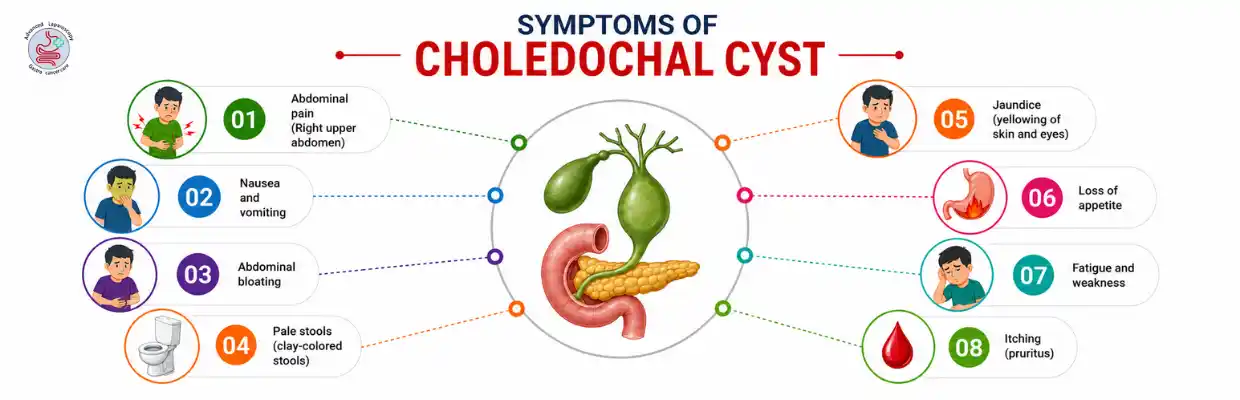
Symptoms of Choledochal Cyst Excision

Symptoms vary depending on the patient's age and the size of the cyst.

Common symptoms include:

  • Abdominal Pain: Persistent or recurrent pain in the upper right side or middle of the abdomen is one of the most common complaints.
  • Jaundice: When bile cannot drain properly, bilirubin accumulates in the bloodstream, causing yellow discoloration of the eyes and skin.
  • Fever: Fever often indicates infection within the bile ducts, known as cholangitis, which requires immediate medical attention.
  • Nausea and Vomiting: Poor bile flow affects digestion and may lead to nausea, vomiting, bloating, and loss of appetite.
  • Palpable Abdominal Mass: Children sometimes develop a noticeable swelling in the upper abdomen due to enlargement of the bile duct.

Other symptoms may include:

  • Dark-colored urine
  • Pale stools
  • Itching
  • Fatigue
  • Recurrent pancreatitis
  • Unexplained weight loss

Because these symptoms overlap with gallstones and other liver disorders, proper evaluation is essential.

Diagnosis Methods

An accurate diagnosis is essential to confirm the presence of a choledochal cyst and determine the most suitable treatment plan. Your doctor may recommend a combination of imaging scans and blood tests to evaluate the bile ducts, liver, and surrounding organs.

  • Ultrasound Abdomen: An abdominal ultrasound is usually the first imaging test performed. It helps detect enlargement of the bile ducts and identify associated conditions such as gallstones or liver abnormalities.
  • MRCP (Magnetic Resonance Cholangiopancreatography): MRCP is the gold-standard imaging test for diagnosing a choledochal cyst. It provides detailed images of the bile ducts without the need for surgery or invasive procedures, helping surgeons plan the treatment accurately.
  • CT Scan: A CT scan produces detailed cross-sectional images of the abdominal organs, helping doctors accurately evaluate the size, location, and extent of the choledochal cyst. It helps evaluate the size and extent of the cyst and detect any complications involving nearby organs.
  • Liver Function Tests: Liver function tests are blood investigations that evaluate how effectively the liver is functioning and help identify any signs of liver damage or bile duct obstruction. They also help identify bile duct blockage, infection, or liver inflammation associated with a choledochal cyst.

Types of Choledochal Cysts

Choledochal cysts are classified into different types based on their location and the pattern of bile duct enlargement. Identifying the type of cyst helps surgeons choose the most appropriate surgical approach and achieve better treatment outcomes.

  • Type I: Type I is the most common form, accounting for nearly 80–90% of all cases. It involves abnormal enlargement of the common bile duct and is usually treated with complete cyst removal and bile duct reconstruction.
  • Type II: Type II is a rare type in which a small pouch-like diverticulum develops from the bile duct. Surgical removal of the diverticulum is typically recommended to prevent future complications.
  • Type III: Also known as a choledochocele, Type III develops within the wall of the duodenum where the bile duct enters the intestine. Treatment depends on the size of the cyst and the symptoms experienced by the patient.
  • Type IV: Type IV is characterized by multiple cysts affecting both the intrahepatic and extrahepatic bile ducts. This type often requires more extensive surgical management due to the involvement of multiple bile duct segments.
  • Type V: Type V, also called Caroli disease, involves multiple cystic dilations within the bile ducts inside the liver. Management depends on the extent of liver involvement and may include surgery or other specialized treatments.

Understanding the type of choledochal cyst is essential for planning the most effective treatment. Early diagnosis and timely surgical intervention help reduce the risk of complications and improve long-term liver and digestive health.

Surgical Treatment Options

Modern surgical management of choledochal cysts focuses on completely removing the diseased bile duct and restoring normal bile flow to prevent future complications. With advancements in minimally invasive techniques, patients today benefit from safer procedures, reduced pain, and faster recovery.

  • Open Choledochal Cyst Excision: Open surgery involves a larger abdominal incision to access and remove the cyst. It is often recommended for complex or advanced cases, though recovery time and hospital stay are generally longer compared to minimally invasive methods.
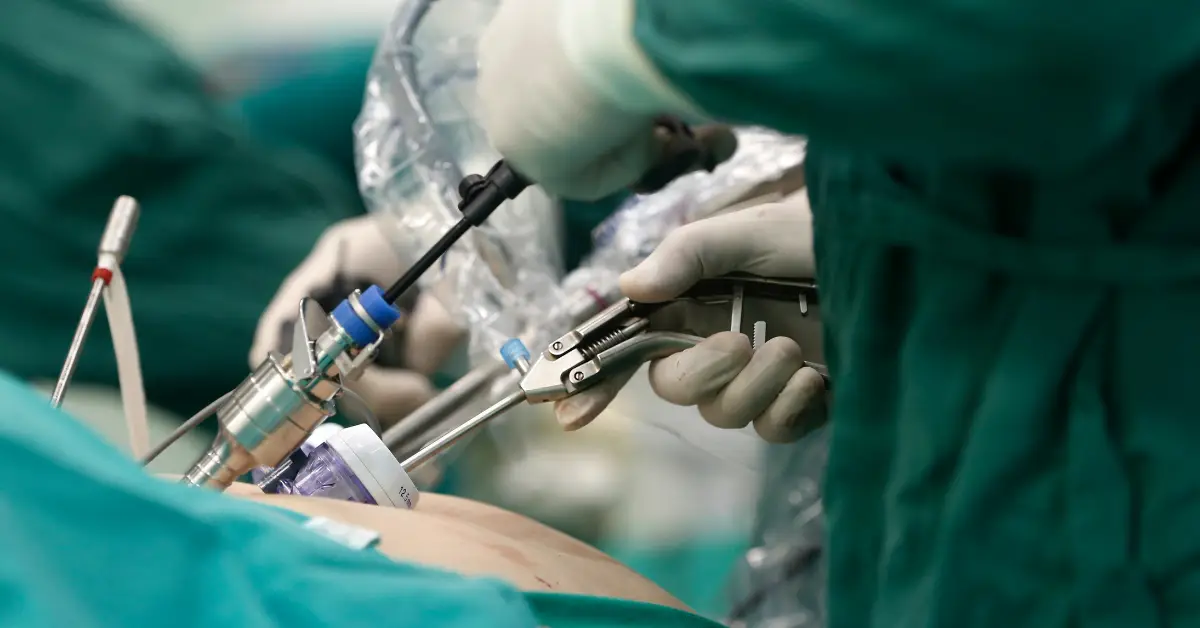
  • Laparoscopic Choledochal Cyst Excision: Laparoscopic surgery is performed using small keyhole incisions with a camera and specialized instruments. It offers several benefits, including less postoperative pain, minimal scarring, reduced blood loss, faster recovery, and shorter hospital stay, making it a preferred choice for many patients undergoing Choledochal Cyst Treatment in Chennai.
  • Robotic-Assisted Surgery: Robotic-assisted surgery is an advanced technique that enhances surgical precision using a robotic platform. It provides high-definition 3D vision, improved dexterity in tight spaces, and more accurate reconstruction, leading to better outcomes in selected patients.

Overall, the choice of procedure depends on the patient's condition, cyst complexity, and overall health. Consulting experienced specialists ensures the most appropriate surgical approach and safer outcomes. Patients often seek the Best Choledochal Cyst Doctors in Chennai for expert evaluation and advanced minimally invasive care.

Procedure: How Choledochal Cyst Excision is Done

Understanding the procedure often helps reduce anxiety before surgery.

  • Step 1: General Anesthesia: The procedure is performed under general anesthesia, ensuring the patient remains completely asleep and pain-free throughout the surgery.
  • Step 2: Accessing the Bile Duct: The surgeon accesses the affected bile duct using either laparoscopic, robotic-assisted, or open surgical techniques, depending on the patient's condition and surgical requirements.
  • Step 3: Complete Cyst Removal: The abnormal bile duct and cyst are carefully removed while preserving the surrounding blood vessels and tissues. Complete removal helps reduce the risk of future complications, including bile duct cancer.
  • Step 4: Bile Duct Reconstruction: After removing the cyst, the surgeon reconstructs the bile drainage pathway to restore the normal flow of bile from the liver to the intestine.
  • Step 5: Roux-en-Y Hepaticojejunostomy: A healthy bile duct is connected to the small intestine using a Roux-en-Y hepaticojejunostomy. This reconstruction ensures effective long-term bile drainage and supports normal digestion.
  • Step 6: Drain Placement: A temporary surgical drain may be placed to monitor healing and detect any bile leakage after surgery. It is usually removed once recovery is progressing well.

Risks and Possible Complications

Like all major surgeries, choledochal cyst surgery carries certain risks, although complications are relatively uncommon when performed by experienced surgeons.

Potential complications include:

  • Bile Leakage: Small amounts of bile may leak from the reconstructed bile duct during healing.
  • Infection: Wound infection or abdominal infection can occasionally occur and is usually treated with antibiotics.
  • Stricture Formation: Scar tissue may narrow the new bile duct connection over time, requiring further treatment.
  • Pancreatitis: Inflammation of the pancreas is an uncommon but recognized complication.
  • Bleeding: Careful surgical techniques minimize blood loss, although bleeding remains a possibility during any major operation.

Early diagnosis, experienced surgical care, and regular follow-up significantly reduce these risks.

Recovery After Surgery

Recovery after choledochal cyst surgery varies depending on the type of procedure performed and the patient's overall health. Most patients experience a smooth recovery with proper postoperative care and regular follow-up. Following your surgeon's instructions on diet, activity, and medications helps promote faster healing and reduces the risk of complications.

  • Hospital Stay: Patients undergoing laparoscopic or robotic surgery typically stay in the hospital for 4–6 days, while those having open surgery may require a slightly longer stay. The duration depends on the individual's recovery and overall condition.
  • Diet Progression: Patients usually begin with clear fluids before gradually progressing to soft foods and a normal balanced diet. This gradual approach allows the digestive system to heal and function comfortably after surgery.
  • Physical Activity: Light walking is encouraged soon after surgery to improve circulation and support recovery. Heavy lifting and strenuous activities should be avoided for several weeks until your surgeon confirms complete healing.
  • Follow-Up Care: Regular follow-up appointments help monitor healing, liver function, and bile drainage after surgery. Most patients can return to their normal daily activities within four to six weeks following minimally invasive surgery.

Benefits of Surgery

Successful surgery provides long-term health benefits that extend well beyond symptom relief.

Some of the major advantages include:

  • Significant reduction in bile duct cancer risk
  • Prevention of recurrent infections
  • Better bile drainage
  • Improved digestion
  • Relief from abdominal pain
  • Prevention of recurrent pancreatitis
  • Protection of liver function
  • Long-term quality of life improvement
  • Smaller scars with minimally invasive surgery
  • Faster recovery and earlier return to work

Patients seeking Choledochal Cyst treatment in Porur often choose minimally invasive surgery because it combines safety with quicker recovery.

Why Choose Dr. Dinesh Ramaswamy?

Choosing the right surgeon plays an important role in achieving successful surgical outcomes. Dr. Dinesh Ramaswamy is an experienced Surgical Gastroenterologist with more than 15+ years of expertise in managing complex gastrointestinal, hepatobiliary, pancreatic, liver, and minimally invasive surgeries.

His clinical practice focuses on:

  • Advanced laparoscopic gastrointestinal surgery
  • Robotic gastrointestinal surgery
  • Hepatobiliary surgery
  • Pancreatic surgery
  • Gallbladder surgery
  • Hernia surgery
  • Gastrointestinal cancer surgery
  • Colorectal surgery

Patients benefit from:

  • Individualized treatment planning
  • Evidence-based surgical care
  • Advanced minimally invasive techniques
  • Comprehensive preoperative evaluation
  • Dedicated postoperative follow-up

He is associated with reputed hospitals across Chennai, allowing patients to access specialized gastrointestinal care with modern surgical facilities. Many patients searching for the Choledochal Cyst Excision in Vadapalani seek experienced specialists who routinely perform advanced hepatobiliary procedures with a focus on patient safety and long-term outcomes.

Conclusion

A choledochal cyst is a serious condition that can lead to infections, pancreatitis, liver damage, and an increased risk of bile duct cancer if left untreated. Choledochal Cyst Excision is the most effective treatment to remove the cyst, restore normal bile flow, and prevent long-term complications. With over 15+ years of experience, Dr. Dinesh Ramaswamy provides advanced laparoscopic and robotic surgical care, helping patients achieve a safe procedure, faster recovery, and improved long-term health.

Read more: Best Gastroenterologist in Porur

Frequently Asked Questions

Common questions about Choledochal Cyst Excision and our services

Yes. Choledochal cysts carry a lifelong risk of infection and cancer, even in asymptomatic patients. Surgery is recommended once diagnosed to prevent future complications and irreversible liver damage.

No. Non-surgical treatments like stenting or drainage do not eliminate cancer risk. Complete surgical excision is the only definitive and preventive treatment.

Patients require periodic liver function tests and imaging. Regular follow-up ensures early detection of strictures and maintains long-term liver health after reconstruction.

Treatment options include open surgery, laparoscopic (keyhole) surgery, and robotic-assisted surgery. The choice depends on the patient’s condition, cyst type, and surgeon’s recommendation.

Most patients recover within 4–6 weeks after minimally invasive surgery. Open surgery may require a longer recovery period depending on the complexity of the procedure.

Laparoscopic surgery offers many advantages such as smaller scars, less pain, reduced blood loss, and faster recovery. However, the final approach depends on the individual case.

MRCP (Magnetic Resonance Cholangiopancreatography) is a specialized scan used to get detailed images of the bile ducts. It helps doctors accurately diagnose the cyst and plan surgery.

Yes, if left untreated, choledochal cysts carry an increased risk of bile duct cancer over time. This is why early surgical removal is strongly recommended.

Yes, when performed by experienced surgeons, it is a safe and effective procedure with a high success rate and good long-term outcomes.

Patients usually start with liquids, then progress to soft foods, and gradually return to a normal balanced diet as digestion improves.

You should consult a specialist for Choledochal Cyst Treatment in Chennai if you experience symptoms such as abdominal pain, jaundice, fever, or recurrent digestive issues, or if imaging shows a bile duct cyst.

Explore Our Latest Vlogs

Stay updated with expert insights, latest trends, and helpful articles.

Need Medical Assistance? Book an Appointment Now!

Take the first step toward better digestive health. Book an appointment with our laparoscopy and gastroenterology team to receive expert care, clear guidance, and advanced minimally invasive solutions tailored to your needs.