Chennai Laparoscopy

Dr. Dinesh Ramaswamy

Abscess / Cyst Drainage

A minor surgical procedure removes infected fluid, eases pain, accelerates healing, and helps prevent further complications effectively.
Abscess / Cyst Drainage in Chennai

Abscesses and cysts can cause pain, swelling, and discomfort, affecting your daily activities if left untreated. Early medical attention helps prevent the infection from worsening and reduces the risk of complications. Abscess / Cyst Drainage Treatment in Chennai offers a safe and effective solution to remove accumulated pus or fluid and promote faster healing. With timely treatment, patients can experience relief from symptoms and return to their normal routine quickly.

About Abscess / Cyst Drainage

What is an Abscess?

An abscess is a localized collection of pus that develops when the body fights a bacterial infection. It appears as a painful, swollen, and red lump under the skin containing pus, dead cells, and bacteria. Common areas include the underarms, buttocks, and groin where friction is frequent. If not treated early, it can worsen and may require Abscess / Cyst Drainage Treatment in Chennai for effective relief.

What is a Cyst?

A cyst is a closed sac-like structure filled with fluid, semi-solid material, or keratin. Unlike abscesses, it is not always caused by infection and may develop due to blocked glands or trapped skin cells. Cysts are often painless initially but can become painful or inflamed if infected. In such cases, patients may need Abscess / Cyst Drainage Treatment in Chennai for proper management.
Abscess Cyst Drainage Treatment in chennai

Causes of Abscess and Cyst Formation

Understanding the root cause helps prevent recurrence and ensures better long-term skin health. Abscesses and cysts usually develop when bacteria enter the skin through small cuts or blocked follicles, or when natural skin secretions get trapped. In some cases, underlying health issues or poor wound healing can also contribute to repeated infections. 

  • Bacterial infections: When bacteria enter through a small cut, pore, or hair follicle, the immune system reacts by forming pus, leading to an abscess.
  • Blocked oil glands or hair follicles: When natural skin secretions get trapped, they form cysts that may later become infected.
  • Skin injuries or trauma: Minor cuts, insect bites, or friction injuries can introduce bacteria under the skin.
  • Poor hygiene or recurrent infections: Improper cleaning of skin folds can increase bacterial buildup and infection risk.
  • Underlying inflammatory conditions: Certain skin disorders make individuals more prone to recurring lumps and cysts.
  • Post-surgical complications: Sometimes, infections can develop at surgical sites if healing is delayed.

In such cases, timely medical care becomes important to avoid worsening infection. Early evaluation can help determine whether conservative care or Abscess / Cyst Drainage Treatment in Chennai is required for effective recovery. Proper hygiene, wound care, and follow-up also play a key role in preventing recurrence.

Abscess vs Cyst Comparison

Feature Abscess Cyst
Cause Usually caused by infection Usually caused by blocked glands or tissue changes
Pain Painful and tender Usually painless
Appearance Red, swollen lump Smooth, round lump
Contents Pus Fluid or semi-solid material
Growth Develops quickly Grows slowly
Treatment Antibiotics and drainage Observation or surgical removal

Symptoms of Abscess or Cyst

Identifying the early signs of an abscess or cyst is essential to ensure prompt treatment and avoid further complications.  These conditions often start as mild skin changes but can quickly become painful and infected if ignored.

  • Swelling or lump under the skin
  • Redness and warmth in the area
  • Pain or tenderness
  • Pus or fluid discharge
  • Fever in severe infections
  • Increase in size over time

If these symptoms worsen, consulting a specialist for Abscess / Cyst Drainage Treatment in Chennai becomes important to avoid complications.

When Do You Need Drainage Surgery?

Not every skin lump or swelling needs a surgical procedure, but when an infection progresses or forms a pus-filled pocket, drainage becomes the most effective treatment. Recognizing the warning signs early helps prevent complications like spreading infection, severe pain, or deeper tissue involvement. In such cases, a specialist may recommend Abscess / Cyst Drainage Treatment in Chennai

  • The swelling is painful and increasing in size:  When a lump keeps growing and becomes more painful, it usually means pus is collecting inside, increasing pressure under the skin and making the condition worse.
  • There is pus formation or infection: Visible pus, discharge, or a warm, red swelling clearly indicates an active infection that typically will not resolve without proper drainage.
  • Antibiotics alone are not effective: If swelling or infection does not improve with medication, it often indicates that pus is still collected inside, and a simple drainage procedure may be needed for full healing. 
  • The lump is large or deep: Deep or larger infections often do not respond well to medicines alone and may need a small surgical procedure for safe and complete treatment.
  • There is risk of rupture or spread of infection: When the infection begins to spread or shows signs of bursting, timely drainage is important to control it and avoid further complications.

Abscess & Cyst Drainage Procedure

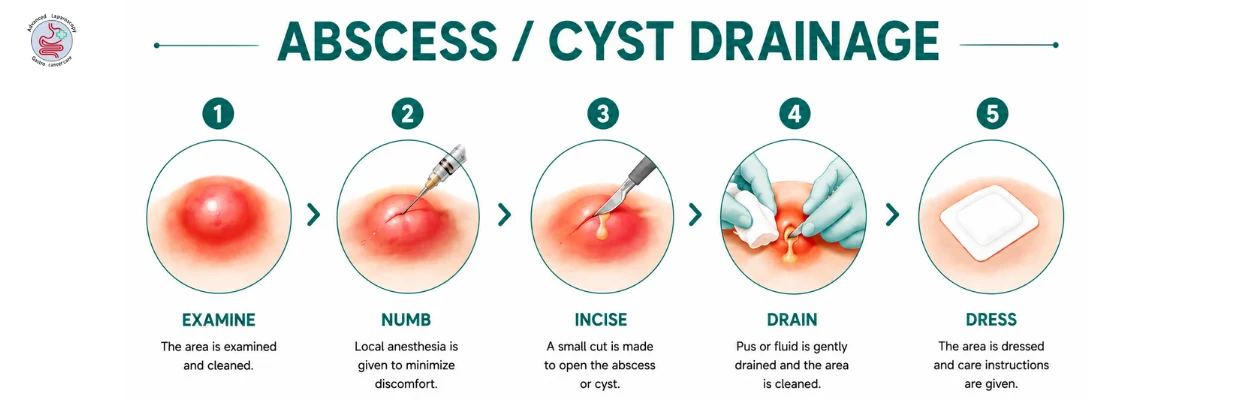
The drainage procedure is simple, safe, and usually performed under local anesthesia.

  • Examination & Diagnosis: The surgeon carefully examines the lump and may use imaging like ultrasound to understand the depth and extent of infection. This helps in selecting the most appropriate and safest treatment approach, ensuring improved recovery and better clinical results. 
  • Local Anesthesia: The affected area is numbed using local anesthesia to ensure the patient feels little to no pain during the procedure. This makes the drainage process comfortable and stress-free.
  • Incision & Drainage: A minor cut is created to access the infected area and fully remove the accumulated pus or fluid. This step provides immediate relief from pressure and pain.
  • Cleaning the Area: The interior of the infected cavity is carefully irrigated and cleared to eliminate all residual infected tissue and debris. This helps reduce the chances of recurrence and promotes faster healing.
  • Dressing & Aftercare: A clean, sterile bandage is placed over the wound to safeguard it from infection and promote proper healing. Patients are also given clear aftercare instructions for smooth recovery.

This is the core of Abscess / Cyst Drainage Treatment in Chennai, ensuring both comfort and effective infection control.

Types of Drainage Procedures

Abscesses and cysts can vary in depth, size, and severity, so the treatment approach is not the same for every patient. Depending on the type of infection, different drainage procedures are used to ensure complete removal of pus and proper healing. In some cases, specialists may recommend Abscess / Cyst Drainage Treatment in Vadapalani for advanced and accessible care.

  • Simple skin abscess drainage: A minor procedure used for small, superficial abscesses where pus is removed through a small incision for quick relief.
  • Deep abscess drainage (image-guided): Used for deeper infections, where imaging techniques help locate and safely drain pus from internal areas.
  • Infected cyst drainage: Performed when a cyst becomes infected, helping remove fluid and reduce inflammation for proper healing.
  • Recurrent abscess surgical drainage: Recommended for repeated infections, focusing on complete removal to prevent recurrence.
  • Perianal or pilonidal abscess drainage: A specialized procedure for infections near sensitive areas, ensuring safe drainage and faster recovery.

Benefits of Abscess & Cyst Drainage

These benefits explain why drainage is often recommended for infected abscesses and cysts. The procedure not only provides quick symptom relief but also ensures proper removal of infection and supports smooth healing.

  • Immediate pain relief: Helps reduce pressure built by pus or fluid, giving fast relief from discomfort.
  • Removal of infection source: Clears out trapped pus, which is the main cause of infection and swelling.
  • Faster healing process: Once the infection is drained, the body heals more quickly and effectively.
  • Minimally invasive procedure: A small, simple procedure with minimal cuts and less trauma to the skin.
  • Prevents spread of infection: Stops bacteria from spreading to nearby tissues and worsening the condition.
  • Short recovery time: Most patients recover quickly and return to normal activities within a few days.

Recovery After Drainage Surgery

  • Immediate Care After the Procedure: After drainage surgery, the area is cleaned and covered with a sterile dressing to protect it from infection. Mild pain or discomfort is normal and usually settles quickly with proper care.
  • Wound Cleaning and Dressing Care: Keeping the wound clean and changing dressings regularly helps prevent infection and supports faster healing. Proper hygiene at home is essential for smooth recovery.
  • Medications and Antibiotic Support: Doctors may prescribe antibiotics and pain relief medicines to control infection and reduce discomfort. Completing the full course of medication ensures complete recovery.
  • Daily Activities and Rest Guidelines: Patients should avoid pressure on the treated area and take adequate rest for a few days. Light activities can be resumed gradually as healing improves.
  • Follow-up Visits with the Surgeon: Follow-up visits help the doctor monitor healing and ensure there are no complications. These visits are important for proper recovery and dressing care adjustments.

Recovery Timeline After Abscess & Cyst Drainage

Recovery after abscess or cyst drainage is usually smooth when proper wound care and follow-up are followed. The healing process may vary depending on the size, location, and severity of the condition.

  • In the first 24–48 hours, patients may experience mild pain, swelling, and some fluid drainage from the treated area. This is normal and usually improves with prescribed medications and proper dressing care.
  • During the first week, discomfort gradually reduces, and the infection starts to settle. Regular dressing changes and maintaining hygiene are important to support faster healing and prevent reinfection.
  • By the second to third week, most patients notice significant improvement, with reduced swelling and near-normal daily activity levels. Minor tenderness may still be present in some cases.
  • Within 4 to 6 weeks, complete healing is typically achieved for most abscesses and cysts. The risk of recurrence is also low if the underlying cause has been properly treated and follow-up care is maintained.

Recovery Tips

  • Keep the wound clean and dry at all times
  • Take all prescribed antibiotics and pain medications
  • Avoid touching or pressing the treated area unnecessarily
  • Attend all follow-up visits for proper monitoring
  • Report symptoms like fever, increasing pain, or pus discharge immediately

Early treatment and good post-procedure care play a key role in ensuring faster recovery and preventing complications.

Why Choose Dr. Dinesh Ramaswamy?

Choosing the right surgeon is essential for safe treatment and faster recovery in abscess and cyst cases. With expert evaluation and advanced surgical techniques, patients receive accurate diagnosis and effective care. Under the guidance of Dr. Dinesh Ramaswamy, treatments like Abscess / Cyst Drainage Treatment in Chennai are performed with high precision and safety. Many patients also seek for Best Doctor for Abscess / Cyst Drainage for accessible and well-equipped medical support. 

  • Experienced General, Laparoscopic & Robotic Surgeons: Highly skilled surgeons with extensive expertise in treating abscesses and cysts using advanced laparoscopic and robotic-assisted surgical techniques for precise care.
  • Advanced sterile operation techniques: Strict sterile methods are followed to prevent infection and ensure patient safety during the procedure.
  • Minimally invasive procedures: Small incisions are used to reduce pain, scarring, and recovery time after treatment.
  • Accurate diagnosis using imaging tools: Imaging tests like ultrasound help identify the exact location and depth of the infection for precise treatment.
  • Personalized treatment plans: Each patient receives a customized approach based on their condition, severity, and medical history.

Dr. Dinesh Ramaswamy has extensive experience in treating skin infections, abscesses, and cysts using minimally invasive methods that ensure less pain and faster healing. His approach focuses on accurate diagnosis, root-cause management, and personalized care to ensure long-term recovery and prevent recurrence.

Conclusion

Abscesses and cysts may begin as minor skin issues, but they can quickly become painful and troublesome if left untreated. Early medical attention and timely drainage are important to prevent complications and support faster healing. Abscess / Cyst Drainage Treatment in Chennai offers a safe, minimally invasive, and effective solution for infected or persistent lumps. With proper care, hygiene, and follow-up, most patients recover well without long-term problems and get the right treatment plan from a specialist. 

Read more: STARR Procedure


Frequently Asked Questions

Common questions about Abscess / Cyst Drainage and our services

Small abscesses may respond initially, but most require drainage. Antibiotics cannot penetrate thick pus effectively. Drainage removes the source of infection and allows antibiotics to work better.

The procedure is performed under anesthesia, so pain is minimal. Most patients experience significant relief immediately after drainage due to reduced pressure and inflammation.

Drain duration depends on abscess size and infection severity. It may remain for a few days until drainage reduces and imaging confirms resolution.

The first stage of an abscess usually begins with localized inflammation caused by an infection. The affected area may appear red, swollen, warm, and tender to the touch. As the infection progresses, pus starts to collect beneath the skin, leading to increased pain and swelling.

An abscess should not be left untreated, as it can worsen over time and lead to complications. Some small abscesses may persist for days or weeks, while larger infections can spread to surrounding tissues or the bloodstream. Seeking prompt medical treatment helps prevent serious health risks and promotes faster recovery.

You should seek medical attention if you notice persistent swelling, increasing pain, redness, fever, drainage, or a lump that continues to grow over time.

Recurrence is possible, especially if the underlying cause is not addressed. Complete treatment and regular follow-up can significantly reduce the chances of recurrence.

Common symptoms include a visible lump, swelling, mild discomfort, or pressure in the affected area. Infected cysts may become red, painful, and swollen.

Abscesses commonly develop due to bacterial infections, blocked glands, ingrown hairs, or infections following injury. Prompt treatment helps prevent complications and recurrence.

Common signs include pain, redness, swelling, warmth around the area, and pus formation. Some patients may also develop fever and fatigue if the infection becomes severe.

Yes, a cyst can become infected and develop pain, redness, swelling, and discharge. In such cases, medical treatment or drainage may be necessary.

Explore Our Latest Vlogs

Stay updated with expert insights, latest trends, and helpful articles.

Related Blogs

No data was found

Need Medical Assistance? Book an Appointment Now!

Take the first step toward better digestive health. Book an appointment with our laparoscopy and gastroenterology team to receive expert care, clear guidance, and advanced minimally invasive solutions tailored to your needs.