Facing surgery can be a stressful experience. Many patients feel anxious about pain, recovery time, and whether they’re choosing the right specialist. If you’ve been exploring surgical options, especially minimally invasive or robotic procedures, you may be wondering what robotic surgery is, how it works, and who can provide the best care. For those seeking precision, safety, and a smoother recovery, the Robotic Surgeon in Vadapalani offers expertise and reassurance, guiding patients every step of the way. This guide is designed to explain robotic surgery in simple terms, highlight the benefits for patients, and introduce why Dr. Dinesh Ramaswamy is recognized as a leading expert in the field.
What Is Robotic Surgery?
Robotic surgery is an advanced surgical technique that allows doctors to perform complex procedures with greater precision and control. Instead of large incisions, surgeons operate through small openings using robotic instruments guided by a high-definition camera. This technology provides a magnified view of the surgical area and allows delicate procedures to be performed more accurately. Under the expertise of the Robotic Surgeon in Vadapalani, robotic surgery helps improve surgical precision and supports faster patient recovery.
Robotic Surgeon in Vadapalani
Dr. Dinesh Ramaswamy
- MBBS, MS (General Surgery), MCh (Surgical Gastroenterology), DNB, FIAGES
- 20+ Years of Surgical Experience
Dr. Dinesh Ramaswamy is widely recognized for his expertise in minimally invasive and robotic-assisted gastrointestinal surgeries. With extensive training in advanced laparoscopic and robotic techniques, he focuses on treating digestive disorders, gallbladder conditions, colorectal diseases, and complex abdominal problems with precision and safety. As a trusted robotic surgery doctor in Vadapalani, he combines modern surgical technology with a patient-focused approach to deliver effective treatment and improved recovery outcomes.
His approach emphasizes careful diagnosis, clear communication with patients, and selecting the most suitable surgical method for each condition. Patients experiencing persistent digestive problems, chronic gastrointestinal disorders, or gallbladder and colon concerns often benefit from his structured evaluation and advanced treatment strategies. By integrating surgical expertise with modern robotic technology, he aims to provide safer procedures, faster healing, and better long-term digestive health for his patients.

Conditions Treated with Robotic Surgery
Robotic-assisted surgery is suitable for a wide range of gastrointestinal and abdominal conditions. It enables surgeons to perform delicate procedures with greater precision while minimizing damage to surrounding tissues.
- Gallbladder Disorders: Gallbladder disorders such as gallstones and chronic inflammation can cause severe abdominal pain, nausea, bloating, and digestive discomfort. Robotic surgery offers a minimally invasive approach to safely remove the gallbladder through small incisions, resulting in less pain, minimal scarring, and a quicker recovery.
- Hernia: A hernia develops when an internal organ or tissue pushes through a weak area in the abdominal wall. Robotic hernia repair provides greater precision during surgery, helping strengthen the abdominal muscles while reducing postoperative pain and promoting faster healing.
- Colorectal Diseases: Robotic surgery is an advanced treatment option for various diseases affecting the colon and rectum, including polyps, diverticular disease, and inflammatory bowel conditions. Its enhanced precision helps preserve healthy tissues and supports improved surgical outcomes.
- Gastrointestinal Cancers: Robotic-assisted surgery is commonly used to treat cancers of the stomach, colon, rectum, liver, and pancreas. The advanced technology allows surgeons to remove tumors accurately while protecting nearby organs, nerves, and blood vessels whenever possible.
- Liver Disorders: Certain liver conditions, including liver tumors, cysts, and selected liver cancers, can be effectively treated using robotic surgery. The minimally invasive technique enables precise removal of diseased tissue while minimizing blood loss and supporting faster recovery.
- Pancreatic Conditions: Robotic surgery is beneficial for carefully selected pancreatic disorders such as pancreatic cysts, tumors, and chronic pancreatitis. The robotic system provides exceptional precision when operating around the pancreas and nearby vital structures.
- Stomach Disorders: Patients with stomach tumors, gastric cancer, severe ulcers, or gastric outlet obstruction may benefit from robotic surgery. This advanced approach allows effective treatment with smaller incisions, reduced discomfort, and a shorter hospital stay.
- Intestinal Disorders: Robotic surgery is used to treat several conditions affecting the small intestine, including intestinal obstruction, strictures, and certain tumors. Its precision helps preserve healthy bowel tissue while improving surgical safety and promoting a smoother recovery.
By choosing a Robotic Gastro Surgeon in Vadapalani, patients gain access to cutting-edge surgical care that prioritizes accuracy, safety, and comfort, making treatment less intimidating.
Preparation Before Robotic Surgery
Proper preparation plays an important role in ensuring that robotic surgery is performed safely and effectively. Patients are guided through a series of medical evaluations and lifestyle adjustments that help reduce surgical risks and support a smoother procedure.
- Comprehensive Medical Evaluation Before Surgery: Before scheduling surgery, doctors perform detailed health assessments including blood tests, imaging scans, and diagnostic evaluations. A Robotic doctor in Vadapalani carefully reviews these results to confirm that robotic surgery is the most suitable treatment option.
- Understanding the Procedure and Surgical Plan: Patients are given a clear explanation of the surgical process, including how the robotic system will be used and what to expect during the procedure. This discussion helps patients feel confident and mentally prepared for the surgery.
- Dietary and Medication Adjustments: Certain medications and foods may need to be temporarily adjusted before surgery to reduce potential complications. The surgeon and medical team provide specific instructions to ensure the body is well prepared for the procedure.
- Pre-Surgical Lifestyle Preparation: Maintaining good hydration, balanced nutrition, and adequate rest helps the body prepare for surgery. These simple steps strengthen the body’s ability to tolerate the procedure and support better recovery afterward.
Why Robotic Surgery is Better Than Traditional Surgery
| Robotic Surgery | Traditional Surgery |
| Small incisions with minimal scarring | Larger incisions with more noticeable scars |
| Less pain and reduced blood loss | More pain and increased blood loss |
| Shorter hospital stay and faster recovery | Longer hospital stay and recovery time |
| Greater surgical precision with 3D visualization | Limited visualization and instrument flexibility |
| Reduced chance of infection with a faster return to normal daily routines. | Higher risk of complications and delayed recovery |
What to Expect Before, During, and After Robotic Surgery
Before Surgery
- Consultation: Your first consultation involves a detailed discussion about your symptoms, medical history, current medications, and overall health. This helps the surgeon determine whether robotic surgery is the most appropriate treatment for your condition.
- Diagnostic Tests: Diagnostic tests such as blood tests, CT scans, MRI, ultrasound, endoscopy, or colonoscopy provide a clear understanding of your condition. These investigations help the surgeon plan the procedure safely and accurately.
- Preparation: Proper preparation before surgery is essential for a successful outcome. Your healthcare team will provide instructions on fasting, medication adjustments, and other preoperative guidelines to ensure you are ready for the procedure.
During Surgery
- Anesthesia: Robotic surgery is usually performed under general anesthesia, ensuring you remain asleep and pain-free throughout the procedure. An experienced anesthesia team continuously monitors your vital signs for your safety.
- Robotic-Assisted Procedure: The surgeon performs the operation through small incisions using advanced robotic instruments controlled from a surgical console. This technology enhances precision while allowing the surgeon to remain in complete control throughout the procedure.
- Surgical Precision: Robotic technology provides a high-definition 3D view and flexible instruments that allow precise movements in difficult-to-reach areas. This improves surgical accuracy while protecting nearby healthy tissues and vital structures.
After Surgery
- Recovery: Most patients experience less pain, smaller scars, and a quicker recovery after robotic surgery compared to traditional open surgery. Early walking and following medical advice help promote faster healing and reduce the risk of complications.
- Hospital Stay: Because robotic surgery is minimally invasive, patients usually have a shorter hospital stay than with conventional surgery. The exact duration depends on the type of procedure and individual recovery progress.
- Follow-Up Care: Regular follow-up visits allow your surgeon to monitor healing, review your recovery, and address any concerns. These appointments ensure that you continue recovering safely and achieve the best possible outcome.
- Activity Restrictions: Avoid heavy lifting and strenuous activities until your surgeon confirms that your body has healed adequately. If you are consulting a Robotic Surgeon in Ashok Nagar, following the recommended activity guidelines can help ensure a safe recovery and a quicker return to your normal routine.
Recovery After Robotic SurgeryRecovery After Robotic Surgery
- Follow-Up Appointments: Regular follow-up visits allow your surgeon to monitor your healing, assess your recovery progress, and address any concerns. These appointments also provide guidance on wound care, diet, medications, and when you can safely return to your normal routine.
- Recovery Timeline: Recovery after robotic gastro surgery is usually faster than traditional open surgery because the procedure involves smaller incisions and less tissue damage. Most patients can resume light daily activities within one to two weeks, while complete recovery depends on the type of surgery and individual health.
- Diet Recommendations: Your diet will be introduced gradually, starting with clear liquids before progressing to soft foods and a balanced diet as tolerated. Eating small, nutritious meals, staying hydrated, and following your surgeon’s dietary advice can support healing and improve digestion.
- Activity Guidelines: Light walking is encouraged soon after surgery to improve blood circulation and reduce the risk of complications. However, strenuous exercise, heavy lifting, and physically demanding activities should be avoided until your surgeon confirms it is safe to resume them.
- Pain Management: Mild pain or discomfort around the incision sites is normal and can usually be managed with prescribed medications. Following your pain management plan and reporting severe or persistent pain to your surgeon helps ensure a comfortable and smooth recovery.
What Are the Benefits for Patients?
Patients who undergo robotic surgery with the Robotic Surgeon in Vadapalani often experience several advantages over traditional surgical methods.
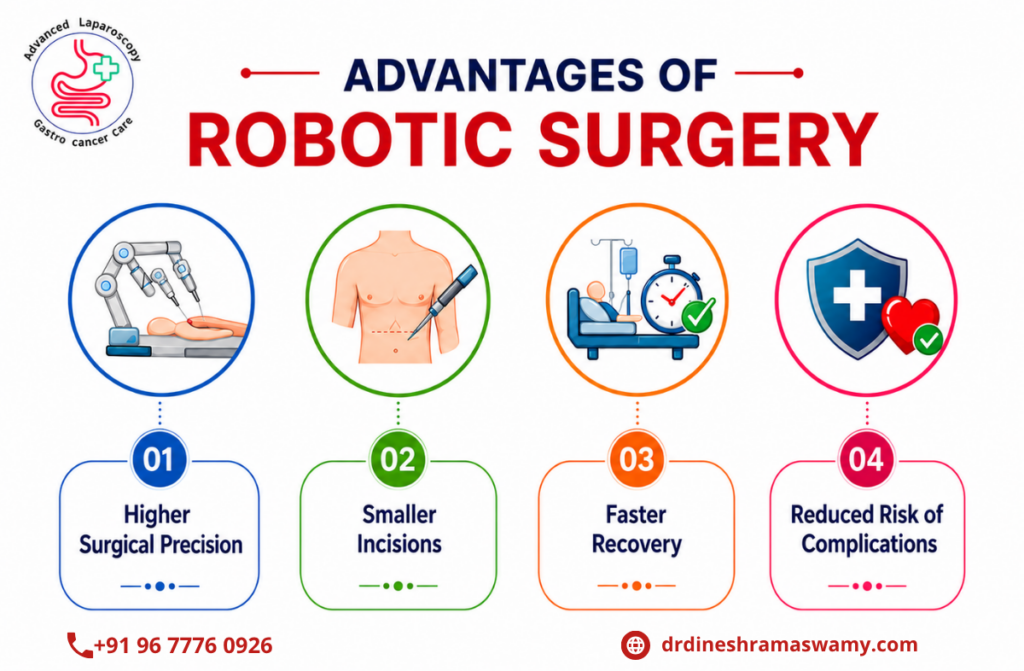
- Minimally invasive procedures: Smaller incisions lead to less pain and scarring
- Faster recovery: Many patients return to normal activities sooner
- Precision and safety: Enhanced visualization and instrument control improve surgical accuracy
- Reduced complications: Careful robotic-assisted techniques can minimize blood loss and tissue damage
- Better outcomes for complex conditions: Particularly beneficial for delicate or cancer-related surgeries
With these benefits, robotic surgery can be an ideal option for patients seeking advanced care with a focus on both safety and comfort.
Why Choose Dr. Dinesh Ramaswamy?
Dr. Dinesh Ramaswamy is widely recognized as the Robotic surgeon in Kodambakkam, combining extensive surgical expertise with advanced robotic technology. He is a Surgical Gastroenterologist and GI Oncosurgeon, specializing in complex procedures involving the liver, pancreas, colon, and other gastrointestinal organs.
With advanced training from prestigious institutions and certifications in minimally invasive laparoscopic surgery, Dr. Ramaswamy brings precision, safety, and evidence-based techniques to every procedure. His approach emphasizes patient-centered care: he ensures that every patient understands the treatment plan, recovery process, and expected outcomes.
Patients trust Dr. Ramaswamy as a robotic Surgery Specialist in Vadapalani because he blends technical expertise with compassion, providing guidance and reassurance from consultation through recovery.
Conclusion
Surgical decisions can feel overwhelming, but modern robotic technology combined with expert guidance offers peace of mind. Choosing the Robotic Surgeon in Vadapalani ensures that you receive skilled, compassionate, and technologically advanced care tailored to your specific needs. For patients facing gastrointestinal, liver, pancreatic, or colorectal surgery, consulting a robotic Surgery doctor in Vadapalani is the first step toward understanding treatment options and outcomes. With the guidance of a leading Robotic doctor in Vadapalani and the expertise of a robotic Surgery Specialist in Vadapalani, patients can expect precise procedures, faster recovery, and improved overall outcome.
Read more: Liver Specialist in Chennai