
Medically reviewed by Dr. Dinesh Ramaswamy, MBBS, MS, MCh, DNB, FIAGES. Specialist in Surgical Gastroenterology and GI Oncology. Last medically reviewed: September 2026.
Your digestive system does much more than process the food you eat. It helps your body absorb nutrients, remove waste and maintain many important functions. Inside your digestive tract also lives a large community of microorganisms known as the gut microbiome.
Diet, physical activity, sleep, stress and certain medicines can influence your digestive health and gut microbiome. The good news is that supporting your gut does not usually require expensive supplements, detox drinks or restrictive diets.
Simple habits such as eating more fibre-rich foods, including a variety of plant foods, drinking enough water and staying physically active can make a meaningful difference. If you are wondering how to improve gut health naturally, this guide explains the practical steps you can start taking.
What Is Gut Health?
Gut health generally refers to how well your gastrointestinal system functions. Your digestive tract includes the stomach, small intestine and large intestine, while organs such as the liver, pancreas and gallbladder also play important roles in digestion.
A healthy digestive system should be able to:
- Break down food properly
- Absorb nutrients
- Maintain regular bowel movements
- Protect the intestinal lining
- Support normal immune functions
- Maintain a balanced community of gut microorganisms
Gut health can vary from person to person. Having occasional gas or bloating does not necessarily mean that something is wrong with your gut. However, frequent or persistent digestive symptoms may require closer attention.
What Is the Gut Microbiome?
The gut microbiome is a large community of tiny microorganisms, mainly bacteria, that live inside your digestive system. Most of them are found in the large intestine. Many of these bacteria are helpful and play an important role in digestion. They help break down certain foods, especially fibre, and support the normal function of the digestive system.
The gut microbiome is different for every person. It can be influenced by your diet, age, lifestyle, medicines, sleep, stress, and physical activity. Eating a balanced diet with fruits, vegetables, whole grains, and other fibre-rich foods can help support a healthy gut microbiome.
Signs Your Digestive Health May Need Attention
Digestive symptoms can occur for many reasons. Diet changes, infections, constipation, food intolerances, stress and gastrointestinal conditions can all produce similar symptoms.
Common digestive complaints include:
- Frequent bloating
- Excessive gas
- Constipation
- Diarrhoea
- Irregular bowel movements
- Abdominal discomfort
- Indigestion
- Acid reflux
- Feeling unusually full after eating
An occasional episode is common and may settle on its own.
However, symptoms that continue for several weeks, frequently return or interfere with daily life should be medically evaluated rather than simply blamed on “poor gut health.”
How to Improve Gut Health Naturally
There is no single food or supplement that can completely transform your digestive system. A combination of healthy habits is generally more useful.
Here are some of the most practical ways to improve gut health naturally.
1. Eat More Fibre-Rich Foods
Fibre is one of the most important parts of a gut-friendly diet.
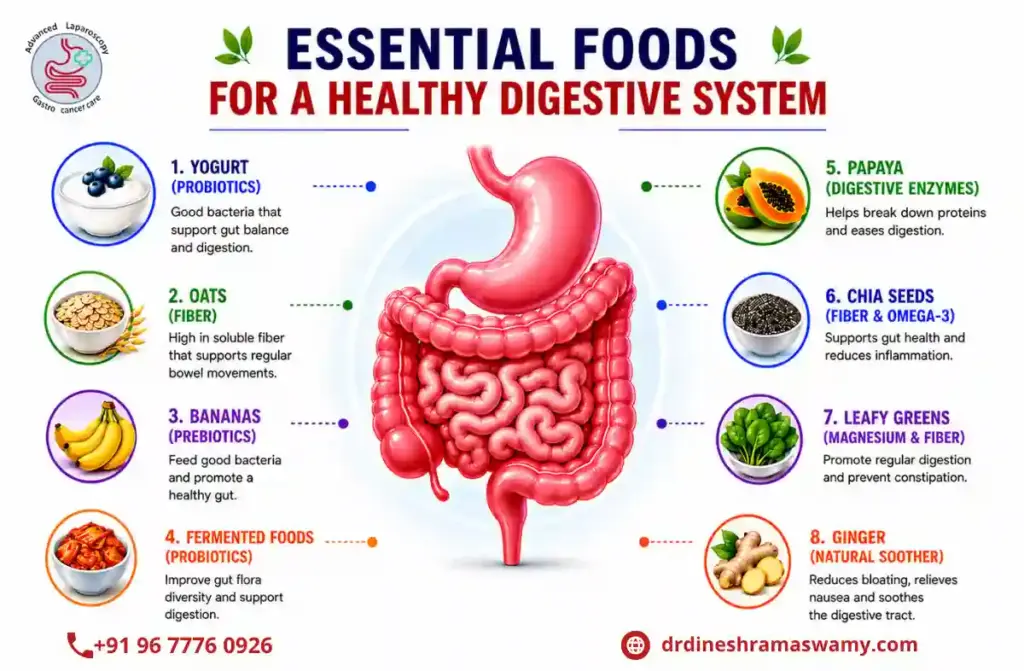
Unlike many other carbohydrates, some types of dietary fibre are not completely digested in the small intestine. They travel to the large intestine, where they can support bowel movements and provide fuel for certain gut bacteria.
Good sources include:
- Oats
- Brown rice
- Whole grains
- Beans
- Lentils
- Chickpeas
- Apples
- Pears
- Bananas
- Carrots
- Green leafy vegetables
- Nuts
- Seeds
Do not suddenly increase your fibre intake dramatically.
A rapid increase can cause gas, abdominal discomfort or bloating in some people. Increase fibre gradually and drink adequate fluids. People with certain digestive disorders may also require personalised fibre advice.
2. Eat a Greater Variety of Plant Foods
When it comes to foods for gut health, variety matters. Instead of eating the same vegetables and fruits every day, rotate different plant foods throughout the week.
For example, include combinations of:
- Vegetables
- Fruits
- Whole grains
- Lentils
- Beans
- Nuts
- Seeds
- Herbs
- Spices
Different plants contain different types of fibre and plant compounds.
A varied diet also makes it easier to obtain a broader range of vitamins, minerals and other nutrients. You do not need unusual or expensive “superfoods.” Regular foods available in an Indian kitchen can form the foundation of a gut-friendly diet.
3. Include Fermented Foods
Fermentation has been used for food preparation for centuries. Certain fermented foods contain live microorganisms, although the amount and type can differ considerably between products.
Examples include:
- Curd or yogurt containing live cultures
- Kefir
- Some traditionally fermented vegetables
- Sauerkraut
- Kimchi
Indian diets also include several fermented preparations.
However, not every fermented food should automatically be considered a probiotic. Processing, heating and storage can affect whether live microorganisms remain in the final product. Fermented foods should therefore be considered one part of an overall balanced diet rather than a treatment for digestive disease.
4. Understand Prebiotics and Probiotics
These terms are often confused.
Probiotics are live microorganisms that, when provided in appropriate amounts, may offer particular health benefits.
Prebiotics are specific substances that are used by microorganisms in the body and may provide a health benefit.
Many everyday plant foods provide fibres that support gut bacteria.
Examples include:
- Onion
- Garlic
- Banana
- Oats
- Legumes
- Certain vegetables
A simple food combination could be curd with fruit or oats with banana.
You generally do not need to purchase several probiotic supplements simply because they are marketed for “gut health.” The effects of probiotics can depend on the strain, dose and condition being treated.
5. Drink Enough Water
Hydration is especially important when you increase dietary fibre. Water helps support normal body functions and can help keep stools softer, which is particularly relevant for people who experience constipation.
Your fluid requirements depend on several factors, including climate, activity levels, body size and health conditions. A simple habit is to drink water regularly throughout the day rather than waiting until you feel extremely thirsty.
People who have been medically advised to restrict fluids should follow their doctor’s recommendations.
6. Reduce Ultra-Processed Foods
You do not need to completely ban every packaged food. However, a diet dominated by ultra-processed foods can push out healthier foods that provide fibre and essential nutrients.
Try to reduce frequent intake of:
- Sugary drinks
- Packaged sweets
- Highly processed snacks
- Refined bakery products
- Fast food
- Processed meats
- Foods containing large amounts of added sugar
Instead, make minimally processed foods the foundation of most meals.
For example, choose fruit instead of sweets for some snacks or nuts instead of highly processed snack foods. Consistency matters more than perfection.
7. Eat Slowly and Chew Your Food Properly
Digestion begins before food reaches your stomach. Eating extremely quickly can lead you to swallow more air and may contribute to discomfort or bloating in some people.
Try to:
- Sit down while eating
- Take smaller bites
- Chew properly
- Avoid rushing meals
- Pay attention to hunger and fullness
You do not need to count how many times you chew each bite. Simply slowing down can help make meals more comfortable.
8. Exercise Regularly
Physical activity benefits more than your muscles and heart. Regular movement can also support bowel function and overall digestive health. You do not need an intense workout every day.
Activities can include:
- Brisk walking
- Cycling
- Swimming
- Strength training
- Yoga
- Recreational sports
Even walking regularly can be a useful starting point if you currently spend most of your day sitting. Choose activities you can realistically maintain over the long term.
9. Manage Stress
Your brain and digestive system constantly communicate through complex neurological, hormonal and immune pathways. This relationship is commonly described as the gut-brain axis. It explains why some people develop stomach discomfort, loose stools, constipation or changes in appetite during stressful periods.
Helpful stress-management habits may include:
- Walking
- Meditation
- Yoga
- Deep breathing
- Spending time outdoors
- Regular exercise
- Maintaining social connections
- Taking breaks from work
- Relaxation activities
Stress management does not replace treatment for a gastrointestinal disorder, but it can form part of an overall digestive-health routine.
10. Get Consistent, Quality Sleep
Sleep and digestive health are closely connected through several biological processes. Irregular sleep can also affect appetite, food choices, stress levels and daily routines.
For better sleep:
- Maintain regular sleeping and waking times
- Reduce screen exposure before bed
- Avoid very heavy meals immediately before sleeping
- Limit excessive caffeine late in the day
- Keep your bedroom comfortable and quiet
- Aim for adequate sleep consistently
Improving sleep often benefits several aspects of health at the same time.
11. Avoid Unnecessary Antibiotic Use
Antibiotics are extremely important medicines when they are medically required. However, antibiotics can also affect bacteria living in the digestive tract.
They should therefore be taken only when prescribed or recommended by an appropriate healthcare professional. Do not stop a prescribed antibiotic because you are worried about your microbiome. Similarly, do not take antibiotics without medical advice for conditions where they may not be necessary.
Best Indian Foods for Gut Health
You do not need imported foods to build a gut-friendly diet. A balanced Indian diet already provides plenty of useful options.
Consider including:
- Whole grains: oats, whole wheat, millets and brown rice.
- Pulses and legumes: dal, chickpeas, rajma and other beans.
- Vegetables: carrots, beans, greens, gourds, beetroot and other seasonal vegetables.
- Fruits: banana, guava, papaya, apple, orange and other whole fruits.
- Nuts and seeds: almonds, walnuts, flaxseeds and chia seeds.
- Fermented foods: curd and other suitable traditionally fermented foods.
The important point is not to identify one “best” food. Your overall eating pattern matters much more than any single ingredient.
Foods and Habits to Limit for Better Gut Health
Instead of creating a long list of forbidden foods, focus on moderation. Try to limit frequent consumption of foods that provide plenty of calories but little fibre or nutritional value.
These may include:
- Sugary beverages
- Highly processed snacks
- Excess sweets
- Frequent fast food
- Very large fried meals
- Excess alcohol
Some people may also notice that particular foods trigger bloating, reflux or diarrhoea.
However, unnecessarily removing several food groups without identifying the actual cause can lead to an unbalanced diet. If you repeatedly develop symptoms after particular foods, discuss the pattern with a healthcare professional or qualified dietitian.
Do You Need Probiotic Supplements?
Not necessarily.
Probiotic supplements are heavily marketed for digestion, immunity, weight management and general wellness, but different probiotic strains do different things. A supplement that has been studied for one condition cannot automatically be expected to work for another.
For most generally healthy adults looking to support digestive health, improving diet quality is a sensible starting point. If you have a gastrointestinal disorder or want to take probiotics for a specific problem, ask your doctor whether a particular product is appropriate.
Can You Improve Gut Health in 7 Days?
You can certainly start healthier habits within seven days, but there is no scientifically defined seven-day “gut reset.” Be cautious about programs promising to completely detox, cleanse or rebuild your digestive system in a few days. Instead, use one week to build better habits.
For example:
Days 1–2: Increase vegetables and whole fruits while improving hydration.
Days 3–4: Add more whole grains, lentils, beans or other fibre-rich foods.
Day 5: Replace some highly processed snacks with fruit, nuts or seeds.
Day 6: Focus on physical activity, stress management and quality sleep.
Day 7: Review which changes are realistic enough to continue.
The goal should be building habits that last for months and years, not completing a temporary gut-health challenge.
How Long Does It Take to Improve Gut Health?
There is no universal timeline.
Digestive symptoms can change quickly in response to food, stress, hydration and bowel habits, while other digestive problems may continue until their underlying cause is identified and treated.
The time needed depends on factors such as:
- Your existing diet
- Bowel habits
- Physical activity
- Sleep
- Stress
- Medicines
- Food intolerances
- Existing gastrointestinal conditions
Instead of expecting your digestive system to “reset” within a certain number of days, monitor how you feel as you build healthier habits.
Common Gut Health Mistakes
One of the biggest mistakes is treating gut health as a trend rather than part of overall health.
Avoid relying heavily on:
- Expensive detox drinks
- Extreme elimination diets
- Multiple unnecessary supplements
- Juice cleanses
- “Gut reset” programs
- Unproven microbiome tests
- A single so-called superfood
A balanced diet, adequate fibre, hydration, exercise, sleep and appropriate medical care are much more practical foundations.
When Should You See a Gastroenterologist?
Lifestyle changes can help support digestive health, but persistent symptoms should not automatically be treated with diet changes or probiotics.
Seek medical evaluation if you experience:
- Blood in your stool
- Black or tarry stools
- Persistent or severe abdominal pain
- Unexplained weight loss
- Repeated vomiting
- Difficulty swallowing
- Persistent diarrhoea
- Significant changes in bowel habits
- Digestive symptoms that continue or repeatedly return
These symptoms can have many possible causes and may require medical examination or further testing.
Key Takeaway
Improving gut health is less about finding a miracle supplement and more about improving everyday habits.
Eat a varied diet containing vegetables, fruits, whole grains, legumes, nuts and seeds. Get enough fibre, stay hydrated, remain physically active, manage stress and maintain healthy sleep habits.
Fermented foods can also be included as part of a balanced diet, while probiotic supplements should be chosen based on individual needs rather than marketing claims.
Most importantly, listen to persistent digestive symptoms. Bloating, constipation, diarrhoea, abdominal pain or reflux that repeatedly affects your daily life deserves proper evaluation. A healthier gut is built through consistent habits, not a quick detox.
Conclusion
You do not need a complicated diet to improve gut health.
Start with the basics: eat more fibre-rich and varied plant foods, include suitable fermented foods, drink enough water, stay active, sleep well and manage stress. Make these changes gradually rather than trying to completely change your diet overnight.
If digestive symptoms continue despite healthy lifestyle changes, do not keep experimenting with restrictive diets or supplements. Persistent symptoms may have an underlying cause that needs proper evaluation.
Building better gut health is not about perfection. It is about creating simple, sustainable habits that support your digestive system over the long term.
Read more: Hepato Pancreatic Biliary Surgeon in Chennai