
That burning sensation in your chest after a meal. The sour taste that suddenly rises into your throat. The discomfort that seems to worsen when you lie down at night.
For millions of people, acid reflux Diet Plan is more than an occasional inconvenience—it can disrupt sleep, affect productivity, interfere with meals, and reduce overall quality of life. While occasional heartburn is common, frequent symptoms can become frustrating and may signal an underlying digestive condition that requires attention.
The encouraging news is that one of the most effective ways to manage acid reflux often starts with simple lifestyle and dietary changes. The foods you choose, the portions you eat, and even the timing of your meals can significantly influence how often reflux occurs and how severe the symptoms become.
Rather than focusing solely on what to avoid, a successful acid reflux diet emphasizes foods that support healthy digestion, reduce irritation, and help prevent stomach acid from flowing where it does not belong.
This guide explores how acid reflux develops, why diet plays such an important role, the best foods to include, common triggers to limit, a practical starter meal plan, and lifestyle habits that can help provide long-term relief.
What Is Acid Reflux and Why Does Your Diet Control It?
Acid reflux occurs when stomach acid flows backward into the esophagus, the tube that carries food from the mouth to the stomach.
Normally, a muscular valve called the lower esophageal sphincter (LES) acts as a protective barrier between the stomach and the esophagus. When functioning properly, it opens to allow food into the stomach and closes afterward to prevent stomach contents from moving upward.
However, when this valve weakens or relaxes inappropriately, stomach acid can travel back into the esophagus, causing irritation and discomfort.
Common symptoms include:
- Heartburn
- Sour or bitter taste in the mouth
- Chest discomfort after meals
- Frequent burping
- Chronic cough
- Hoarseness
- Difficulty swallowing
Why Food Matters So Much
Certain foods directly influence how the digestive system functions.
Some foods can:
- Relax the lower esophageal sphincter
- Increase stomach acid production
- Delay stomach emptying
- Increase abdominal pressure
- Trigger digestive irritation
Others help support healthy digestion and are less likely to provoke reflux symptoms.
Because food is one of the most consistent daily influences on digestive health, dietary modifications often form the foundation of long-term acid reflux management.
Did You Know?
Acid Reflux Fact
Occasional acid reflux is common, but symptoms occurring multiple times each week may indicate Gastroesophageal Reflux Disease (GERD), a condition that often benefits from dietary changes, lifestyle modifications, and medical evaluation when necessary.
7 Powerful Foods to Include in Your Acid Reflux Diet Plan
A successful acid reflux diet focuses on foods that support digestion while minimizing irritation of the esophagus.
1. Oatmeal and Whole Grains
- Oatmeal is widely regarded as one of the most reflux-friendly breakfast options. It is rich in soluble fiber, which supports digestive health, promotes fullness, and helps regulate digestion.
- Because oatmeal is naturally low in fat and acidity, it is less likely to trigger reflux symptoms than many processed breakfast foods.
- Other excellent choices include brown rice, quinoa, whole wheat products, and millets.
2. Non-Citrus Fruits
- Fruits provide vitamins, antioxidants, and fiber, but selecting lower-acid options can be beneficial for people with reflux.
- Bananas, pears, melons, and apples are often well tolerated because they are less acidic than citrus fruits and may help reduce digestive irritation.
- Including fruit as part of balanced meals supports overall health while helping maintain a reflux-friendly eating pattern.
3. Green Vegetables
- Vegetables are naturally low in fat and generally easy to digest.
- Leafy greens, broccoli, cucumber, zucchini, green beans, and asparagus provide essential nutrients without stimulating excess stomach acid production. They also contribute to healthy weight management, an important factor in controlling reflux.
- A plate filled with colorful vegetables often supports both digestive and overall health.
4. Lean Protein Sources
- Protein is essential for maintaining muscle mass and supporting overall health, but choosing lean sources is important.
- Skinless poultry, fish, lentils, beans, tofu, and egg whites provide high-quality protein while being easier to digest than heavily processed or high-fat meats.
- Meals built around lean proteins are often associated with fewer reflux symptoms.
5. Yogurt and Low-Fat Dairy
- Low-fat yogurt may support digestive health by providing protein and beneficial bacteria that help maintain a healthy gut environment.
- While some individuals tolerate dairy better than others, low-fat options are generally less likely to aggravate reflux compared with full-fat dairy products.
6. Ginger
- Ginger has long been used to support digestive comfort.
- It contains natural compounds that may help soothe the digestive tract and reduce feelings of stomach discomfort. Small amounts of fresh ginger can be incorporated into meals, soups, or herbal beverages.
- Moderation remains important, as excessive amounts may not be suitable for everyone.
7. Healthy Fats in Moderation
- Not all fats are problematic. Healthy fats found in avocados, nuts, seeds, and olive oil provide valuable nutrients and can be part of a balanced acid reflux diet.
- The key lies in moderation, as large amounts of any fat may slow digestion and increase the likelihood of reflux symptoms.
Healthy Food Swaps for Acid Reflux
| Instead Of | Choose |
| Fried Breakfast Foods | Oatmeal with Fruit |
| Sugary Snacks | Banana or Pear |
| Full-Fat Dairy | Low-Fat Yogurt |
| Potato Chips | Roasted Chickpeas |
| Cream-Based Sauces | Olive Oil-Based Dressings |
| Carbonated Drinks | Water or Herbal Tea |
Small substitutions often produce significant improvements over time.
Foods You Must Completely Avoid
- Although reflux triggers vary between individuals, certain foods consistently appear among the most common causes of symptoms.
- These foods may weaken the lower esophageal sphincter, increase acid production, or irritate the lining of the esophagus.
| Food Category | Why It Can Trigger Reflux |
| Fried Foods | Slow digestion and increase stomach pressure |
| Fatty Meals | May relax the lower esophageal sphincter |
| Spicy Foods | Can irritate the digestive tract |
| Citrus Fruits | Naturally acidic and may worsen symptoms |
| Tomato-Based Foods | High acidity may trigger heartburn |
| Chocolate | May relax the lower esophageal sphincter |
| Carbonated Beverages | Increase pressure within the stomach |
| Excess Caffeine | May worsen symptoms in sensitive individuals |
| Alcohol | Can increase reflux episodes |
A Practical Approach
Rather than eliminating foods unnecessarily, consider keeping a symptom diary. Tracking meals alongside reflux episodes can help identify personal triggers while maintaining dietary flexibility.
A 3-Day Starter Acid Reflux Diet Plan
| Day | Breakfast | Lunch | Dinner |
| Day 1 | Oatmeal with banana slices | Grilled chicken, brown rice, and vegetables | Baked fish with steamed vegetables |
| Day 2 | Whole wheat toast and low-fat yogurt | Lentil soup with salad | Grilled tofu, quinoa, and vegetables |
| Day 3 | Oats with pear slices | Brown rice with grilled fish and vegetables | Vegetable soup with whole grain bread |
Smart Snack Choices
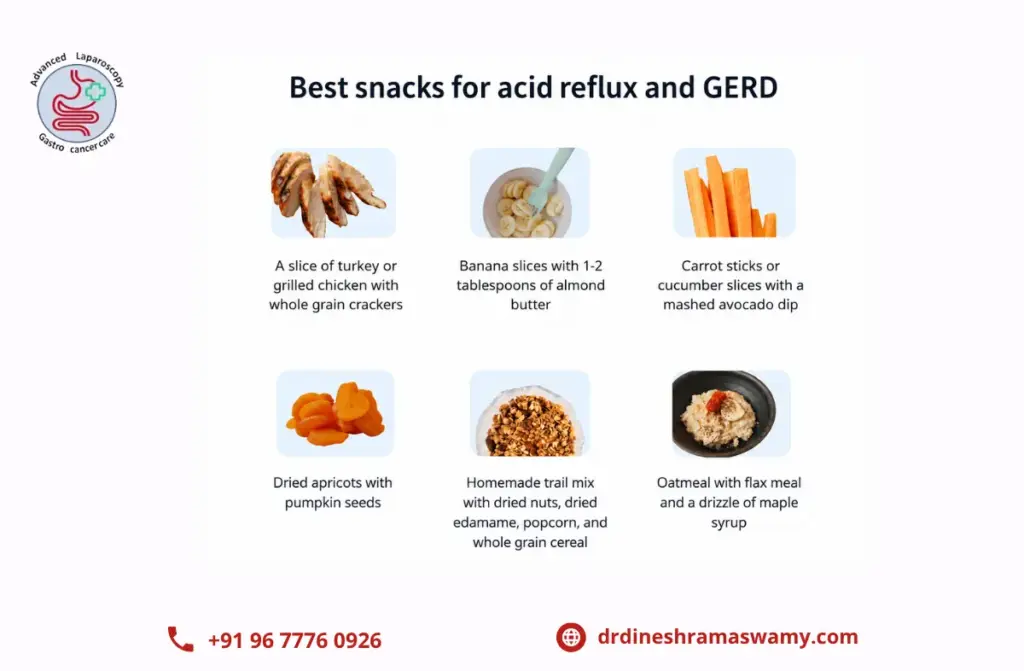
- Healthy snacks can help maintain energy without provoking reflux symptoms.
- Good options include bananas, pears, unsalted nuts, whole grain crackers, cucumber slices, and low-fat yogurt.
- Smaller meals and snacks are often easier to tolerate than large portions.
Lifestyle Habits That Strengthen Your Acid Reflux Diet Plan
Diet is only one part of successful reflux management. Several everyday habits can significantly influence symptom control.
Common Reflux Triggers Beyond Food
| Trigger | Why It Matters |
| Overeating | Increases stomach pressure and reflux risk |
| Late-Night Meals | Encourages nighttime acid reflux |
| Smoking | Weakens the lower esophageal sphincter |
| Excess Weight | Increases abdominal pressure |
| Tight Clothing | May compress the stomach |
| Chronic Stress | Can worsen symptom perception and eating habits |
Understanding these triggers often helps explain why symptoms persist even when dietary changes are made.
- Avoid Lying Down Immediately After Eating: Remaining upright for at least two to three hours after meals allows gravity to assist digestion and helps prevent stomach acid from moving upward.
- Eat Smaller, More Frequent Meals: Large meals place additional pressure on the stomach and can increase reflux episodes. Smaller portions are generally easier to digest and better tolerated.
- Maintain a Healthy Weight: Excess body weight is one of the strongest risk factors for acid reflux. Even modest weight reduction can significantly improve symptoms for many individuals.
- Elevate the Head of Your Bed: For people experiencing nighttime reflux, elevating the head of the bed may help reduce acid exposure during sleep and improve comfort.
- Avoid Smoking: Smoking can weaken the lower esophageal sphincter and contribute to persistent reflux symptoms. Avoiding tobacco benefits both digestive and overall health.
Manage Stress Effectively
- Stress does not directly cause acid reflux, but it can influence digestion, eating habits, and symptom awareness.
- Activities such as walking, meditation, deep breathing exercises, and maintaining healthy sleep habits may support overall digestive wellness.
Conclusion
Acid reflux may be common, but it should never be accepted as a normal part of everyday life. Frequent heartburn, regurgitation, and digestive discomfort are often signs that the body is responding to certain dietary habits, lifestyle factors, or underlying digestive issues.
The encouraging reality is that small, consistent changes can produce meaningful improvements. Choosing reflux-friendly foods, identifying personal triggers, maintaining a healthy weight, and adopting supportive daily habits can significantly reduce symptoms over time.
Relief rarely comes from a single meal or one lifestyle change. Instead, it is the result of many positive choices made consistently. Every balanced meal, every healthier habit, and every step toward better digestive health brings you closer to greater comfort and improved quality of life.
Read more: Ebola Virus Disease