
Medically reviewed by Dr. Dinesh Ramaswamy, MBBS, MS, MCh, DNB, FIAGES. Specialist in Surgical Gastroenterology and GI Oncology | Last reviewed: August 2026
Fruits are among the healthiest foods you can include in your daily diet. They are naturally rich in vitamins, minerals, antioxidants, fiber, and water, making them an essential part of a balanced lifestyle. Yet, one question continues to spark debate: Is eating fruits right after meals healthy?
Some people believe eating fruits after lunch or dinner improves digestion, while others think it causes bloating, acidity, or poor nutrient absorption. With so much conflicting information available online, it can be difficult to know what is actually true.
The reality is that there is no single rule that applies to everyone. The best time to eat fruit depends on your digestive health, overall diet, and any underlying gastrointestinal conditions you may have. Understanding how your digestive system processes different foods can help you make better choices for your health.
How Does Your Body Digest Fruits?
Before understanding the timing of fruit consumption, it’s important to know how digestion works.
When you eat a meal, food enters the stomach, where it is mixed with digestive acids and enzymes before gradually moving into the small intestine. Fruits contain natural sugars, fiber, water, and vitamins that are digested alongside other foods.
Contrary to popular myths, fruits do not simply “rot” inside your stomach when eaten after meals. Your digestive system is designed to process mixed meals efficiently. However, the speed of digestion varies depending on what you eat.
A heavy meal containing large amounts of fat, protein, or refined carbohydrates naturally takes longer to digest than a light meal. When fruits are eaten immediately after such meals, they remain in the stomach slightly longer because the entire meal is digested together.
For most healthy individuals, this is completely normal and does not cause harm.
Is Eating Fruits Immediately After Meals Harmful?
For most people, eating fruits after meals is generally safe. There is no strong scientific evidence suggesting that consuming fruits immediately after food is unhealthy.
However, some individuals may experience mild digestive discomfort depending on their digestive sensitivity.
You may notice symptoms such as:
- Feeling unusually full
- Mild bloating
- Increased gas
- Stomach discomfort
- Acid reflux in sensitive individuals
These symptoms are usually not caused by the fruit itself but by the overall size and composition of the meal.
If you’ve already eaten a heavy lunch and then consume a large bowl of fruit, your digestive system simply has more food to process, which may temporarily increase fullness.
Why Some People Feel Bloated After Eating Fruits
Many fruits are naturally high in fiber and certain natural sugars such as fructose.
Fiber supports healthy digestion by promoting regular bowel movements and feeding beneficial gut bacteria. However, when fiber is suddenly increased or combined with a very heavy meal, some people may notice temporary bloating.
Common fruits that may occasionally cause bloating in sensitive individuals include:
- Apples
- Pears
- Watermelon
- Mangoes
- Grapes
This doesn’t mean these fruits are unhealthy. It simply means that every digestive system responds differently.
If you frequently experience bloating after eating fruit, it may be worth observing whether certain fruits trigger your symptoms more than others.
Can Eating Fruits After Meals Affect Nutrient Absorption?
One common misconception is that fruits lose their nutritional value when eaten after meals.
In reality, your body continues to absorb vitamins, minerals, antioxidants, and fiber regardless of whether fruits are eaten before or after food.
Vitamin C, potassium, folate, and other nutrients remain available for absorption as digestion progresses naturally.
What matters most is your overall daily fruit intake, rather than the exact timing.
Including a variety of seasonal fruits regularly is far more important than worrying about whether they are eaten before or after meals.
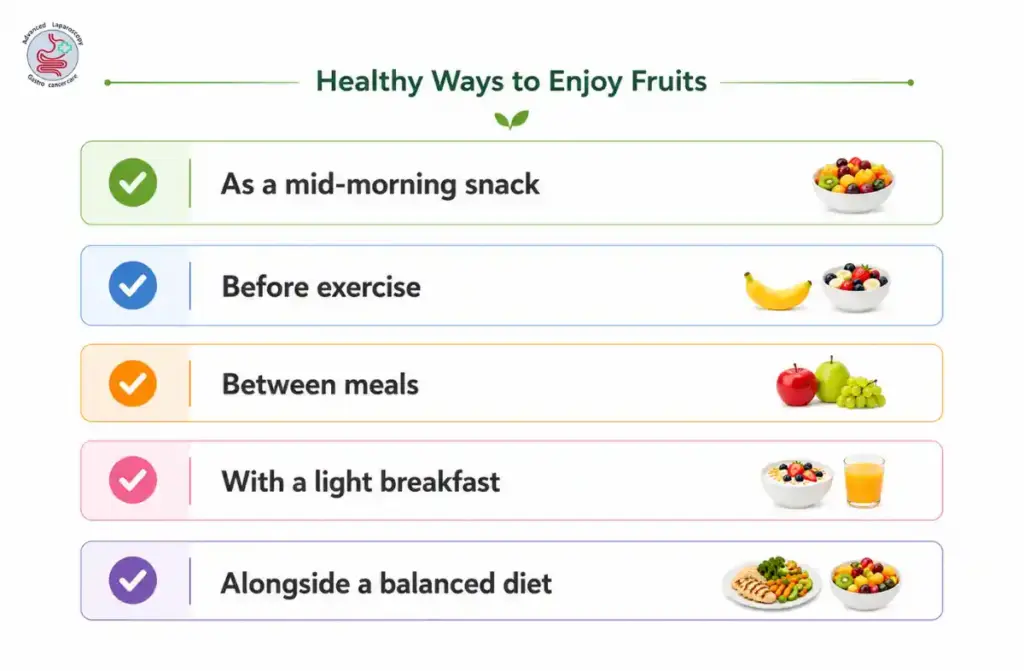
When Is the Best Time to Eat Fruits?
Although fruits can be eaten at almost any time of the day, certain timings may offer additional benefits for some people.
Between Meals
- Eating fruits as a mid-morning or evening snack can help control hunger while providing natural energy.
- This also reduces dependence on processed snacks that are high in sugar and unhealthy fats.
Before Meals
- Some people find that eating fruit 30–60 minutes before meals helps them feel satisfied, making portion control easier.
- Since fruits are rich in fiber and water, they may reduce overeating during the main meal.
After Meals
- If eating fruits after meals does not cause discomfort, there is generally no reason to avoid doing so.
- Many people naturally enjoy fruit as a healthy dessert instead of sweets or sugary snacks.
Who Should Be Careful?
Although fruits are healthy, certain individuals may benefit from adjusting the timing of fruit consumption.
People with Acid Reflux (GERD)
Highly acidic fruits such as oranges, pineapples, lemons, and sweet lime may worsen heartburn in some individuals, especially after large meals.
People with Irritable Bowel Syndrome (IBS)
Some fruits contain fermentable carbohydrates that may trigger bloating, abdominal pain, or diarrhea in people with IBS.
Examples include:
- Apples
- Pears
- Cherries
- Watermelon
A gastroenterologist or dietitian can help identify individual food triggers.
People with Diabetes
People living with diabetes do not need to avoid fruits completely.
Instead, portion size, fruit selection, and total carbohydrate intake should be considered.
Whole fruits are generally preferred over fruit juices because they contain fiber, which helps slow sugar absorption.
Choosing the Right Fruits
Not all fruits have the same nutritional profile.
Some fruits are rich in vitamin C, while others provide potassium, antioxidants, or dietary fiber.
Excellent choices include:
- Papaya
- Guava
- Apples
- Oranges
- Berries
- Pomegranate
- Kiwi
- Bananas
- Watermelon
- Muskmelon
Eating seasonal fruits in moderation provides the greatest nutritional benefit.
Practical Tips for Better Digestion
Whether you eat fruits before or after meals, these simple habits can support digestive health:
- Eat slowly and chew food properly.
- Avoid overeating during meals.
- Drink adequate water throughout the day.
- Include fiber-rich vegetables in your meals.
- Stay physically active.
- Limit ultra-processed foods.
- Avoid lying down immediately after eating.
- Choose whole fruits instead of fruit juices whenever possible.
These lifestyle habits often have a greater impact on digestion than the exact timing of fruit consumption.
Common Myths About Eating Fruits
Myth 1: Fruits Rot Inside the Stomach
- This is false.
- The stomach continuously mixes food with digestive enzymes and acids. Fruits do not remain undigested or rot inside the stomach.
Myth 2: Fruits Should Always Be Eaten on an Empty Stomach
- There is no scientific rule that requires fruits to be eaten only on an empty stomach.
- Healthy individuals can safely consume fruits at different times of the day.
Myth 3: Eating Fruits After Meals Causes Weight Gain
- Weight gain occurs when calorie intake consistently exceeds calorie expenditure—not because fruits are eaten after meals.
- In fact, replacing high-calorie desserts with fresh fruits may support healthy weight management.
When Should You See a Gastroenterologist?
Occasional bloating after meals is common and usually improves with dietary adjustments.
However, persistent digestive symptoms should not be ignored.
Consult a gastroenterologist if you experience:
- Frequent abdominal pain
- Persistent bloating
- Difficulty swallowing
- Recurrent vomiting
- Unexplained weight loss
- Blood in stools
- Ongoing acid reflux
- Chronic constipation or diarrhea
Early evaluation can help identify underlying digestive conditions and ensure timely treatment.
Conclusion
Fruits remain one of the healthiest foods you can include in your daily diet. For most healthy individuals, eating fruits immediately after meals is perfectly safe and does not reduce their nutritional value. However, people with digestive conditions such as acid reflux, IBS, or other gastrointestinal disorders may notice discomfort with certain fruits or meal combinations.
Rather than focusing only on timing, prioritize eating a wide variety of fresh, seasonal fruits as part of a balanced diet. Listen to your body’s signals, maintain healthy eating habits, and seek medical advice if digestive symptoms persist.
If you frequently experience bloating, abdominal discomfort, acid reflux, or other digestive concerns after meals, consulting a qualified gastroenterologist can help determine the underlying cause and guide you toward the most appropriate dietary and medical care.
Read more: Best Foods For Liver Health