Medically reviewed by Dr. Dinesh Ramaswamy, MBBS, MS, MCh, DNB, FIAGES Specialist in Surgical Gastroenterology, GI Oncology and Advanced Laparoscopic Surgery. Last medically reviewed: September 2026
A swelling or bulge in the groin, abdomen, or around the belly button may be a sign of a hernia. It may become more noticeable while standing, coughing, lifting heavy objects, or straining. Some hernias cause little discomfort, while others can gradually become painful and affect daily activities.
If you notice these symptoms, consulting an experienced hernia surgeon in Porur can help identify the type of hernia and determine whether monitoring or surgical treatment is required.
Dr. Dinesh Ramaswamy, Senior Surgical Gastroenterologist and GI Onco Surgeon, has experience in laparoscopic and advanced abdominal surgery. He evaluates different types of hernias and recommends treatment based on the size, location, symptoms, previous surgeries, and overall health of the patient.
What is a Hernia?
Understanding Hernia
In simple terms, a hernia occurs when an internal organ or fatty tissue pushes through a weak spot in the surrounding muscle or connective tissue wall. Think of it like a small tear in the lining of a bag — whatever is inside starts to push against that weak point, and over time, it bulges outward. The abdominal wall is usually strong enough to hold everything in place, but certain areas — around the groin, navel, or a previous surgical scar — are naturally more vulnerable.
Hernias don’t develop overnight. They usually build up gradually, often triggered by repeated strain on the abdominal muscles. A weak spot that goes unnoticed for years can slowly widen each time you lift something heavy, strain during a bowel movement, or even cough forcefully during an illness. Eventually, that weak point gives way just enough for tissue to slip through.
Common Symptoms
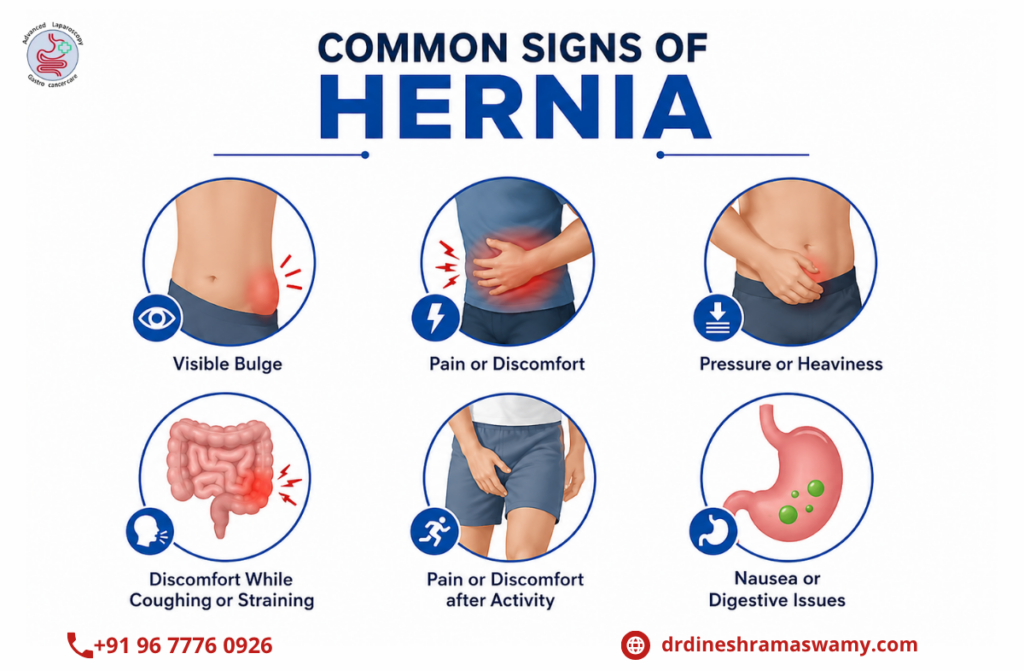
Hernias can present differently from person to person, but a few signs tend to show up consistently:
- A visible bulge under the skin, often more noticeable when standing or straining
- Pain or discomfort while lifting objects
- A burning or aching sensation at the site of the bulge
- Swelling that may come and go throughout the day
- A heavy or dragging feeling, especially after standing for long periods
If any of these sound familiar, it’s worth getting evaluated rather than waiting for symptoms to worsen.
Dr. Dinesh Ramaswamy – Hernia Surgeon in Porur
Dr. Dinesh Ramaswamy is a Senior Surgical Gastroenterologist and GI Onco Surgeon with 20 + years of experience in gastrointestinal, laparoscopic and advanced abdominal surgery. His clinical experience includes the diagnosis and surgical management of different types of hernias, including inguinal, umbilical, incisional and recurrent hernias.
His qualifications include:
- MBBS
- MS in General Surgery
- MCh in Surgical Gastroenterology
- DNB
- FIAGES
With extensive experience in minimally invasive and advanced gastrointestinal surgery, Dr. Dinesh Ramaswamy evaluates each hernia based on its type, size, symptoms and complexity. He also considers the patient’s overall health and previous abdominal surgeries before recommending treatment.

Depending on the condition, patients may be advised monitoring, open hernia repair or laparoscopic hernia surgery. The aim is to choose an appropriate surgical approach for the individual patient rather than following the same treatment plan for every hernia.
Types of Hernia
Not all hernias are the same, and the type you have determines the best treatment approach.
- Inguinal Hernia: An inguinal hernia is the most common type of hernia and occurs when tissue or part of the intestine pushes through a weak area in the groin. It is more common in men and may cause a visible bulge, pain, or discomfort, especially during lifting, coughing, or prolonged standing.
- Femoral Hernia: A femoral hernia develops when tissue protrudes through the femoral canal just below the groin. It is more common in women and has a higher risk of becoming trapped or strangulated, making early diagnosis and treatment essential.
- Umbilical Hernia: An umbilical hernia occurs when abdominal tissue pushes through a weak spot near the belly button. It is commonly seen in infants but can also affect adults, particularly those who are overweight, pregnant, or have undergone multiple pregnancies.
- Incisional Hernia: An incisional hernia forms at the site of a previous abdominal surgery due to weakness in the surgical scar. It can appear months or years after surgery and is more likely if the wound healing was delayed or heavy activities were resumed too early.
- Hiatal Hernia: A hiatal hernia occurs when part of the stomach moves upward through the diaphragm into the chest cavity. Unlike other hernias, it usually does not cause a visible lump but commonly leads to acid reflux, heartburn, and difficulty swallowing.
- Epigastric Hernia: An epigastric hernia develops when fatty tissue pushes through a weakness in the upper abdominal wall between the breastbone and the navel. It often appears as a small lump that may become more noticeable or tender during physical activity or straining.
What Causes Hernia?
Several everyday factors can contribute to the development of a hernia, often working together over time:
- Weak abdominal muscles, sometimes present from birth
- Heavy lifting, especially with improper technique
- Chronic cough from conditions like bronchitis or smoking
- Obesity, which places extra strain on the abdominal wall
- Pregnancy, due to increased abdominal pressure
- Previous abdominal surgery that weakens the muscle layer
- Long-term constipation and excessive straining
- Aging, which naturally reduces muscle elasticity
- A family history of hernias, suggesting a genetic predisposition
Who Is at Risk of Developing a Hernia?
While anyone can develop a hernia, certain groups face a higher likelihood:
- Men: particularly for inguinal hernias, due to anatomical structure
- Elderly people: as muscle tone naturally weakens with age
- Smokers: chronic coughing increases abdominal strain
- Athletes: especially those involved in heavy lifting or contact sports
- People doing heavy physical work: manual labourers and those who lift frequently
- Obese individuals: excess weight adds constant pressure on the abdominal wall
- Pregnant women: due to the added strain on abdominal tissue
When Should You Consult a Hernia Surgeon?
Not every hernia requires immediate surgery, but certain symptoms should never be ignored. Seek medical attention promptly if you notice:
- Persistent or worsening pain at the site of the bulge
- A bulge that appears to be enlarging over time
- Nausea or vomiting accompanying the discomfort
- Fever, which could indicate infection or complication
- Redness or discoloration over the swollen area
- Sudden, severe abdominal pain
- Difficulty passing stool or gas
Hernia Treatment Options
Choosing the right hernia treatment depends on factors such as the type of hernia, its size, symptoms, and overall health condition. Dr. Dinesh Ramaswamy, an experienced hernia specialist, provides advanced treatment options with a focus on safe procedures and faster recovery.
- Observation (For Small Hernias): Not every hernia needs immediate surgery. If the hernia is small, symptom-free, and not causing complications, your surgeon may recommend a watch-and-wait approach with regular monitoring.
- Open Hernia Repair: This traditional method involves a single larger incision through which the surgeon pushes the protruding tissue back into place and reinforces the weakened muscle wall, sometimes using mesh for added support.
- Laparoscopic Hernia Repair: A modern alternative, laparoscopic repair uses a few small incisions and a camera-guided approach to perform the same repair with significantly less disruption to surrounding tissue. This technique generally offers:
- Smaller incisions with minimal scarring
- Less post-operative pain
- Faster recovery and return to normal activity
- Reduced hospital stay
- Better cosmetic results overall
Benefits of Laparoscopic Hernia Surgery
| Traditional Surgery | Laparoscopic Surgery |
| Larger incision | Small incisions |
| More pain | Less pain |
| Longer recovery | Faster recovery |
| Higher infection risk | Lower infection risk |
| Longer hospital stay | Shorter hospital stay |
What to Expect Before Hernia Surgery
Preparing for hernia surgery typically involves a few straightforward steps:
- A thorough medical evaluation to assess overall fitness for surgery
- Blood tests to check general health parameters
- Imaging studies, such as an ultrasound, if further clarity is needed
- A review of current medications, especially blood thinners
- Fasting instructions, usually starting the night before the procedure
What Happens During Hernia Surgery?
During the procedure, anaesthesia is administered to ensure complete comfort — general anaesthesia is most common for hernia repairs. The surgeon then carefully repositions the displaced tissue back into the abdominal cavity. If the muscle wall is significantly weakened, a surgical mesh may be placed to reinforce the area and reduce the chance of recurrence. Most hernia repairs are completed within an hour, after which patients are moved to a recovery room for monitoring as the anaesthesia wears off.
Recovery After Hernia Surgery
- First 24 Hours: Mild discomfort and grogginess are normal immediately after surgery. Most patients can walk short distances within hours and are typically discharged the same day or the next, depending on the type of repair performed.
- First Week: Light activity is encouraged, but heavy lifting and strenuous movement should be avoided. Some swelling or bruising around the incision site is common and usually resolves on its own.
- Return to Work: Patients with desk-based jobs often return within one to two weeks, while those with physically demanding roles may need three to four weeks before resuming full duties.
- Exercise Guidelines: Gentle walking is encouraged early on, but more intense exercise, including core workouts and heavy weightlifting, should be reintroduced gradually and only after clearance from your surgeon.
- Follow-up Care: Regular follow-up visits help track healing progress, monitor the surgical site, and address any concerns before they become bigger problems.
Tips to Prevent Hernia Recurrence
A few consistent habits can significantly reduce the chance of a hernia returning:
- Maintain a healthy body weight
- Avoid heavy lifting, or use proper technique when unavoidable
- Treat chronic cough promptly rather than letting it persist
- Eat fibre-rich foods to prevent constipation and straining
- Quit smoking to reduce coughing and improve tissue healing
- Exercise regularly to maintain overall muscle strength
- Strengthen abdominal muscles through guided, low-impact routines
Why Early Hernia Treatment Is Important
Delaying treatment isn’t just uncomfortable — it can be dangerous. An untreated hernia can progress into a strangulated hernia, where blood supply to the trapped tissue is cut off, creating a life-threatening situation. This can lead to intestinal obstruction, severe and sudden pain, and the need for emergency surgery under far riskier conditions than a planned procedure. Beyond the medical risks, living with an untreated hernia often means a steadily reduced quality of life, with everyday activities like walking, lifting, or even standing becoming a source of constant discomfort.
Why Patients Trust Dr. Dinesh Ramaswamy
Dr. Dinesh Ramaswamy is a Senior Surgical Gastroenterologist and GI Onco Surgeon with 20+ years of surgical experience. As a Hernia Surgeon in Porur, he evaluates each patient carefully and recommends treatment based on the type, size and symptoms of the hernia.
- Experience in Hernia Surgery: Experienced in treating inguinal, umbilical, incisional and other abdominal wall hernias using open and minimally invasive techniques.
- Accurate Diagnosis: Clinical examination and imaging, when required, help identify the location, size and complexity of the hernia before treatment.
- Personalized Treatment: Treatment is planned according to the patient’s symptoms, age, overall health, previous surgeries and type of hernia.
- Laparoscopic Expertise: Minimally invasive hernia repair may be recommended for suitable patients, depending on their individual condition.
- Clear Patient Guidance: Patients receive clear information about treatment options, surgical procedures, recovery and follow-up care.
- Consultation in Porur: Convenient access to hernia evaluation, surgical guidance and follow-up care for patients in Porur and nearby areas.
Take the Right Step for Hernia Care
Consult a gastroenterology specialist for personalised guidance on improving digestion, managing gut-related concerns and maintaining long-term digestive health.
A hernia may start as a small, painless swelling, but increasing pain, size or discomfort should not be ignored. Proper evaluation can help determine whether monitoring or surgical repair is needed.
Dr. Dinesh Ramaswamy provides evaluation and treatment for inguinal, umbilical, incisional and other abdominal wall hernias. As an experienced hernia surgeon in Porur, he recommends open or laparoscopic repair based on the type of hernia, symptoms and individual health needs. If you develop sudden severe pain, vomiting or a hernia that cannot be pushed back, seek urgent medical care.
Read more: Best Gastroenterologist in Chennai