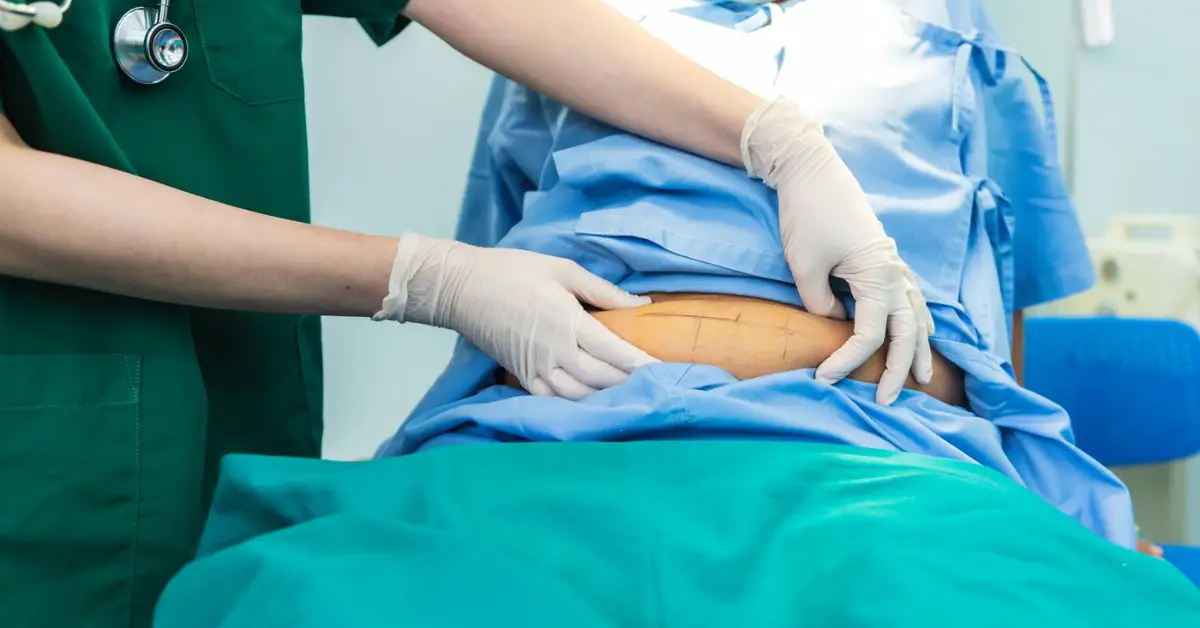
Today, minimally invasive surgery has changed how patients recover. With laparoscopic repair, the surgeon uses small cuts, a camera, and fine instruments to bring the stomach back into position and strengthen the diaphragm opening. This can provide acid reflux relief, less pain, smaller scars, and faster recovery. For patients looking for Hiatus Hernia Treatment in Chennai, consulting an experienced GI surgeon helps decide the safest plan.
Book Appointment to discuss symptoms, diagnosis, and treatment options. Hiatus Hernia Surgery in Chennai is now performed using advanced laparoscopic and robotic techniques for safer outcomes and quicker recovery.
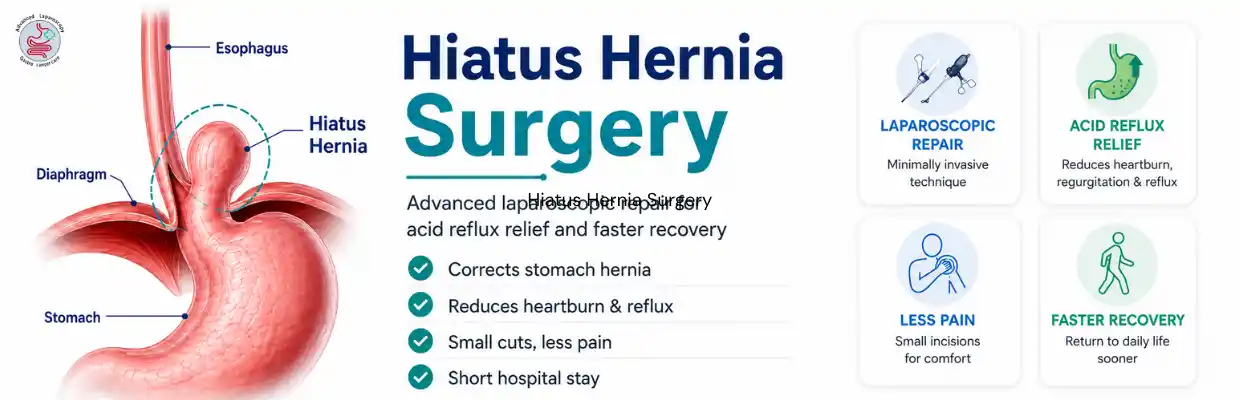
A hiatus hernia occurs when the upper portion of the stomach pushes through the natural opening in the diaphragm and enters the chest cavity. The diaphragm is a large muscle that separates the chest from the abdomen and plays an essential role in breathing. Normally, the esophagus passes through a small opening in the diaphragm before connecting to the stomach, but when this opening becomes weakened or enlarged, part of the stomach can move upward and form a hiatus hernia.
Normally, the stomach stays below the diaphragm. A hiatus hernia occurs when a portion of the stomach moves through the diaphragm into the chest cavity. This can weaken the normal anti-reflux barrier between the stomach and esophagus. As a result, stomach acid may travel back into the food pipe, causing heartburn, acid reflux, regurgitation, or chest discomfort.
| Sliding Hiatus Hernia | Paraesophageal Hernia |
| This is the most common type. The stomach and the lower part of the esophagus slide up and down through the diaphragm opening. | This is less common but can be more serious. Part of the stomach pushes beside the esophagus and may remain trapped in the chest. |
| It is commonly linked with GERD, heartburn, sour burps, and acid reflux symptoms. | Surgery is often recommended when there is risk of obstruction, twisting, bleeding, or reduced blood supply. |
| Many patients improve with lifestyle changes and medicines first. | It needs careful evaluation because complications can become urgent. |
A hiatus hernia usually does not happen because of one single reason. It often develops over time when pressure inside the abdomen increases or when the diaphragm muscles become weak.
Common causes and risk factors include:
A simple way to understand it: imagine a small opening in a cloth becoming loose after repeated pulling. The hiatus opening can behave similarly when exposed to long-term strain.
Some people have a hiatus hernia and do not know it. Others feel symptoms daily, especially after meals or while lying down. Cleveland Clinic notes that symptoms, when present, are often related to acid reflux.
Common symptoms include:
For example, a patient may say, “I eat dinner at 9 PM and by midnight I wake up with burning in my chest.” Another may feel food “sticking” while swallowing. These are not symptoms to ignore, especially if they are frequent.
Occasional acidity after a heavy meal may settle with diet changes. But repeated reflux, pain, or swallowing problems need medical evaluation.
See a doctor if you have:
Chest pain should always be taken seriously. Not every chest pain is acidity. If pain is severe, spreads to the arm, jaw, or back, or comes with sweating or breathlessness, emergency care is needed.
A good diagnosis is not just about finding the hernia. It is about understanding the size, reflux severity, swallowing function, and whether surgery is truly needed. Your doctor may recommend one or more diagnostic tests to confirm a hiatus hernia and assess its severity.
Not every hiatus hernia needs surgery. Many mild cases are managed with diet changes, weight loss, avoiding late-night meals, and acid-reducing medicines. Surgery is considered when symptoms are persistent, severe, or linked to complications.
Surgery may be needed when:
For patients considering Hiatus Hernia Surgery in chennai, the decision should be based on proper testing and a surgeon’s assessment, not symptoms alone.
Here is how the journey usually looks from diagnosis to discharge.
Laparoscopic repair is widely preferred because it is precise and patient-friendly. The biggest benefit is not just cosmetic; it helps patients return to daily life with less disruption.
Benefits include:
For someone who runs a business, manages a family, or cares for elderly parents, a shorter recovery is a big deal. Less downtime means the patient can get back to normal life with more confidence.
Every surgery has risks, even when performed safely by an experienced team. The goal of a good consultation is to understand these risks clearly and reduce them as much as possible.
Possible risks include:
Some patients may feel bloating, tight swallowing, or difficulty burping after fundoplication. These symptoms often improve with time and diet adjustment, but persistent symptoms need follow-up. bloating, gas, and swallowing difficulty may take time to settle after surgery.
Recovery is gradual. Patients should not rush food, lifting, or exercise. The body needs time for swelling to settle and the repair to strengthen.
| Timeline | What Usually Happens |
| Hospital stay | Many patients stay 1–2 days, depending on the hernia size, surgery type, and medical condition. |
| Week 1 | Liquid or soft diet, gentle walking, mild soreness, and rest. Small frequent meals are important. |
| Week 2 | Energy improves. Walking increases. Some patients return to light desk work if comfortable. |
| Week 3–4 | Soft foods are gradually expanded. Driving may resume when pain is controlled and the surgeon permits it. |
| Week 4–6 | Many patients return to normal routines, but heavy lifting is still avoided. |
| After 6 weeks | Diet becomes more flexible. Exercise is increased slowly based on surgeon advice. |
| Complete recovery | Full recovery may take a few months, especially after large hernia repair. |
patients may need a liquid or soft diet for around three weeks after hiatal hernia and fundoplication surgery because swelling near the repair can make swallowing feel tight temporarily.
Food matters after surgery. Eating too fast or taking large meals can cause bloating, discomfort, or swallowing difficulty. Small meals are the cheat code here.
| Foods to Eat | Foods to Avoid |
| Clear liquids as advised | Spicy foods |
| Soups and broths | Carbonated drinks |
| Soft foods like idli, upma, soft rice, mashed potato | Coffee |
| Curd or yogurt if tolerated | Alcohol |
| Soft fruits like banana | Large meals |
| Protein-rich soft foods like eggs, paneer, fish, or dal as advised | Fried and oily foods |
| Plenty of water in small sips | Hard, dry foods early in recovery |
Helpful eating tips:
A patient may feel “I can eat normally now” after one week because pain is less. But inside, swelling is still settling. That is why diet discipline matters.
Choosing the right surgeon is not only about the operation. It is about diagnosis, judgment, surgical planning, safety, and follow-up care.
Dr. Dinesh Ramaswamy is listed as a surgical gastroenterologist in Chennai with training in general surgery and surgical gastroenterology, and his professional profiles mention expertise in gastrointestinal surgery, advanced laparoscopic surgery, GI oncology, and minimal access procedures.
Patients may choose Dr. Dinesh Ramaswamy for:
For patients searching for Hiatus Hernia Surgery in vadapalani or Hiatus Hernia Surgery in Porur, meeting a GI surgeon helps clarify whether medication, lifestyle correction, laparoscopic repair, or robotic surgery is the best option.
Hiatus hernia is common, but persistent reflux, chest discomfort, regurgitation, or difficulty swallowing should not be ignored. The right treatment depends on the type of hernia, symptom severity, test results, and overall health.
Hiatus Hernia Surgery can help patients with severe reflux, large hernias, or complications get meaningful relief and return to a better quality of life. With laparoscopic and robotic techniques, treatment is now more precise, recovery is faster, and hospital stay is shorter for many patients.
If reflux is controlling your food, sleep, and daily routine, do not keep adjusting your life around it. Get evaluated, understand your options, and choose the right treatment path. Hiatus Hernia Treatment in Chennai offers advanced evaluation and minimally invasive surgical options tailored to each patient’s condition.
Read more: Liver Treatment in chennai
Hiatus hernia surgery is a procedure used to treat a condition where part of the stomach moves up into the chest through the diaphragm. The goal of the surgery is to bring the stomach back into its normal position and strengthen the opening in the diaphragm so that acid reflux is reduced and symptoms improve. In many cases, Hiatus Hernia Surgery is performed using minimally invasive techniques for better recovery.
No, surgery is not required for all patients. Many people manage mild hiatus hernia with lifestyle changes and medications. Surgery is usually recommended only when symptoms are severe, medications are not effective, or complications such as large hernia or persistent reflux occur.
Laparoscopic hiatus hernia surgery is a minimally invasive procedure where the surgeon makes small incisions and uses a camera and specialized instruments to repair the hernia. The stomach is repositioned, and the diaphragm opening is tightened. This approach is commonly preferred because it involves less pain, quicker recovery, and minimal scarring.
The procedure typically takes between 1 to 2 hours, depending on the complexity of the hernia and whether additional procedures like fundoplication are required.
Most patients experience only mild to moderate discomfort after surgery. Since it is usually performed laparoscopically, pain is significantly lower compared to open surgery and is managed effectively with medications.
Many patients can return to light work within 1 to 2 weeks. Physically demanding jobs may require a recovery period of 3 to 4 weeks or longer based on the doctor’s advice.
In most patients, acid reflux symptoms improve significantly or disappear after surgery. However, long-term results depend on lifestyle habits, diet, and adherence to post-operative care.
After surgery, it is important to avoid foods that can irritate the stomach or increase acid production:
A soft, light, and easily digestible diet is usually recommended during early recovery.
Like any surgery, there are some risks, although they are generally rare:
Stay updated with expert insights, latest trends, and helpful articles.
Take the first step toward better digestive health. Book an appointment with our laparoscopy and gastroenterology team to receive expert care, clear guidance, and advanced minimally invasive solutions tailored to your needs.