“A small bulge or mild discomfort may not seem serious — but in some cases, it could be your body warning you about a hernia.”
A hernia happens when an internal organ or tissue pushes through a weak muscle wall. It often develops slowly and may start with only mild discomfort or a small bulge.
Many people ignore the early symptoms because they seem harmless at first. However, untreated hernias can become larger, more painful, and sometimes dangerous.
Hernias can affect people of all ages, including men, women, children, and infants. Recognizing the warning signs early can help prevent serious complications.
What Is a Hernia?
A hernia occurs when tissue or part of an organ pushes through a weak area in the surrounding muscle.
Muscle weakness and pressure inside the body are the main causes. Over time, the weak area may enlarge and create visible swelling.
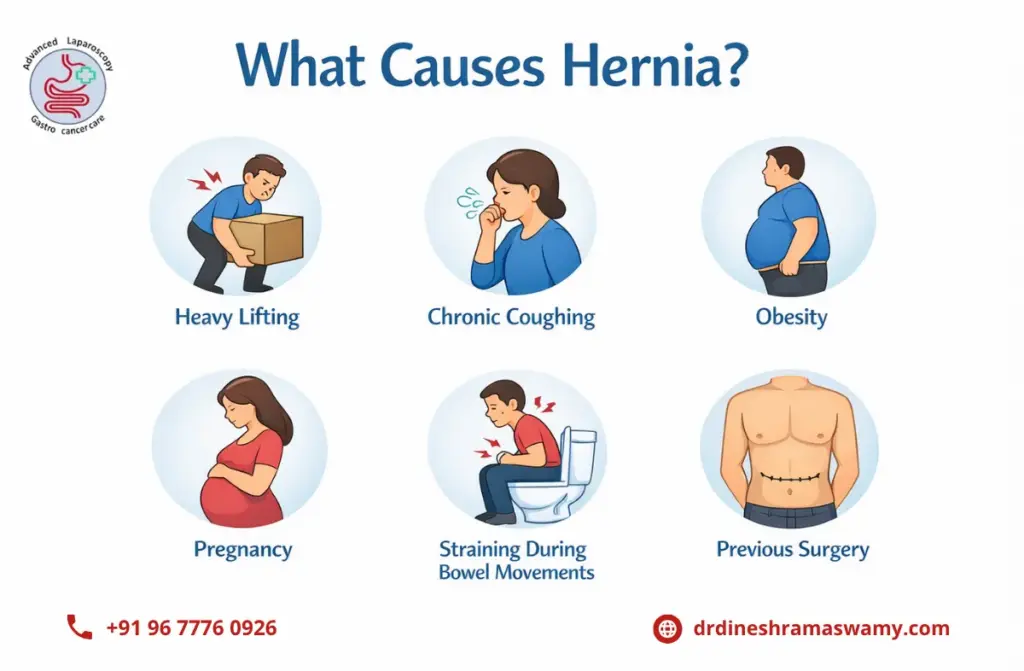
Common Causes
- Heavy lifting: Repeated strain weakens muscles.
- Chronic coughing: Constant pressure affects the abdominal wall.
- Obesity: Extra weight increases internal pressure.
- Constipation and straining: Frequent straining stresses muscles.
- Pregnancy: Added pressure weakens abdominal tissues.
- Aging: Muscles naturally lose strength over time.
- Previous surgeries: Surgical scars may create weak areas.
Most Common Types of Hernia
- Inguinal Hernia: Occurs in the groin and is more common in men.
- Umbilical Hernia: Appears near the belly button and affects both infants and adults.
- Hiatal Hernia: Part of the stomach moves upward into the chest area.
- Femoral Hernia: Develops near the upper thigh and is more common in women.
- Incisional Hernia: Forms near old surgical scars after abdominal surgery.
A Brief History of Hernia Treatment
“Hernias have troubled humanity for thousands of years — long before modern medicine understood how to treat them safely.”
Historical records show that hernias were recognized as early as ancient Egypt around 1555 BC. Early physicians described unusual abdominal swelling and painful bulges, but treatment options were extremely limited and often dangerous.
For centuries, people relied on tight bandages, herbal remedies, and primitive support devices to control symptoms. However, these methods could not permanently repair the weakened muscles causing the hernia.
Everything changed in the late 19th century when Italian surgeon **Edoardo Bassini** introduced a groundbreaking surgical technique in 1884. His method focused on repairing and strengthening the abdominal wall rather than simply pushing the bulge back into place.
Bassini’s operation dramatically improved survival and recovery rates, becoming the foundation of modern hernia surgery. His work transformed hernia treatment from a risky procedure into one of the most successful surgical repairs in medical history.
Today, advanced surgical methods and minimally invasive procedures allow millions of people worldwide to recover safely and return to normal life much faster than ever before.
Early Signs of Hernia You Should Never Ignore
- A Visible Bulge or Lump: A soft lump may appear during standing, coughing, or straining. It often disappears when lying down.
- Mild Pain or Pressure: Many people feel aching, heaviness, or pressure in the affected area.
- Burning or Pulling Sensation: Some hernias create tingling, burning, or pulling discomfort after activity.
- Pain While Lifting or Bending: Symptoms often worsen when lifting heavy objects or bending forward.
- Weakness in the Groin or Abdomen: The muscles may feel weak or unstable during movement.
- Early Treatment Methods for Hernia: Treating a hernia early can help reduce discomfort and prevent serious complications. While small hernias may not always require immediate surgery, early medical care is important.
Lifestyle Adjustments
Simple lifestyle changes may help slow worsening symptoms.
- Avoid heavy lifting: Reduces pressure on weakened muscles.
- Maintain healthy weight: Less strain on the abdomen.
- Treat constipation: Prevents excessive straining.
- Stop smoking: Improves tissue strength and healing.
- Manage chronic cough: Reduces repeated abdominal pressure.
Activity Modifications
Certain physical activities can worsen a hernia if done incorrectly.
- Lift objects carefully: Use proper posture while lifting.
- Avoid sudden twisting movements: Helps reduce strain.
- Limit high-pressure exercises: Heavy workouts may worsen symptoms.
Medications for Symptom Relief
Some medicines may help control related symptoms.
- Antacids: Help reduce acid reflux in hiatal hernia.
- Pain relievers: May ease mild discomfort temporarily.
Hernia Support Belts
- Support belts or trusses may provide temporary relief by supporting the weakened area.
- However, they do not cure the hernia and should only be used under medical advice.
Monitoring Small Hernias
- Doctors may sometimes monitor very small hernias that are not causing major symptoms.
- Regular checkups help detect changes before complications develop.
Early Surgical Repair
Surgery is often recommended before the hernia becomes larger or painful.
Early treatment may offer:
- Faster recovery
- Lower complication risk
- Smaller surgical repair
- Less discomfort over time
Ignoring symptoms can allow the hernia to worsen gradually, making treatment more difficult later.
Symptoms That May Indicate a More Serious Hernia
- Severe or Sudden Pain: Sharp pain may signal trapped or damaged tissue.
- Nausea and Vomiting: Digestive symptoms can occur if the intestine becomes blocked.
- Bulge That Cannot Be Pushed Back In: A firm or stuck bulge may indicate incarceration.
- Redness or Darkening of the Skin: Skin color changes may suggest reduced blood flow.
- Fever Along With Pain: Fever with swelling can indicate a medical emergency.
Signs of Hernia in Men
- Swelling in the groin or scrotum: A visible lump may appear.
- Pain during lifting or exercise: Symptoms worsen with strain.
- Heaviness around the testicular area: Pressure may increase while standing.
- Discomfort during long periods of standing: Pain often becomes more noticeable.
Signs of Hernia in Women
- Pelvic pressure or aching: Pain may feel similar to cramps.
- Groin pain mistaken for muscle strain: Symptoms are often overlooked.
- Discomfort during daily activities: Walking or bending may cause pain.
- Harder to diagnose: Symptoms can resemble other conditions.
Signs of Hernia in Children and Babies
- Bulging Near the Belly Button
- The bulge often becomes visible when the baby cries.
- Irritability or Crying During Strain
- Babies may appear uncomfortable during coughing or bowel movements.
- Swelling in the Groin
- Swelling may appear during movement or crying.
Hiatal Hernia Symptoms Often Mistaken for Digestive Problems
- Frequent heartburn: Burning sensation in the chest.
- Acid reflux: Stomach acid moves upward.
- Chest discomfort: Pain may feel similar to indigestion.
- Trouble swallowing: Food may feel stuck.
- Bloating after meals: Pressure increases after eating.
What Causes Hernias to Get Worse?
- Ignoring symptoms: The weakness may continue growing.
- Heavy lifting: Increased pressure worsens the hernia.
- Chronic coughing: Repeated strain damages muscles further.
- Smoking: Weakens tissue and slows healing.
- Excess body weight: Extra pressure stresses the abdomen.
- Lack of treatment: Untreated hernias often enlarge over time.
When Should You See a Doctor?
You should seek medical attention if you notice:
- Persistent swelling
- Increasing pain
- Digestive discomfort
- Sudden changes in the bulge
- Symptoms affecting daily life
Emergency Warning Signs
Severe painMay indicate trapped tissue.
- Vomiting: Possible intestinal blockage.
- Fever: Could signal infection.
- Discolored bulge: May indicate poor blood supply.
- Inability to pass stool or gas: Potential bowel obstruction.
How Hernias Are Diagnosed
- Physical Examination: Doctors check for swelling while standing or coughing.
- Ultrasound: Helps detect soft tissue abnormalities.
- CT Scan: Provides detailed images of internal organs.
- Endoscopy for Hiatal Hernia: Used to examine the stomach and esophagus.
- Importance of Early Diagnosis: Early treatment helps prevent complications.
Treatment Options for Hernia
Lifestyle Changes
- Weight management: Reduces abdominal pressure.
- Avoiding heavy lifting: Prevents worsening symptoms.
- Managing constipation: Reduces strain during bowel movements.
Hernia Support Devices
Support belts may temporarily reduce discomfort.
- Surgical Repair
- Open Surgery
- The surgeon repairs the weakened muscle directly.
- Laparoscopic Surgery
- Minimally invasive surgery with smaller incisions and faster recovery.
Can Hernias Be Prevented?
- Strengthen core muscles safely: Improves muscle support.
- Lift properly: Reduces strain on the abdomen.
- Maintain healthy weight: Lowers pressure inside the body.
- Quit smoking: Protects connective tissue health.
- Treat chronic cough: Prevents repeated abdominal strain.
- Eat fiber-rich foods: Helps prevent constipation.
Traditional and Home-Based Methods Commonly Used for Hernia Relief
Many people try traditional or natural remedies to reduce hernia discomfort, especially during the early stages. While these methods may help manage symptoms temporarily, they do not permanently repair the muscle weakness causing the hernia.
Warm Compress
Applying gentle heat may help relax muscles and reduce mild discomfort.
- Helps improve comfort: May reduce muscle tightness.
- Provides temporary relief: Useful for mild soreness.
Ginger and Herbal Remedies
Some traditional remedies use ginger or herbal teas to reduce digestive discomfort.
- May reduce bloating: Helpful for hiatal hernia symptoms.
- Can support digestion: May ease acid reflux temporarily.
Eating Smaller Meals
This method is commonly suggested for hiatal hernia management.
- Reduces stomach pressure: Helps minimize reflux.
- Improves digestion: Prevents overeating discomfort.
Avoiding Heavy Foods
Traditional advice often includes limiting spicy, oily, and heavy meals.
- May reduce acid reflux: Especially in hiatal hernia.
- Helps prevent bloating: Less pressure on the abdomen.
Gentle Yoga and Breathing Exercises
Certain low-impact exercises may improve posture and core support.
- Supports flexibility: Reduces body strain.
- May improve posture: Helps reduce pressure buildup.
Heavy or intense exercises should be avoided because they can worsen the hernia.
Maintaining Proper Posture
Traditional healing practices often focus on posture correction.
- Reduces abdominal strain: Less pressure on weak muscles.
- Supports better body balance: Helpful during daily activities.
Using Abdominal Support Wraps
Support garments are sometimes used to hold the hernia in place temporarily.
- May reduce discomfort: Offers mild support.
- Not a permanent solution: Does not repair the hernia.
Important Note
Traditional methods may temporarily relieve symptoms, but they cannot permanently heal a hernia. If pain, swelling, nausea, vomiting, or a growing bulge develops, medical evaluation becomes important to avoid complications.
Common Myths About Hernias
“Hernias heal on their own”
- Most hernias require medical treatment.
“Only men get hernias”
- Women and children can also develop hernias.
“Exercise always causes hernias”
- Poor lifting technique is usually the bigger problem.
“If it doesn’t hurt, it’s harmless”
- Some dangerous hernias cause little pain early on.
Possible Complications of Untreated Hernia
- Incarcerated hernia: Tissue becomes trapped.
- Strangulated hernia: Blood supply gets blocked.
- Intestinal obstruction: Can affect digestion and bowel movement.
- Severe infection risk: Medical emergency in advanced cases.
Who Is Most at Risk of Hernia?
Some people are more likely to develop hernias because of muscle strain or pressure inside the body.
Higher-risk groups include:
- Heavy lifters and labor workers
- Older adults
- People with obesity
- Pregnant women
- Smokers with chronic cough
- Athletes and weightlifters
- People with previous abdominal surgery
What Does a Hernia Feel Like?
A hernia may feel like:
- A soft bulge or lump
- Pressure or heaviness
- Burning or aching pain
- Pulling discomfort during movement
- Pain that worsens while lifting or coughing
Some hernias cause very little pain at first, making them easy to ignore.
Can a Hernia Become Dangerous?
Yes. A hernia can become dangerous if tissue gets trapped and loses blood supply.
Emergency warning signs include:
- Severe sudden pain
- Vomiting or nausea
- Fever
- Hard or dark-colored bulge
- Inability to pass stool or gas
Immediate medical care may be needed.
Recovery After Hernia Surgery
Most people recover well after early treatment.
General recovery:
- Few days — Mild soreness and swelling
- 1–2 weeks — Easier daily movement
- 4–6 weeks — Avoid heavy lifting
- Full healing — Gradually improves over time
Following medical advice helps recovery happen faster and more safely.
Real-Life Example
Many people mistake early hernia symptoms for muscle strain.
A person lifting heavy objects daily may notice a small bulge and mild discomfort that disappears during rest. Over time, the swelling may become larger and more painful.
Early treatment can often prevent serious complications later.
Conclusion
“A hernia often starts quietly — with a small bulge, mild pressure, or occasional discomfort. But ignoring the signs can allow the condition to worsen over time.”
Early detection is important because hernias can become more serious if left untreated. Some remain mild, while others may suddenly become dangerous.
Paying attention to warning signs and seeking treatment early can help prevent complications and improve recovery outcomes.
“If you notice persistent swelling, unusual pain, or pressure in the abdomen or groin, seeking medical advice early can help prevent serious complications and support faster recovery.”