Medically reviewed by Dr. Dinesh Ramaswamy, MBBS, MS, MCh, DNB, FIAGES. Specialist in Surgical Gastroenterology and GI Oncology | Last reviewed: August 2026
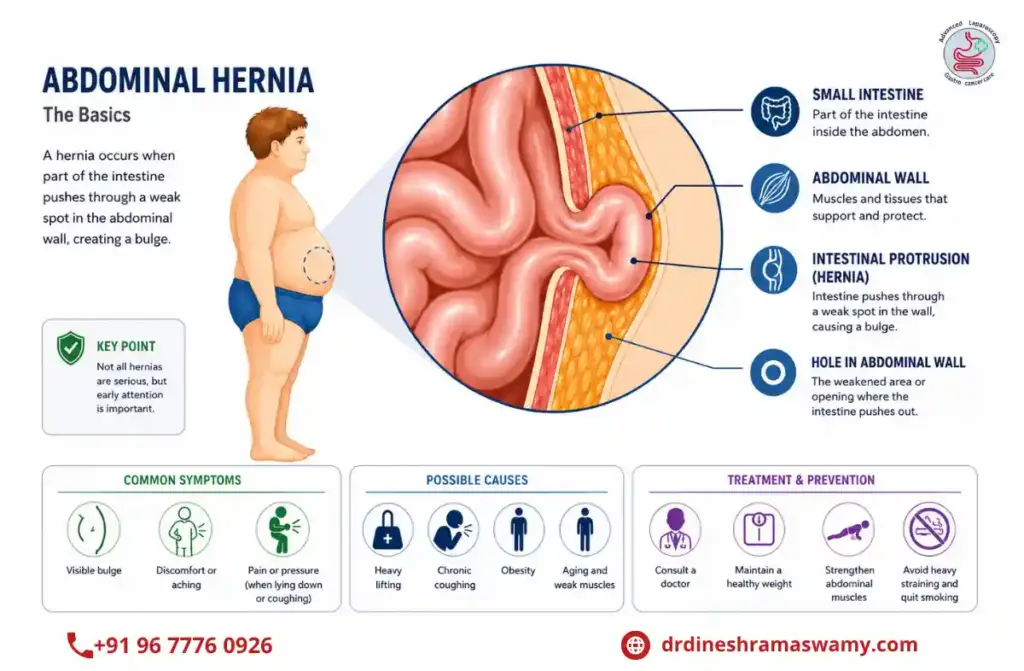
A hernia occurs when an internal organ or tissue pushes through a weak area in the surrounding muscle or connective tissue, often causing a visible bulge, discomfort, or pain. It may develop in the abdomen, groin, or around a previous surgical incision. While some hernias cause mild symptoms initially, others may gradually increase in size or lead to complications.
Choosing an experienced Hernia Surgeon in Chennai is important for accurate diagnosis and appropriate treatment planning. Dr. Dinesh Ramaswamy, Senior Surgical Gastroenterologist and GI Onco Surgeon in Chennai, has over 20+ years of surgical experience in gastrointestinal and advanced abdominal procedures. He evaluates hernia conditions and helps patients understand suitable treatment approaches based on their individual needs.
What Is a Hernia?
A hernia develops when an internal organ or fatty tissue pushes through a weak spot in the surrounding muscle or connective tissue. It commonly occurs in the abdominal wall or groin, where weakened muscles allow tissue to protrude and form a noticeable bulge.
A hernia may become more visible when coughing, bending, lifting heavy objects, or standing for long periods. Some people experience pain, pressure, or discomfort, while others may not notice any symptoms initially.
Hernias do not usually resolve on their own. A medical evaluation helps identify the type, size, and severity of the condition and determine whether observation or surgical repair is appropriate.
What Are the Different Types of Hernia?
Hernias are classified based on where they develop in the body. Some occur in the groin, while others affect different areas of the abdominal wall or diaphragm. Understanding the type of hernia helps determine the appropriate treatment approach.
- Inguinal Hernia: An inguinal hernia develops when tissue pushes through a weak area in the lower abdominal wall into the groin. It is more common in men and may cause a bulge, discomfort, or pain, particularly during physical activity.
- Umbilical Hernia: An umbilical hernia occurs when tissue protrudes through a weak area around the belly button. It may appear as a noticeable swelling and can affect both adults and children.
- Incisional Hernia: An incisional hernia develops at or near the site of a previous abdominal surgery. It occurs when the surgical wound area does not regain sufficient strength during healing.
- Ventral Hernia: A ventral hernia occurs through a weakened area in the front abdominal wall. It may develop in different regions of the abdomen and can cause swelling or discomfort.
- Epigastric Hernia: An epigastric hernia develops between the breastbone and belly button, usually through a small weakness in the upper abdominal wall. It may cause a small bulge or tenderness.
- Hiatus Hernia: A hiatus hernia occurs when part of the stomach moves upward through an opening in the diaphragm into the chest cavity. It may be associated with acid reflux, heartburn, or difficulty swallowing.
Identifying the type of hernia through clinical examination and appropriate investigations helps a surgeon plan suitable treatment.
What Are the Common Symptoms of a Hernia?
Hernia symptoms can vary depending on the type, location, and size of the condition. Some people may notice a visible bulge, while others experience pain or discomfort during everyday activities.
Common symptoms include:
- Visible bulge: Swelling in the abdomen, groin, or around the belly button.
- Pain or discomfort: Aching or sharp pain in the affected area, particularly during movement.
- Discomfort while lifting: Increased pressure or pain when lifting heavy objects.
- Pain during coughing: The bulge may become more noticeable when coughing, sneezing, or straining.
- Heaviness or pressure: A feeling of fullness or pressure in the abdomen or groin.
- Burning sensation: Some people experience burning or irritation around the affected area.
When Should Hernia Symptoms Be Treated as an Emergency?
Certain symptoms may indicate a serious complication, such as an obstructed or strangulated hernia. Seek immediate medical attention if you experience:
- Sudden or severe abdominal or groin pain.
- Nausea and vomiting.
- A hernia bulge that becomes firm, tender, or cannot be pushed back.
- Redness or darkening of the skin over the swelling.
- Difficulty passing stools or gas.
Early medical evaluation helps identify complications and determine the appropriate treatment.
What Causes a Hernia?
A hernia develops when the muscles or connective tissues become weak, allowing internal tissue to push through the affected area. This weakness may be present from birth or develop over time due to physical strain, ageing, previous surgeries, or other health factors.
Common causes and contributing factors include:
- Abdominal muscle weakness: Naturally weak or weakened abdominal tissues can increase the likelihood of developing a hernia.
- Heavy lifting: Repeatedly lifting heavy objects without proper technique can increase pressure on the abdominal wall.
- Chronic coughing: Persistent coughing places repeated pressure on the abdominal muscles.
- Constipation: Frequent straining during bowel movements can contribute to increased abdominal pressure.
- Obesity: Excess body weight places additional strain on the abdominal wall.
- Previous abdominal surgery: Weakness around a surgical incision may lead to an incisional hernia.
- Ageing: Muscles and connective tissues may become weaker with age.
- Pregnancy: Increased abdominal pressure during pregnancy can contribute to abdominal wall weakness.
In many cases, a combination of factors contributes to hernia development. Identifying these factors helps guide treatment decisions and advice on reducing the risk of further strain.
When Should You Consult a Hernia Surgeon?
A hernia should be evaluated by a qualified surgeon when you notice a new swelling, persistent discomfort, or pain around the abdomen or groin. Even if the symptoms are mild, a medical assessment helps determine the type of hernia and whether treatment is necessary.
You should consider consulting a hernia surgeon if you experience:
- A visible bulge in the abdomen, groin, or around the belly button.
- Pain or discomfort while walking, bending, coughing, or lifting objects.
- A swelling that gradually increases in size.
- Repeated discomfort that affects daily activities.
- Pain or tenderness around a previous surgical incision.
- Difficulty performing routine physical activities due to the swelling.
Seek emergency medical attention if you develop sudden severe pain, vomiting, abdominal swelling, or a firm, tender hernia bulge that cannot be pushed back. These may indicate a serious complication requiring urgent treatment.
A surgeon can assess the condition, review your medical history, and recommend appropriate management based on the hernia’s location, size, symptoms, and overall health.
How Is a Hernia Diagnosed?
Hernia diagnosis involves a physical examination and, when necessary, imaging tests to identify the location, size, and severity of the condition. The evaluation also helps the surgeon determine whether the hernia requires observation or surgical treatment.
Common diagnostic methods include:
- Physical Examination: The surgeon examines the abdomen or groin for visible swelling, tenderness, or weakness. You may be asked to stand, cough, or strain slightly to check whether the bulge becomes more noticeable.
- Ultrasound Scan: An ultrasound uses sound waves to examine the affected area. It can help identify the hernia, particularly when the swelling is not clearly visible during physical examination.
- CT Scan: A CT scan provides detailed images of the abdominal structures. It may be recommended for complex, large, recurrent, or incisional hernias to assess their size and surrounding tissues.
- Upper GI Endoscopy: For suspected hiatus hernia, an upper gastrointestinal endoscopy may be recommended to examine the oesophagus and stomach and identify associated conditions such as inflammation or reflux-related damage.
The choice of diagnostic test depends on the type of hernia and the patient’s symptoms. An accurate assessment helps guide the treatment plan and determine the most appropriate surgical approach when required.
What Are the Treatment Options for Hernia?
Hernia treatment depends on the type, size, location, symptoms, and overall health of the patient. While some hernias may be monitored under medical supervision, others require surgical repair to prevent complications and relieve discomfort.
- Watchful Waiting: For selected patients with small, minimally symptomatic hernias, a surgeon may recommend regular monitoring rather than immediate surgery. This involves observing changes in the swelling, pain, or other symptoms. Watchful waiting is not suitable for every type of hernia and requires medical guidance.
- Open Hernia Repair: Open hernia repair involves making an incision near the affected area to access the hernia. The protruding tissue is returned to its appropriate position, and the weakened muscle wall is repaired. Surgical mesh may be used to strengthen the affected area when appropriate.
- Laparoscopic Hernia Repair: Laparoscopic surgery is a minimally invasive approach performed through small incisions using a camera and specialised surgical instruments. The surgeon repairs the weakened area, often with mesh reinforcement. It may be suitable for certain inguinal, ventral, and incisional hernias.
- Robotic-Assisted Hernia Repair: Robotic-assisted surgery uses specialised instruments controlled by the surgeon through a robotic platform. It may offer enhanced instrument movement and visualisation in selected complex cases. Its suitability depends on the type of hernia, patient condition, and available surgical expertise.
The choice of treatment should be based on an individual assessment rather than a single approach for everyone. A surgeon can explain the benefits, limitations, and potential risks of each procedure before recommending a suitable treatment plan.
Open vs Laparoscopic vs Robotic Hernia Surgery
Hernia repair can be performed using open, laparoscopic, or robotic-assisted surgical techniques. Each approach has its own advantages and limitations. The choice depends on the type of hernia, its size, previous surgeries, and the patient’s overall health.
Comparison of Hernia Surgery Techniques
| Feature | Open Surgery | Laparoscopic Surgery | Robotic-Assisted Surgery |
| Incisions | Usually one larger incision | Several small incisions | Several small incisions |
| Surgical approach | Direct access to the hernia | Camera-guided instruments | Robot-assisted instruments controlled by the surgeon |
| Visualisation | Direct surgical view | Camera-based view | Magnified 3D view |
| Recovery | Depends on the procedure | May allow quicker recovery in suitable cases | May allow quicker recovery in suitable cases |
| Suitability | Different types of hernias | Selected inguinal and abdominal wall hernias | Selected complex and abdominal wall hernias |
Which Hernia Surgery Approach Is Better?
There is no single surgical technique that is best for every patient. Open repair may be appropriate for certain hernias, while laparoscopic or robotic-assisted procedures may be considered depending on the clinical situation.
Factors influencing the choice include:
- Type and location of the hernia.
- Size and complexity of the defect.
- Whether the hernia has occurred previously.
- Previous abdominal surgeries.
- Patient’s age and general health.
- Surgeon experience and available facilities.
A detailed surgical evaluation helps determine the safest and most appropriate approach for each patient.
When Is Hernia Surgery Necessary?
Hernia surgery may be recommended when the condition causes persistent pain, increases in size, or interferes with daily activities. The decision depends on the type of hernia, symptoms, risk of complications, and the patient’s overall health.
A surgeon may recommend hernia repair in the following situations:
- Increasing hernia size: The swelling gradually becomes larger over time.
- Persistent pain: Discomfort or pain affects walking, bending, lifting, or other routine activities.
- Difficulty reducing the bulge: The protruding tissue becomes difficult to return to its normal position.
- Recurrent hernia: The hernia develops again after an earlier repair.
- Risk of complications: There are concerns about bowel obstruction or strangulation.
- Activity limitations: The condition interferes with work, exercise, or everyday movement.
Can Every Hernia Be Treated Without Surgery?
No. Hernias do not generally heal on their own because the underlying weakness in the muscle or abdominal wall remains. However, selected patients with certain asymptomatic or minimally symptomatic hernias may be monitored under medical supervision.
In cases of suspected strangulation or bowel obstruction, emergency surgical assessment is essential. Consulting a surgeon helps determine whether planned surgery, regular monitoring, or urgent treatment is appropriate.
What Happens If a Hernia Is Left Untreated?
A hernia may remain small and cause little discomfort initially. However, some hernias gradually increase in size and may lead to pain or complications if not properly evaluated. The risks depend on the type of hernia and the patient’s individual condition.
Possible complications include:
- Increasing Size: The hernia may gradually enlarge, making the swelling more noticeable and potentially increasing discomfort.
- Persistent Pain: Pressure on the surrounding tissues may cause ongoing pain during movement and daily activities.
- Incarcerated Hernia: The protruding tissue becomes trapped and cannot be pushed back into its normal position.
- Bowel Obstruction: If part of the intestine becomes trapped, it may block the normal passage of intestinal contents, causing abdominal pain, vomiting, and difficulty passing stools or gas.
- Strangulated Hernia: The blood supply to the trapped tissue becomes restricted, potentially causing tissue damage. This is a medical emergency that requires immediate treatment.
Not every hernia develops these complications, but ignoring persistent symptoms can delay appropriate care. Early surgical evaluation helps assess the risks and determine whether monitoring or repair is necessary.
What to Expect During Recovery After Hernia Surgery?
Recovery after hernia surgery depends on the surgical technique, type of hernia, size of the repair, and the patient’s overall health. Patients undergoing minimally invasive procedures may return to routine activities sooner in suitable cases, while more complex repairs may require additional recovery time.
- Hospital Stay: The hospital stay varies depending on the procedure and individual recovery. Some patients may be discharged on the same day or the following day, while complex hernia repairs may require a longer stay.
- Pain Management: Mild pain, swelling, or discomfort around the surgical area is common after the procedure. Prescribed medications and proper wound care help manage these symptoms.
- Diet and Daily Activities: Patients are generally encouraged to follow a balanced diet, stay hydrated, and avoid constipation. Gentle walking may help support recovery, depending on the surgeon’s advice.
- Returning to Work and Exercise: The time required to resume work, exercise, and heavy physical activities varies. Patients should gradually return to their regular routine and avoid strenuous activities until cleared by their surgeon.
- Follow-Up Consultations: Follow-up appointments help assess wound healing, identify possible complications, and monitor recovery. Patients should report increasing pain, fever, redness, wound discharge, or any unusual swelling.
Following postoperative instructions and attending scheduled reviews can support a smoother recovery after hernia repair.
Why Choose Dr. Dinesh Ramaswamy for Hernia Evaluation and Treatment?
Choosing the right surgeon is an important part of hernia care. Proper evaluation, selection of an appropriate surgical technique, and postoperative follow-up all contribute to effective treatment planning.
Dr. Dinesh Ramaswamy is a Senior Surgical Gastroenterologist and GI Onco Surgeon with over 20+ years of surgical experience in gastrointestinal and advanced abdominal procedures.
His professional background includes:
- Surgical Experience: Over 20+ years of experience in gastrointestinal and abdominal surgery.
- Qualifications: MBBS, MS (General Surgery), MCh (Surgical Gastroenterology), DNB, and FIAGES.
- Advanced Training: Surgical training at AIIMS New Delhi, JIPMER, and GB Pant Hospital.
- Surgical Expertise: Experience in gastrointestinal surgery, laparoscopic procedures, and complex abdominal conditions.
- Patient-Centred Approach: Individual assessment to understand the condition and discuss suitable treatment options.

For patients experiencing abdominal or groin swelling, persistent discomfort, or other symptoms of a hernia, a consultation with Dr. Dinesh Ramaswamy can help determine the appropriate next steps.
When to Book a Consultation?
If you notice a swelling around your abdomen, groin, or previous surgical incision, consider scheduling a consultation with a surgeon. Early evaluation helps identify the type of hernia, assess its severity, and determine whether monitoring or surgical treatment is required.
You should seek medical advice if you experience:
- A new or gradually increasing abdominal or groin bulge.
- Pain or discomfort during physical activities.
- Swelling around a previous surgical incision.
- Repeated discomfort that affects daily activities.
- Symptoms that persist or become progressively worse.
Consult Dr. Dinesh Ramaswamy for an evaluation of hernia-related concerns and guidance on appropriate treatment options. The treatment plan is based on the patient’s condition, medical history, and surgical requirements.
If you experience sudden severe pain, vomiting, or a firm and tender hernia bulge, seek emergency medical attention rather than waiting for a routine appointment.