Medically reviewed by Dr. Dinesh Ramaswamy, MBBS, MS, MCh, DNB, FIAGES. Specialist in Surgical Gastroenterology and GI Oncology | Last reviewed: August 2026
A hernia may cause a visible bulge, groin discomfort, or pain that worsens while coughing, lifting, or standing. Although some hernias remain mild initially, they can gradually enlarge and interfere with daily activities. If you are looking for the Best Hernia Surgeon in Chennai, Dr. Dinesh Ramaswamy provides comprehensive evaluation and surgical care for inguinal, umbilical, incisional, recurrent, and complex abdominal wall hernias. Depending on the condition, treatment may involve open, laparoscopic, or robotic-assisted hernia repair.
What is Hernia?
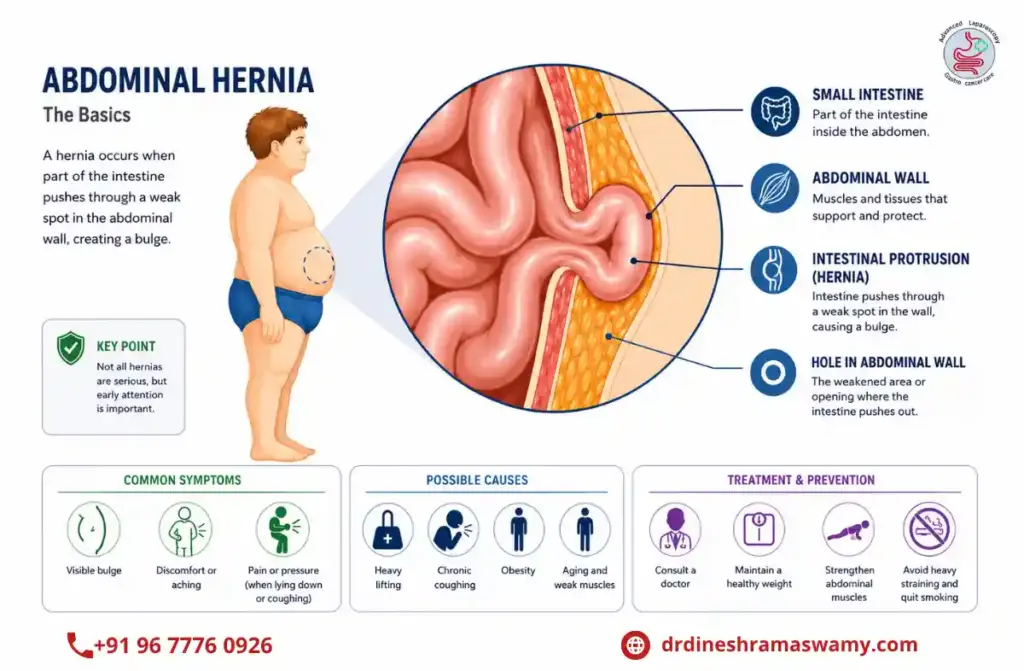
A hernia occurs when an internal organ or fatty tissue pushes through a weak area in the muscles or connective tissue that normally holds it in place. This creates a visible bulge beneath the skin, which may become more noticeable while standing, coughing, or lifting heavy objects.
Although hernias can develop in different parts of the body, they are most commonly seen in the abdominal wall and groin. Some hernias remain painless for months, while others gradually increase in size and cause discomfort during daily activities.
How Does a Hernia Develop?
A hernia usually develops because of weakness in the abdominal muscles combined with repeated pressure inside the abdomen. In some individuals, this weakness is present from birth, while in others it develops gradually with age or previous surgery.
Several everyday factors can increase the risk of developing a hernia, including:
- Heavy lifting without proper support
- Chronic coughing
- Persistent constipation and straining
- Obesity
- Pregnancy
- Previous abdominal surgeries
- Aging-related muscle weakness
- Long-term smoking
For example, someone who regularly lifts heavy weights at work may slowly develop a groin hernia over time without realizing it. Initially, there may only be a small bulge, but continued strain can cause the hernia to enlarge and become painful.
Importance of Early Diagnosis
Many people delay treatment because the swelling disappears when lying down or because the discomfort is mild. A hernia cannot resolve on its own and typically requires medical treatment. Instead, they often become larger over time.
Early diagnosis offers several advantages:
- Smaller hernias are generally easier to repair.
- Minimally invasive surgery becomes a suitable option in many cases.
- Recovery is often quicker.
- Risk of emergency complications is significantly reduced.
- Daily activities can be resumed sooner.
Ignoring symptoms such as increasing pain, nausea, vomiting, or an irreducible swelling may lead to strangulation, where blood supply to the intestine is cut off. This is a medical emergency that needs prompt surgical intervention. As a Hernia Specialist in Chennai, early evaluation and timely treatment can help prevent serious complications.
Types of Hernia Treated
Hernias can develop when internal tissues push through weakened areas of the abdominal muscles. Factors such as chronic constipation, heavy lifting, obesity, pregnancy, and aging can increase pressure inside the abdomen and raise the risk of hernia formation. Early diagnosis and timely treatment help prevent discomfort and complications.
- Inguinal Hernia
- Umbilical Hernia
- Incisional Hernia
- Femoral Hernia
Each type of hernia requires proper evaluation based on its location, severity, and symptoms. Treatment options may vary depending on the patient’s age, lifestyle, and overall health condition. An experienced Hernia Specialist in Chennai can recommend the most suitable approach for safe and effective recovery.
Best Hernia Surgeon in Chennai
Dinesh Ramaswamy
- Qualifications: MBBS, MS (General Surgery), MCh (Surgical Gastroenterology), DNB, FIAGES
- Experience: 15+ Years
Dr. Dinesh Ramaswamy is a highly experienced Surgical Gastroenterologist with 15+ years of clinical expertise in advanced abdominal and gastrointestinal surgery. He trained at premier institutes like AIIMS, New Delhi, and GB Pant Hospital, gaining strong exposure to complex and minimally invasive surgical procedures, which shaped his precise and evidence-based approach.
His expertise includes hernia repair, colorectal, hepatobiliary, and advanced laparoscopic surgeries. With extensive experience in high-volume centers, he manages both routine and complex cases safely and effectively. Focused on personalized care and minimally invasive techniques, he is widely regarded as the Best Hernia Surgeon in Chennai for advanced and patient-focused surgical treatment.

Article about Dr. Dinesh Ramaswamy
Dr. Dinesh Ramaswamy is a highly experienced Gastroenterologist and GI Onco Surgeon specializing in advanced laparoscopic and robotic surgeries.
Read more about his expertise, achievements, and medical journey in this detailed feature article.
Common Symptoms of Hernia
Hernia symptoms often begin gradually and may worsen over time if left untreated. Recognizing the early signs can help prevent complications and ensure timely medical care. Early evaluation by an experienced surgeon allows for accurate diagnosis and appropriate treatment, helping patients recover safely and return to their daily activities with confidence.
- Visible Bulge or Swelling: A noticeable lump or bulge in the abdomen, groin, or near the navel is the most common sign. It may become more visible while standing, coughing, or straining.
- Pain and Discomfort: Patients may experience pain or discomfort, especially during physical activities like lifting or bending.
- Abdominal Pressure or Heaviness: A feeling of heaviness or pressure in the affected area is common. This sensation may worsen after prolonged standing or activity.
- Burning or Aching Sensation: Some individuals feel a burning or aching sensation at the site of the hernia. This discomfort can be mild initially but may increase over time.
- Worsening Symptoms with Activity: Symptoms often become more noticeable during activities like coughing, sneezing, or heavy lifting. Resting usually helps reduce discomfort.
- Signs of Complications: Severe pain, nausea, vomiting, or the inability to push the bulge back may indicate a serious hernia complication. These symptoms require immediate medical attention, as prompt evaluation and timely treatment can help prevent further complications and protect your overall health.
Causes and Risk Factors
Hernias develop when pressure inside the abdomen combines with weakness in the abdominal wall. Several factors can increase the likelihood of developing a hernia.
Common Causes of Hernia
- Heavy lifting without proper support
- Persistent coughing caused by smoking habits or underlying lung-related conditions
- Persistent constipation and straining during bowel movements
- Obesity and excess abdominal pressure
- Pregnancy
- Previous abdominal surgeries
- Congenital weakness in the abdominal wall
Risk Factors
Certain individuals are more prone to hernias than others. For example, a warehouse worker who regularly lifts heavy objects may develop an inguinal hernia over time. Similarly, an older adult with weakened muscles may experience an abdominal wall hernia even during routine activities.
Additional risk factors include:
- Advancing age
- Family history of hernias
- Smoking
- Sedentary lifestyle
- Poor muscle strength
- Repeated physical strain
Recognizing these risk factors early can help individuals seek medical evaluation before symptoms become severe.
When Should You See a Doctor for Hernia?
Many people ignore the early signs of a hernia because the symptoms may appear mild at first. However, delaying treatment can lead to complications that require emergency intervention.
- Persistent Pain or Discomfort: Ongoing pain, pressure, or aching in the abdomen or groin may indicate that the hernia is worsening. Symptoms often become more noticeable during coughing, standing, or physical activity.
- Visible Bulge That Increases in Size: A hernia commonly appears as a lump or swelling that becomes more prominent over time. If the bulge grows larger or remains visible throughout the day, medical evaluation is recommended.
- Pain During Physical Activity or Lifting: Discomfort that increases while lifting heavy objects, exercising, or performing daily tasks can be a sign of hernia progression. Ignoring these symptoms may lead to further complications.
- Difficulty Standing, Walking, or Bending: As the hernia enlarges, it may interfere with normal movement and make routine activities uncomfortable. Difficulty with mobility should be assessed by a healthcare professional.
- Nausea, Vomiting, or Digestive Problems: Symptoms such as nausea, bloating, vomiting, or constipation may indicate that the hernia is affecting the intestines. These signs require prompt medical attention to avoid serious complications.
- Redness, Tenderness, or Swelling Around the Hernia: A hernia that becomes red, swollen, warm, or increasingly painful may signal restricted blood flow. This can be a medical emergency and should be treated immediately.
Hernia Diagnosis and Evaluation
Proper diagnosis and evaluation are essential for identifying the exact type, size, and severity of a hernia. Many symptoms such as abdominal pain, constipation, bloating, and digestive discomfort can resemble other gastrointestinal conditions, making early assessment important. Timely diagnosis helps prevent serious complications like intestinal obstruction or strangulation and allows doctors to plan the most effective treatment approach.
- Physical Examination for Hernia: A physical examination is the first step in diagnosing a hernia. Doctors look for swelling, tenderness, or weakness in the abdominal wall and assess how symptoms change during coughing, standing, or straining.
- Ultrasound Scan for Hernia Diagnosis: Ultrasound scanning helps detect small or hidden hernias that may not be clearly visible during physical examination. It is a painless and non-invasive imaging method commonly used for abdominal and groin hernias.
- CT Scan for Complex Hernia Cases: A CT scan provides detailed images of the abdominal wall and internal organs. It is especially useful for identifying complicated, recurrent, or large hernias before surgery planning.
- Assessment of Hernia Size and Severity: Doctors evaluate the hernia’s size, location, pain level, and effect on digestion and daily activities. This assessment helps determine whether immediate surgery or conservative management is required.
- Pre-Surgical Health Evaluation Before Hernia Repair: Before hernia surgery, patients undergo a complete health evaluation to ensure safe treatment and smooth recovery. The assessment may include blood tests, heart evaluation, imaging scans, and digestive health review.
Hernia Treatment Options
The appropriate treatment depends on the type of hernia, its size, the severity of symptoms, and the patient’s overall health. Advanced surgical techniques are designed to improve patient comfort, support faster healing, and reduce the risk of recurrence. A thorough evaluation and personalized treatment plan help ensure safe, effective care and the best possible long-term outcomes.
- Laparoscopic Hernia Surgery: Laparoscopic hernia surgery is a minimally invasive procedure performed through small incisions using a camera and specialized instruments. The hernia is repaired from within the abdomen, making it a commonly used treatment option for suitable patients.
- Robotic Hernia Surgery: Robotic hernia surgery is an advanced technique that allows surgeons to perform hernia repair with enhanced precision and control. It may be recommended for certain primary, recurrent, or complex hernia cases based on individual patient needs.
- Open Hernia Repair: Open hernia repair involves making an incision over the affected area to reposition the protruding tissue and strengthen the abdominal wall. This approach is often considered for larger or more complex hernias requiring direct surgical access.
Recovery Timeline After Hernia Surgery
Recovery after hernia surgery depends on factors such as the type of hernia, surgical method, age, and overall health condition of the patient. Most individuals recover gradually over a few weeks and can safely return to normal daily activities by following proper post-surgical care instructions.
- First 24 Hours After Hernia Surgery: The first 24 hours mainly focus on pain management, rest, and monitoring the body’s initial healing response. Patients are usually encouraged to walk slowly, stay hydrated, and avoid sudden strain or heavy movement.
- Recovery During the First Week: During the first week, mild swelling, bruising, and discomfort gradually improve as healing progresses. Doctors often advise proper medication, fiber-rich foods, hydration, and avoiding heavy lifting to support smooth recovery.
- Returning to Daily Activities After Hernia Surgery: Most patients can slowly resume routine activities within two to four weeks depending on their recovery speed. Activities involving bending, driving, or physical strain should be restarted carefully to prevent pressure on the repaired muscles.
- Exercise and Physical Activity Recovery Timeline: Light walking and gentle movement are usually encouraged soon after surgery to improve circulation and reduce stiffness. Intense workouts, gym exercises, and heavy physical activity should only begin after complete healing and medical approval.
- Complete Recovery and Long-Term Care After Hernia Surgery: Complete healing may take several weeks to a few months based on the complexity of the surgery. Long-term care focuses on maintaining healthy body weight, preventing constipation, and avoiding excessive abdominal strain to reduce recurrence risk.
Why Choose Dr. Dinesh Ramaswamy?
Choosing the right surgeon is essential for a safe procedure and smooth recovery. With extensive experience, advanced surgical expertise, and the use of modern techniques, Dr. Dinesh Ramaswamy provides personalised hernia treatment for patients of all ages. His commitment to accurate diagnosis, minimally invasive procedures when appropriate, and compassionate patient care has made him a trusted choice for hernia surgery in Chennai.
- Expertise in Hernia Repair: Dr. Dinesh Ramaswamy treats inguinal, umbilical, femoral, incisional, recurrent, and complex abdominal wall hernias. Every patient receives a detailed evaluation to determine the most suitable treatment approach.
- Advanced Laparoscopic and Robotic Surgery: Minimally invasive laparoscopic and robotic surgery offers smaller incisions, reduced pain, faster recovery, and shorter hospital stays. These advanced surgical techniques help patients return to their daily activities sooner while ensuring safe and effective treatment outcomes.
- Personalized Treatment Plans: Treatment is tailored to each patient’s hernia type, medical history, and overall health, ensuring safe and effective care with a smoother recovery.
- Modern Surgical Techniques: Advanced techniques such as mesh repair, laparoscopic surgery, and robotic-assisted hernia repair help reduce recurrence and support better long-term outcomes.
- Experienced Multidisciplinary Team: An experienced team of specialists works together to provide coordinated care from diagnosis through recovery.
- Comprehensive Post-Operative Care: Patients receive individualized follow-up care, wound care instructions, and recovery support to promote smooth healing and a quicker return to everyday activities.
Preventive Tips to Reduce the Risk of Hernia
- Maintain a Healthy Weight: Keeping a healthy body weight helps reduce excess pressure on the abdominal muscles and lowers the chances of developing a hernia.
- Practice Safe Lifting Techniques: Avoid lifting heavy objects incorrectly. Use proper posture and lift with your legs instead of putting strain on your abdominal area.
- Strengthen Abdominal Muscles: Regular exercise that improves core strength can help support the abdominal wall and maintain better muscle function.
- Prevent Constipation and Straining: A fiber-rich diet, adequate water intake, and healthy bowel habits can help avoid excessive straining during bowel movements, which may increase hernia risk.
- Quit Smoking and Manage Chronic Cough: Smoking-related coughing and long-term respiratory issues can put repeated pressure on the abdomen. Managing cough and avoiding tobacco can help reduce strain.
- Treat Health Conditions Early: Conditions that increase abdominal pressure, such as persistent coughing or urinary problems, should be addressed promptly to lower the risk of hernia formation.
Conclusion
Hernias are a common but treatable surgical condition. Early evaluation and repair prevent complications such as pain, obstruction, and strangulation. Consulting the Best Hernia Surgeon in Chennai helps ensure accurate diagnosis and evidence-based treatment tailored to individual needs. With modern surgical options and experienced care, many patients achieve safe, effective recovery and return to normal activities. Choosing the right surgeon and understanding your condition are key steps toward successful long-term outcomes.
Read more: Piles treatment in chennai