Medically reviewed by Dr. Dinesh Ramaswamy, MBBS, MS, MCh, DNB, FIAGES. Specialist in Surgical Gastroenterology and GI Oncology. Last medically reviewed: September 2026.
Gallstones and other gallbladder problems can cause repeated upper abdominal pain, nausea, bloating and discomfort after meals. Some people have mild symptoms at first, while others develop sudden severe pain that requires medical attention.
If you have been diagnosed with gallstones or have repeated symptoms, consulting an experienced Gallbladder Surgeon in Vadapalani can help determine whether you need monitoring, medical treatment or surgery.
Dr. Dinesh Ramaswamy is a Surgical Gastroenterologist and GI Onco Surgeon with more than 20+ years of clinical and surgical experience. He evaluates gallstones, gallbladder inflammation, bile duct problems and other gastrointestinal conditions and provides laparoscopic surgical treatment when required.
Dr. Dinesh Ramaswamy – Gallbladder Surgeon in Vadapalani
When it comes to choosing the Best gallbladder surgeon in vadapalani, experience and trust matter more than anything else.
Dr. Dinesh Ramaswamy is a highly qualified surgeon with credentials including MBBS, MS (General Surgery), MCh in Surgical Gastroenterology, DNB, and FIAGES. With over 20+ years of experience, he has gained extensive expertise in gastrointestinal and laparoscopic procedures. His advanced training and hands-on experience enable him to effectively manage and treat gallbladder conditions using modern, minimally invasive surgical techniques.

What sets him apart?
- Patient-first approach with clear communication
- Strong focus on surgical precision and safety
- High success rates in laparoscopic gallbladder removal
- Trusted reputation across Vadapalani and nearby areas
Patients often highlight how they feel informed, reassured, and confident throughout their treatment journey.
Common Gallbladder Problems Treated
Gallbladder conditions can vary from mild discomfort to serious complications. Some of the most common issues treated include:
- Gallstones (Cholelithiasis): Gallstones are one of the most common gallbladder problems. They are hardened deposits, usually made of cholesterol or bilirubin, that form inside the gallbladder. While some people may not experience symptoms initially, stones can block the flow of bile, leading to sudden and intense abdominal pain, especially after meals. Over time, untreated gallstones can lead to more serious complications.
- Cholecystitis (Inflammation of the Gallbladder): This condition occurs when a gallstone blocks the cystic duct, causing bile to build up and leading to inflammation. Patients often experience persistent abdominal pain, fever, nausea, and tenderness in the upper abdomen. If not treated promptly, cholecystitis can result in infection or even damage to the gallbladder.
- Biliary Colic: Biliary colic refers to episodes of severe, cramping pain caused by temporary blockage of the bile duct by gallstones. The pain typically occurs after consuming fatty meals and may last for a few hours before subsiding. Although the blockage is temporary, repeated episodes are a clear warning sign that medical evaluation is needed.
- Bile Duct Obstruction: When gallstones move into the bile duct, they can cause a blockage that prevents bile from flowing properly. This can lead to jaundice (yellowing of the skin and eyes), dark urine, pale stools, and infections. Bile duct obstruction is a serious condition that requires immediate medical attention to prevent complications.
- Pancreatitis Due to Gallstones: In some cases, gallstones can block the pancreatic duct, leading to inflammation of the pancreas—a condition known as pancreatitis. This is a potentially life-threatening condition that causes severe abdominal pain, vomiting, and requires urgent hospitalization and treatment.
Symptoms That Indicate You Need Surgery
Gallbladder problems rarely appear suddenly without warning. In most cases, the body gives clear signals but these are often mistaken for common digestive issues like acidity or gas. Ignoring these symptoms can allow the condition to worsen, sometimes leading to complications that require emergency care. Recognizing the pattern and severity of these signs is important in deciding when surgical treatment may be necessary.
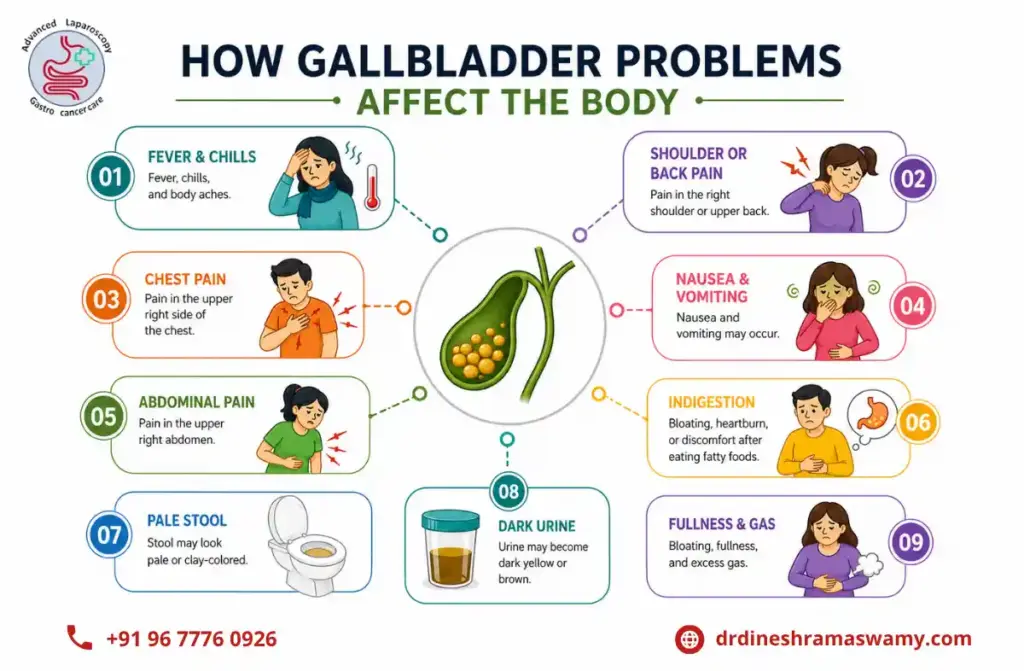
- Sharp pain in the upper right abdomen: One of the most common and noticeable symptoms is a sharp or cramping pain in the upper right side of the abdomen. This pain may start suddenly and can last from a few minutes to several hours. Some patients describe it as a stabbing sensation that may also radiate to the back or right shoulder. Recurrent episodes of this pain are often linked to gallstones blocking the bile flow.
- Pain that worsens after fatty meals: If you notice discomfort or pain after eating oily, fried, or heavy foods, it could be a sign that your gallbladder is struggling to release bile properly. This type of pain typically begins within an hour after eating and may gradually intensify. Over time, patients may start avoiding certain foods altogether due to fear of triggering the pain.
- Nausea or vomiting: Persistent nausea, especially after meals, is another common symptom. In some cases, it may be accompanied by vomiting, making it difficult to maintain a normal diet. This happens because the digestive system is not functioning efficiently when bile flow is disrupted.
- Indigestion and bloating: Many patients report feeling unusually full even after eating small portions. Bloating, excessive gas, and discomfort are often early signs of gallbladder dysfunction. While these symptoms may seem mild, their frequent occurrence should not be ignored.
- Fever with abdominal discomfort: When abdominal pain is accompanied by fever, it may indicate an infection or inflammation of the gallbladder, such as cholecystitis. This is a more serious condition that requires prompt medical attention to prevent further complications.
- Yellowing of skin or eyes (jaundice in severe cases): Jaundice occurs when there is a blockage in the bile duct, preventing bile from flowing normally. This leads to a buildup of bilirubin in the body, causing yellowing of the skin and eyes. It is often associated with dark urine and pale stools and is considered a warning sign of a more advanced condition.
Do All Gallstones Need Surgery?
No.
Gallstones that do not cause symptoms may not always require surgery. In many cases, they can be observed.
The situation changes when gallstones repeatedly cause pain or lead to complications.
Surgery may be considered when there is:
- Recurrent biliary pain
- Acute or repeated gallbladder inflammation
- Gallstone-related pancreatitis
- Complications related to bile duct stones
- Certain gallbladder polyps
- Other gallbladder complications identified during evaluation
The decision should be based on the patient’s symptoms, scan findings, medical history and overall health.
Diagnostic Methods
Accurate diagnosis is the most important step in treating gallbladder conditions effectively. Since symptoms can sometimes mimic other digestive issues, a thorough evaluation using the right diagnostic tools helps confirm the exact problem and its severity. A specialist will recommend tests based on your symptoms, medical history, and clinical findings.
- Ultrasound (First-line and most effective test): Ultrasound is usually the first and most commonly used test to detect gallstones. It is non-invasive, painless, and provides clear images of the gallbladder. This test can identify the presence, size, and number of stones, as well as signs of inflammation or infection.
- CT Scan (Computed Tomography): A CT scan offers more detailed cross-sectional images of the abdomen. It is particularly useful in identifying complications such as infection, perforation, or inflammation spreading beyond the gallbladder. It helps doctors get a broader view of surrounding organs.
- MRCP (Magnetic Resonance Cholangiopancreatography): MRCP is an advanced imaging technique used to examine the bile ducts, liver, and pancreas in detail. It is especially helpful when there is suspicion of bile duct obstruction or stones that are not clearly visible on ultrasound. This test plays a key role in planning further treatment.
- Blood Tests: Blood tests are performed to check for signs of infection, inflammation, or liver dysfunction. Elevated liver enzymes, increased white blood cell count, or abnormal bilirubin levels can indicate complications such as bile duct blockage or infection.
Together, these diagnostic methods provide a clear understanding of the condition, allowing the specialist to decide whether medication, monitoring, or surgery is the best course of action. Early and accurate diagnosis not only improves treatment outcomes but also helps prevent serious complications in the future.
Treatment Options
The most effective and long-term solution is laparoscopic gallbladder removal.
- Minimally invasive procedure
- Advanced surgical tools for precision
- Safe and widely performed
Patients from nearby areas may choose surgeons in Vadapalani because of convenient access to advanced laparoscopic care and specialised treatment facilities.
Advantages of Laparoscopic Gallbladder Surgery
Modern surgery has changed the entire patient experience.
Key benefits:
- Minimal scars: The procedure uses very small incisions, which heal quickly and leave almost invisible marks. This helps patients feel more confident about their appearance after surgery.
- Faster recovery time: Because the surgery is less invasive, the body recovers much faster than with traditional methods. Most individuals are able to get back to their regular daily activities within a short period.
- Reduced hospital stay: Patients usually stay in the hospital for just a day or may even be discharged the same day. This makes the overall treatment process easier and causes minimal interruption to your everyday routine.
- Lower infection risk: Smaller incisions reduce the chances of infection and complications after surgery. This ensures a safer and smoother healing process.
- Early return to normal routine: With less pain and quicker recovery, patients can get back to work and daily activities sooner. This improves overall comfort and quality of life after surgery.
This is why choosing the Best gallbladder surgeon in vadapalani matters—it directly impacts how quickly and comfortably you recover.
Why Choose Dr. Dinesh Ramaswamy in Vadapalani?
Choosing the right surgeon for gallbladder treatment is important, especially when surgery may be required. Dr. Dinesh Ramaswamy has 20+ years of experience in Surgical Gastroenterology and provides evaluation and surgical care for gallstones and other gallbladder conditions.
Key Reasons to Consider Dr. Dinesh Ramaswamy
- Expertise in laparoscopic gallbladder surgery and minimally invasive procedures
- Detailed evaluation based on symptoms, medical history and imaging findings
- Individualised treatment planning based on each patient’s condition
- Focus on patient safety before, during and after surgery
- Clear guidance about the procedure, recovery and follow-up care
If you are looking for a Gallbladder Surgeon in Vadapalani, consulting an experienced surgical gastroenterologist can help you understand whether surgery is necessary and which treatment approach is appropriate.
Consult a Gallbladder Surgeon in Vadapalani
Gallstones are common, but their treatment depends on whether they are causing symptoms or complications.
If you experience repeated upper abdominal pain, nausea after meals, fever, jaundice or have already been diagnosed with symptomatic gallstones, a surgical evaluation can help determine the next step.
An experienced Gallbladder Surgeon in Vadapalani can review your symptoms, imaging and medical history and determine whether observation, further investigation or laparoscopic gallbladder surgery is appropriate.
Timely evaluation is especially important when symptoms are becoming more frequent or severe, as gallstones can occasionally lead to gallbladder inflammation, bile duct obstruction or pancreatitis.
Read more: Signs of gallbladder stones