Choledochal Cyst Excision is the definitive surgical treatment for congenital or acquired dilatation of the bile ducts. This condition carries a significant risk of recurrent infections, pancreatitis, stone formation, and long-term malignant transformation if left untreated. Choledochal Cyst Excision involves complete removal of the abnormal bile duct segment followed by biliary reconstruction to restore safe bile flow. Early surgical intervention is strongly recommended to prevent complications and protect liver function. When performed by an experienced hepatobiliary surgeon, Choledochal Cyst Excision offers excellent long-term outcomes, symptom resolution, and a significant reduction in cancer risk.
A choledochal cyst is a rare congenital condition in which the bile duct becomes abnormally enlarged, disrupting the normal flow of bile from the liver to the small intestine. This can lead to infections, pancreatitis, liver damage, and an increased risk of bile duct cancer if left untreated. Choledochal Cyst Excision is the recommended treatment to remove the cyst and prevent long-term complications.
Surgery is considered the definitive treatment because simply draining the cyst or treating infections does not remove the underlying problem.
The primary goals of surgery include:
Consider a patient who experiences repeated episodes of severe abdominal pain every few months. Each episode is treated with medications, but the symptoms continue to return. Imaging later reveals a choledochal cyst causing intermittent blockage of bile flow. Removing the cyst permanently addresses the source of the problem instead of repeatedly treating its complications.
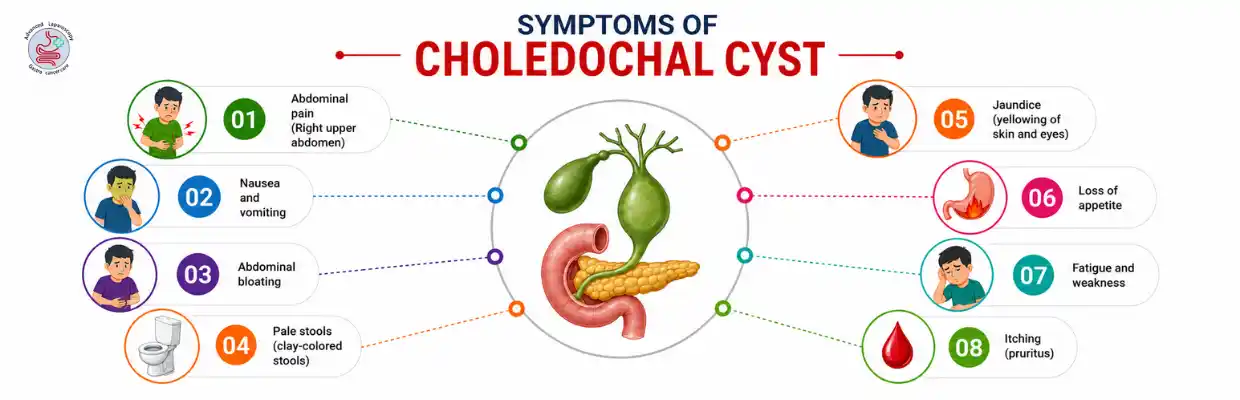
Symptoms vary depending on the patient's age and the size of the cyst.
Common symptoms include:
Other symptoms may include:
Because these symptoms overlap with gallstones and other liver disorders, proper evaluation is essential.
An accurate diagnosis is essential to confirm the presence of a choledochal cyst and determine the most suitable treatment plan. Your doctor may recommend a combination of imaging scans and blood tests to evaluate the bile ducts, liver, and surrounding organs.
Choledochal cysts are classified into different types based on their location and the pattern of bile duct enlargement. Identifying the type of cyst helps surgeons choose the most appropriate surgical approach and achieve better treatment outcomes.
Understanding the type of choledochal cyst is essential for planning the most effective treatment. Early diagnosis and timely surgical intervention help reduce the risk of complications and improve long-term liver and digestive health.
Modern surgical management of choledochal cysts focuses on completely removing the diseased bile duct and restoring normal bile flow to prevent future complications. With advancements in minimally invasive techniques, patients today benefit from safer procedures, reduced pain, and faster recovery.
Overall, the choice of procedure depends on the patient's condition, cyst complexity, and overall health. Consulting experienced specialists ensures the most appropriate surgical approach and safer outcomes. Patients often seek the Best Choledochal Cyst Doctors in Chennai for expert evaluation and advanced minimally invasive care.
Understanding the procedure often helps reduce anxiety before surgery.
Like all major surgeries, choledochal cyst surgery carries certain risks, although complications are relatively uncommon when performed by experienced surgeons.
Potential complications include:
Early diagnosis, experienced surgical care, and regular follow-up significantly reduce these risks.
Recovery after choledochal cyst surgery varies depending on the type of procedure performed and the patient's overall health. Most patients experience a smooth recovery with proper postoperative care and regular follow-up. Following your surgeon's instructions on diet, activity, and medications helps promote faster healing and reduces the risk of complications.
Successful surgery provides long-term health benefits that extend well beyond symptom relief.
Some of the major advantages include:
Patients seeking Choledochal Cyst treatment in Porur often choose minimally invasive surgery because it combines safety with quicker recovery.
Choosing the right surgeon plays an important role in achieving successful surgical outcomes. Dr. Dinesh Ramaswamy is an experienced Surgical Gastroenterologist with more than 15+ years of expertise in managing complex gastrointestinal, hepatobiliary, pancreatic, liver, and minimally invasive surgeries.
His clinical practice focuses on:
Patients benefit from:
He is associated with reputed hospitals across Chennai, allowing patients to access specialized gastrointestinal care with modern surgical facilities. Many patients searching for the Choledochal Cyst Excision in Vadapalani seek experienced specialists who routinely perform advanced hepatobiliary procedures with a focus on patient safety and long-term outcomes.
A choledochal cyst is a serious condition that can lead to infections, pancreatitis, liver damage, and an increased risk of bile duct cancer if left untreated. Choledochal Cyst Excision is the most effective treatment to remove the cyst, restore normal bile flow, and prevent long-term complications. With over 15+ years of experience, Dr. Dinesh Ramaswamy provides advanced laparoscopic and robotic surgical care, helping patients achieve a safe procedure, faster recovery, and improved long-term health.
Read more: Best Gastroenterologist in Porur
Yes. Choledochal cysts carry a lifelong risk of infection and cancer, even in asymptomatic patients. Surgery is recommended once diagnosed to prevent future complications and irreversible liver damage.
No. Non-surgical treatments like stenting or drainage do not eliminate cancer risk. Complete surgical excision is the only definitive and preventive treatment.
Patients require periodic liver function tests and imaging. Regular follow-up ensures early detection of strictures and maintains long-term liver health after reconstruction.
Treatment options include open surgery, laparoscopic (keyhole) surgery, and robotic-assisted surgery. The choice depends on the patient’s condition, cyst type, and surgeon’s recommendation.
Most patients recover within 4–6 weeks after minimally invasive surgery. Open surgery may require a longer recovery period depending on the complexity of the procedure.
Laparoscopic surgery offers many advantages such as smaller scars, less pain, reduced blood loss, and faster recovery. However, the final approach depends on the individual case.
MRCP (Magnetic Resonance Cholangiopancreatography) is a specialized scan used to get detailed images of the bile ducts. It helps doctors accurately diagnose the cyst and plan surgery.
Yes, if left untreated, choledochal cysts carry an increased risk of bile duct cancer over time. This is why early surgical removal is strongly recommended.
Yes, when performed by experienced surgeons, it is a safe and effective procedure with a high success rate and good long-term outcomes.
Patients usually start with liquids, then progress to soft foods, and gradually return to a normal balanced diet as digestion improves.
You should consult a specialist for Choledochal Cyst Treatment in Chennai if you experience symptoms such as abdominal pain, jaundice, fever, or recurrent digestive issues, or if imaging shows a bile duct cyst.
Stay updated with expert insights, latest trends, and helpful articles.
Take the first step toward better digestive health. Book an appointment with our laparoscopy and gastroenterology team to receive expert care, clear guidance, and advanced minimally invasive solutions tailored to your needs.