
Medically reviewed by Dr. Dinesh Ramaswamy, MBBS, MS, MCh, DNB, FIAGES. Specialist in Surgical Gastroenterology and GI Oncology | Last reviewed: August 2026
Bloating is a common digestive symptom that causes a feeling of fullness, tightness, or pressure in the abdomen, sometimes with visible swelling. Understanding what causes bloating is essential for identifying the underlying reason and finding effective relief. It can occur due to overeating, constipation, food intolerances, stress, or digestive conditions such as IBS. While occasional bloating is usually harmless and improves with simple dietary and lifestyle changes, frequent or persistent bloating may indicate an underlying health issue that requires medical evaluation.
Why Does Bloating Happen?
One of the biggest myths about bloating is that it simply means you have too much gas.
While excess gas can certainly contribute, it’s only one piece of the puzzle. In fact, your digestive system produces gas every day as part of normal digestion. Most of the time, you never notice it because your body absorbs it or passes it naturally.
why does bloating occur?
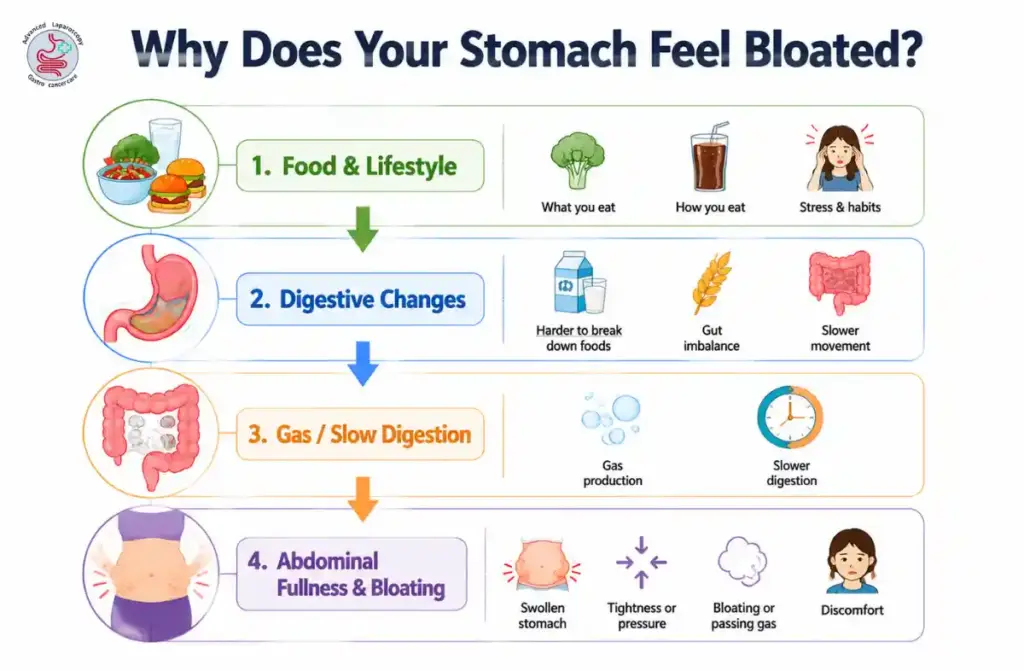
The answer lies in how your digestive system handles food, gas, and movement through the intestines. When this process slows down, produces more gas than usual, or your gut becomes unusually sensitive, the result is the uncomfortable feeling we call bloating.
Think of your digestive system like a well-organized highway. Food, fluids, and gas are constantly moving along a planned route. If traffic flows normally, everything passes smoothly. But when movement slows—because of constipation, slow digestion, or certain digestive disorders—pressure begins to build, leading to fullness and discomfort.
At the same time, some people don’t actually produce excessive gas at all. Instead, their intestines become more sensitive to normal digestive activity. Even a small amount of gas or intestinal stretching can feel uncomfortable, which is why two people can eat exactly the same meal but only one experiences bloating.
The table below summarizes the most common ways bloating develops.
| Why Bloating Happens | What It Means |
| Increased gas production | Certain foods ferment in the colon and naturally produce more gas. |
| Trapped gas | Gas cannot move easily because bowel movement has slowed or digestion is delayed. |
| Slow digestion | Food stays in the stomach or intestines longer, allowing more fermentation to occur. |
| Increased gut sensitivity | Normal amounts of gas feel uncomfortable because the digestive nerves are more sensitive, as seen in IBS. |
| Fluid retention | Hormonal changes or certain medical conditions can cause the abdomen to feel swollen even without excess gas. |
Clinical Insight: Feeling bloated doesn’t always mean you have excessive gas. In many people, especially those with irritable bowel syndrome (IBS), the problem is increased sensitivity to normal digestive activity rather than the amount of gas itself.
Understanding these mechanisms explains why there is no single treatment for bloating. The most effective approach is to identify what is causing your digestive system to behave differently.
What Is Your Body Trying to Tell You?
Doctors rarely diagnose the cause of bloating based on the symptom alone. Instead, they look for patterns.
The timing of your bloating, the foods that trigger it, and the symptoms that accompany it often provide valuable clues about what’s happening inside your digestive system.
For example, bloating that appears after dairy products points toward a different cause than bloating associated with constipation or bloating that persists throughout the day regardless of what you eat.
| Your Bloating Pattern | Possible Cause |
| After large meals | Overeating or slow digestion |
| After dairy products | Lactose intolerance |
| Along with constipation | Trapped gas due to slow bowel movement |
| Along with diarrhea | Food intolerance, IBS, or gastrointestinal infection |
| Mostly in the evening | Gas accumulation throughout the day |
| Around menstrual periods | Hormonal changes and temporary fluid retention |
| Persistent for several weeks | Digestive or other medical conditions that need evaluation |
| Sudden severe bloating with intense pain | Requires urgent medical assessment |
The Most Common Causes of Bloating
By now, we’ve established an important point: bloating is a symptom, not a diagnosis. The next question is naturally, “What’s causing it?”
For most people, the answer isn’t a serious disease. Instead, bloating often develops because of a combination of eating habits, digestive changes, food intolerances, or conditions that affect how food and gas move through the intestines.
Let’s look at the most common causes and, more importantly, understand why they lead to bloating.
Everyday Eating Habits That Can Cause Bloating
Sometimes bloating is caused not by what you eat, but how you eat. Eating too quickly, overeating, or drinking carbonated beverages can slow digestion and increase swallowed air, leading to gas and abdominal discomfort. Large meals also take longer to digest, allowing more gas to build up. Adopting mindful eating habits, eating smaller portions, and limiting fizzy drinks can help reduce recurring bloating and improve digestive comfort.
When Healthy Foods Become the Problem
One of the biggest surprises for many people is that some of the healthiest foods are also among the most common causes of bloating.
Foods rich in fiber and certain carbohydrates provide excellent nutrition, but they’re also fermented by beneficial bacteria living in the large intestine. During this natural process, gas is produced.
That doesn’t mean these foods are unhealthy—it simply means your digestive system has to work a little harder to process them.
| Food | Why It May Cause Bloating |
| Beans and lentils | Rich in fermentable carbohydrates that naturally produce gas |
| Broccoli, cabbage and cauliflower | High in raffinose, which is broken down by gut bacteria |
| Onions and garlic | Contain FODMAP carbohydrates that may be poorly absorbed by some people |
| Apples, pears and certain fruits | Naturally contain fructose and sorbitol |
| Dairy products | May cause bloating in people with lactose intolerance |
| Artificial sweeteners | Some sugar alcohols are poorly absorbed and ferment in the intestine |
Clinical Insight: Every digestive system is unique. A food that causes bloating in one person may be perfectly tolerated by another. Identifying your own trigger foods is usually more helpful than following unnecessarily restrictive diets.
When Your Bowels Slow Down, Bloating Often Speeds Up
Constipation is one of the most common reasons people experience persistent bloating.
Think of your intestines as a motorway. Under normal circumstances, food, waste, and gas continue moving forward together. But when stool remains in the colon for longer than it should, everything behind it—including gas—moves more slowly.
As pressure builds, your abdomen begins to feel heavy, tight, and uncomfortable.
This explains why many people notice that their bloating improves shortly after having a bowel movement.
Constipation may also be accompanied by hard stools, infrequent bowel movements, straining, or the feeling that the bowels haven’t emptied completely. Addressing constipation often reduces bloating without the need for gas-relieving medications.
Food Intolerances: When Your Body Struggles to Digest Certain Foods
Food intolerance is another common explanation for recurring bloating, particularly when symptoms appear after eating specific foods.
Unlike food allergies, which involve the immune system, food intolerances mainly affect digestion. The body lacks enough of a particular enzyme or has difficulty absorbing certain nutrients, allowing them to pass into the colon where bacteria ferment them and produce gas.
Some of the most common examples include:
- Lactose intolerance, where the body cannot properly digest the natural sugar found in milk and dairy products.
- Fructose malabsorption, in which certain fruit sugars aren’t fully absorbed before reaching the colon.
- Celiac disease, an autoimmune condition triggered by gluten that damages the lining of the small intestine and interferes with nutrient absorption.
While occasional bloating from a food intolerance may be manageable, persistent symptoms should be properly evaluated before making major dietary changes.
Why Some People Feel Bloated Even When Nothing Looks Wrong
Perhaps the most misunderstood cause of bloating is irritable bowel syndrome (IBS).
Many people assume IBS causes excessive gas.
In reality, that’s not always the case.
One of the defining features of IBS is increased gut sensitivity. The digestive nerves become more responsive to normal stretching inside the intestines. As a result, the same amount of gas that another person wouldn’t even notice can feel uncomfortable or painful.
This explains why medical tests may appear completely normal while the symptoms remain very real.
People with IBS may also experience:
- Abdominal pain that improves after a bowel movement.
- Constipation, diarrhea, or alternating bowel habits.
- Bloating that fluctuates from day to day.
- Symptoms that worsen during periods of emotional stress.
Understanding this mechanism is reassuring because it highlights that normal test results don’t mean your symptoms are imaginary—they simply point toward a functional digestive disorder rather than structural disease.
Can Stress and Hormones Really Affect Digestion?
The digestive system and brain communicate continuously through what doctors call the gut-brain axis.
During periods of stress or anxiety, hormones released by the body can influence how quickly the intestines contract, increase sensitivity to normal digestive activity, and even alter the balance of gut bacteria.
This is why many people notice bloating before examinations, important presentations, or emotionally stressful events.
Hormonal changes can also contribute. Many women experience bloating in the days leading up to menstruation because hormonal fluctuations temporarily affect fluid balance and bowel movement. Pregnancy and menopause may also produce similar digestive changes.
Although these causes are usually temporary, recognizing them helps explain why bloating doesn’t always originate from the digestive tract itself.
Could Persistent Bloating Be a Sign of Something More Serious?
Most episodes of bloating are related to eating habits, constipation, food intolerances, or functional digestive disorders like IBS. However, bloating that becomes persistent, progressively worse, or is accompanied by other symptoms deserves medical attention.
Rather than causing unnecessary worry, it’s helpful to understand which situations require further evaluation.
Conditions that may contribute to persistent bloating include:
- Delayed stomach emptying (gastroparesis), where food remains in the stomach longer than normal.
- Small intestinal bacterial overgrowth (SIBO), in which excessive bacteria in the small intestine produce additional gas.
- Inflammatory bowel diseases such as Crohn’s disease and ulcerative colitis.
- Gallbladder, liver, or pancreatic disorders that interfere with normal digestion.
- Less commonly, gynecological conditions such as ovarian cysts, endometriosis, or ovarian cancer.
It’s important to remember that persistent bloating alone does not mean cancer. Most people are ultimately diagnosed with manageable digestive conditions.
How Do Doctors Diagnose the Cause of Bloating?
By the time someone decides to see a doctor, the biggest question usually isn’t “How do I stop the bloating?” It’s “Why does this keep happening?”
The answer isn’t always found in a blood test or a scan.
In fact, diagnosing bloating often begins with something much simpler—understanding your symptoms. The pattern of your bloating, when it occurs, what triggers it, and whether it’s accompanied by other digestive symptoms usually provides the strongest clues.
That’s why doctors focus on identifying the root cause, rather than simply treating the feeling of bloating itself.
What Happens During the Medical Evaluation?
The first step is a detailed discussion about your symptoms and overall health. Your doctor may ask:
- When did the bloating first begin?
- Does it occur after every meal or only after certain foods?
- Is your abdomen visibly swollen, or does it only feel tight?
- Do you have constipation, diarrhea, heartburn, or nausea?
- Does the bloating improve after passing gas or having a bowel movement?
- Have you noticed unexplained weight loss, vomiting, fever, or blood in your stool?
- Are you taking medications that may affect digestion?
A physical examination follows, during which the abdomen is assessed for tenderness, swelling, abnormal bowel sounds, hernias, enlarged organs, or fluid accumulation.
In many people, these two steps alone provide enough information to guide initial treatment without extensive testing.
When Are Tests Needed?
If symptoms are persistent, severe, or associated with warning signs, your doctor may recommend investigations to rule out underlying digestive conditions.
| Investigation | Why It May Be Recommended |
| Blood tests | Check for anemia, infection, inflammation, thyroid problems, or nutritional deficiencies |
| Stool tests | Detect infection, inflammation, or hidden blood |
| Breath tests | Diagnose lactose intolerance or small intestinal bacterial overgrowth (SIBO) |
| Abdominal ultrasound | Evaluate the liver, gallbladder, pancreas, kidneys, and pelvic organs |
| Upper GI endoscopy | Assess persistent indigestion, early fullness, or upper digestive symptoms |
| Colonoscopy | Investigate persistent bowel changes, bleeding, or colorectal conditions |
| CT or MRI scan | Used when symptoms suggest a more complex underlying condition |
It’s important to remember that not everyone with bloating needs these tests. Investigations are chosen based on your age, medical history, physical examination, and associated symptoms—not simply because bloating is present.
When Should You See a Doctor?
Occasional bloating after a heavy meal is common and usually improves without treatment.
However, bloating that becomes frequent, persistent, or progressively worse shouldn’t be ignored.
You should arrange a medical consultation if you experience:
- Bloating lasting longer than two to three weeks.
- Symptoms that occur almost every day.
- Persistent constipation or diarrhea.
- Feeling full after eating very small amounts.
- Recurrent nausea or vomiting.
- Symptoms that interfere with work, sleep, or daily activities.
Conclusion
Bloating is a common digestive symptom that is often caused by lifestyle habits or underlying digestive conditions. While occasional bloating is usually harmless, persistent or frequent symptoms should be evaluated to identify the root cause. Making healthy dietary and lifestyle changes can provide lasting relief for many people. If bloating is severe or accompanied by warning signs, consult a healthcare professional for timely diagnosis and appropriate treatment.