Medically reviewed by Dr. Dinesh Ramaswamy, MBBS, MS, MCh, DNB, FIAGES. Specialist in Surgical Gastroenterology and GI Oncology | Last reviewed: August 2026
Digestive conditions such as gallstones, hernias, pancreatitis, bowel disorders, and gastrointestinal tumours may sometimes require surgical treatment. Consulting an experienced Surgical Gastroenterologist in Chennai can help identify the condition and determine the right treatment approach.
Dr. Dinesh Ramaswamy provides specialised care for conditions affecting the stomach, intestines, liver, gallbladder, and pancreas. His expertise in laparoscopic and robotic surgery supports precise treatment, patient safety, and smoother recovery.
Who is a Surgical Gastroenterologist?
Surgical gastroenterology sits at the intersection of two highly specialized disciplines: gastroenterology (the study and treatment of the digestive system) and surgery. It deals with disorders of the esophagus, stomach, small intestine, large intestine, liver, gallbladder, bile ducts, pancreas, and spleen — essentially the entire digestive tract and its surrounding organs.
Think of it this way: if your gut health problem is a building with a crumbling foundation, a gastroenterologist examines the structure and recommends repairs. A surgical gastroenterologist is the one who picks up the tools and rebuilds it.
Role of a Surgical Gastroenterologist
A surgical gastroenterologist wears many hats throughout a patient’s care journey:
- Diagnosis: Using endoscopy, imaging, and lab tests to identify the root cause of gastrointestinal symptoms
- Surgical treatment: Performing minimally invasive or open surgical procedures to correct structural problems, remove tumors, or repair damaged organs
- Postoperative care: Monitoring recovery, managing complications, and guiding rehabilitation after surgery
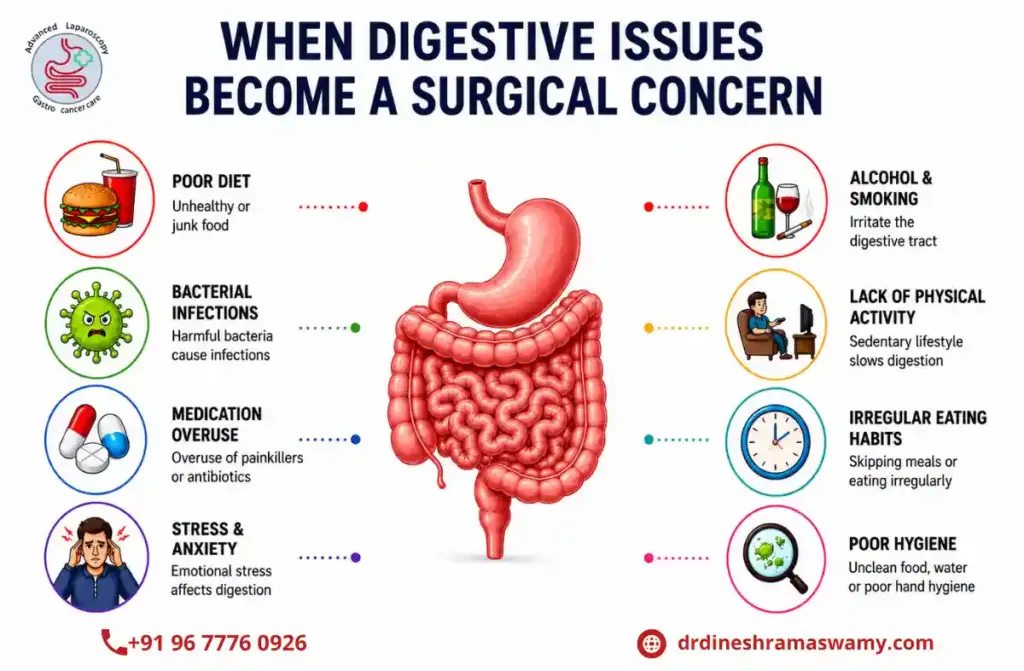
Difference Between a Gastroenterologist and Surgical Gastroenterologist
Many patients understandably confuse the two. A gastroenterologist (non-surgical) focuses on medical management, including medications, lifestyle modifications, endoscopic procedures, and dietary therapy. A surgical gastroenterologist, on the other hand, steps in when these approaches are not sufficient.
Conditions such as gallstones causing repeated infections, a hernia compressing nearby structures, or a colorectal tumor often require surgical intervention. In such cases, a surgical specialist becomes essential, and patients often seek the expertise of the best GI surgeon in Chennai for advanced and effective treatment outcomes.
Meet Our Expert – Dr. Dinesh Ramaswamy
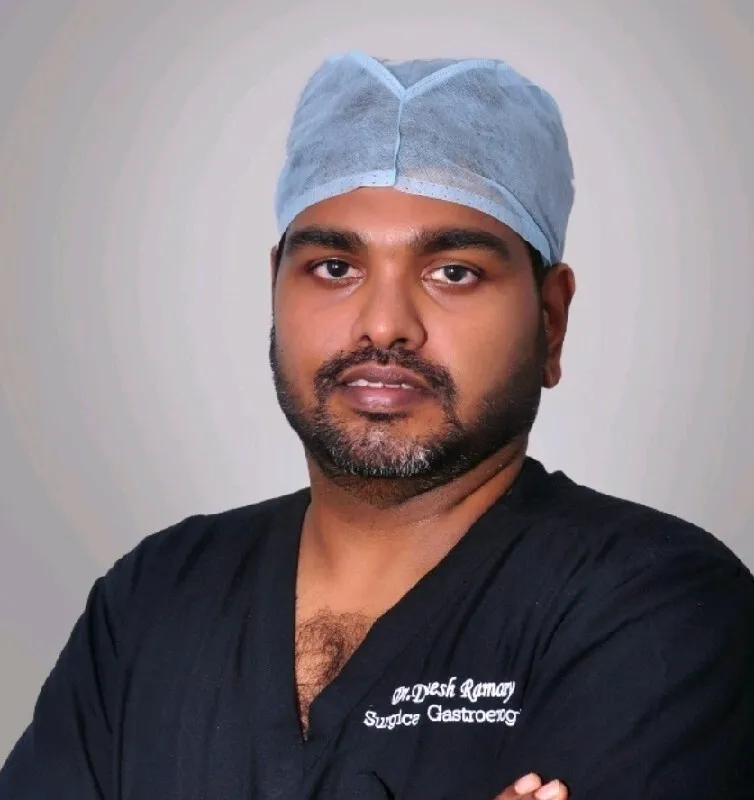
- Qualifications: MBBS, MS (General Surgery), MCh (Surgical Gastroenterology), DNB, FIAGES
- Experience: 15+ Years
Dr. Dinesh Ramaswamy is a surgical gastroenterologist and GI onco surgeon in Chennai with over 15+ years of experience in treating complex digestive and abdominal conditions. He holds MBBS, MS in General Surgery, MCh in Surgical Gastroenterology, DNB and FIAGES qualifications.
His areas of clinical interest include gallbladder surgery, hernia repair, colorectal surgery, gastrointestinal cancer surgery, liver and pancreatic procedures, and minimally invasive gastrointestinal surgery. Depending on the diagnosis, he may recommend observation, medical management, further investigation or surgery.
Dr. Dinesh focuses on explaining the diagnosis, available treatment options, possible risks and expected recovery before a treatment decision is made. This helps patients and their families participate confidently in the care-planning process.
Research Publications
- Thoracic duct injury following esophagectomy in carcinoma of the esophagus: ligation by the abdominal approach
- Long-term functional outcome after pancreatoduodenectomy for periampullary carcinoma with morphological correlation
- Correlations of portal pressure in post‐cholecystectomy benign biliary stricture
Our commitment to advancing patient care extends beyond clinical practice through active contributions to medical research. The publications listed below reflect our contributions to peer-reviewed journals and our dedication to evidence-based healthcare, innovation, and continuous professional development.
To explore the complete list of research publications and academic contributions, visit our Google Scholar profile
Common Digestive Disorders Treated by a Surgical Gastroenterologist in Chennai
- Gallbladder and Biliary Tract Disorders: Gallbladder disease is one of the most common reasons patients seek gastrointestinal surgical care. Conditions include:
- Gallstones (Cholelithiasis): Hard deposits in the gallbladder that cause severe right-sided abdominal pain, especially after fatty meals.
- Gallbladder inflammation (Cholecystitis): Infection and swelling of the gallbladder, often requiring urgent surgical removal.
- Gallbladder polyps: Abnormal growths on the gallbladder wall that may need monitoring or removal
- Bile duct obstruction: Blockage in the bile ducts that can cause jaundice, dark urine, and life-threatening infection.
- Hernia Conditions: A hernia occurs when an internal organ pushes through a weak spot in the surrounding muscle or tissue. Surgical intervention is often the most reliable and conclusive treatment option. Common types include:
- Inguinal hernia (groin area)
- Umbilical hernia (belly button area)
- Hiatal hernia (The upper part of the stomach moves upward through the diaphragm opening)
- Incisional hernia (occurring at a previous surgical scar)
- Complex abdominal wall hernias
- Appendix-Related Disorders: Acute appendicitis remains one of the most frequent surgical emergencies. Left untreated, a ruptured appendix can cause life-threatening peritonitis. Surgical gastroenterologists also manage chronic or recurrent appendiceal inflammation and complicated appendix infections.
- Gastrointestinal and Digestive Tract Cancers: Early detection and surgical removal offer the best outcomes for GI cancers. A skilled Surgical Gastroenterologist in Chennai manages:
- Esophageal cancer
- Stomach (gastric) cancer
- Small intestine tumors
- Colon and rectal cancer
- Early-stage GI malignancies requiring curative surgery
- Liver Diseases Requiring Surgical Management: The liver is remarkably resilient — but certain conditions demand surgical intervention. These include liver tumors (both benign and malignant), liver cysts and abscesses, hepatocellular carcinoma, and complex liver lesions. Liver transplantation evaluation is also part of this scope.
- Pancreatic Disorders: Pancreatic conditions are notoriously difficult to diagnose early. A surgical gastroenterologist treats acute and chronic pancreatitis, pancreatic cysts, obstructive pancreatic conditions, and both benign and malignant pancreatic tumors.
- Colorectal and Anal Disorders: Far more patients deal with these conditions than openly discuss them. Surgical management includes:
- Hemorrhoids (piles) not responding to conservative treatment
- Anal fissures and fistulas
- Colorectal polyps, especially those at risk of malignancy
- Inflammatory colorectal conditions requiring surgical correction
- Spleen-Related Conditions: While less commonly discussed, spleen disorders — including an enlarged spleen (splenomegaly), splenic cysts, splenic tumors, and traumatic spleen injuries — may all require surgical care depending on severity.
Symptoms That Indicate You Should See a Surgical Gastroenterologist
- Persistent Abdominal Pain: Pain that keeps coming back — especially if localized to the right side, upper abdomen, or around the belly button — deserves investigation. It’s not something to manage with antacids indefinitely.
- Chronic Indigestion and Bloating: Occasional bloating after a heavy meal is normal. Persistent bloating, gas, and indigestion that interfere with daily activities are not.
- Difficulty Swallowing: Dysphagia — the medical term for trouble swallowing — can signal esophageal narrowing, acid damage, or tumor growth. It should never be dismissed.
- Persistent Acid Reflux: Heartburn that doesn’t improve with lifestyle changes or medication may indicate a hiatal hernia or GERD requiring surgical correction.
- Blood in Stool: Whether it’s bright red blood or dark, tarry stools, blood in the stool always warrants urgent evaluation. It can indicate anything from hemorrhoids to colorectal cancer.
- Unexplained Weight Loss: Losing significant weight without trying is a red flag for gastrointestinal malignancy or severe malabsorption.
- Recurrent Vomiting or Nausea: Repeated nausea and vomiting — particularly after meals — can suggest a gastric obstruction, ulcer, or motility disorder.
- Changes in Bowel Habits: Alternating constipation and diarrhea, pencil-thin stools, or a sudden change in bowel frequency that lasts more than a few weeks needs professional evaluation.
- Jaundice and Liver-Related Symptoms: Yellowing of the skin or eyes, dark urine, and pale stools are classic signs of bile duct obstruction or liver dysfunction — both of which may require surgical treatment.
Advanced Surgical Procedures Offered by a Surgical Gastroenterologist in Chennai
- Laparoscopic Gastrointestinal Surgery: The cornerstone of modern GI surgery. Using tiny incisions and a camera, the surgeon operates with remarkable precision while minimizing trauma to the body.
- Gallbladder Removal Surgery (Laparoscopic Cholecystectomy): The most commonly performed GI procedure — and one of the safest when done laparoscopically. Most patients go home the same day or the next morning.
- Hernia Repair Surgery: Mesh-based laparoscopic hernia repair has dramatically reduced recurrence rates and recovery times compared to traditional open surgery.
- Appendectomy: Surgical removal of the appendix, typically performed laparoscopically within hours of diagnosis to prevent rupture.
- Colorectal Surgery: Surgical removal of affected portions of the colon or rectum, often using laparoscopic or robotic techniques for faster recovery.
- Liver Surgery: From resections to ablation procedures, liver surgery requires exceptional precision and is performed by experienced hands using advanced imaging guidance.
- Pancreatic Surgery: Among the most complex GI surgeries, procedures like the Whipple operation (pancreaticoduodenectomy) require a center of excellence with dedicated expertise.
- Bariatric and Metabolic Surgery: Weight loss surgeries like sleeve gastrectomy and gastric bypass not only help with obesity but also resolve type 2 diabetes and other metabolic conditions.
- Gastrointestinal Cancer Surgery: From radical resections to minimally invasive oncological procedures, cancer surgery is carefully planned with curative intent wherever possible.
- Robotic Gastrointestinal Surgery: Robotic platforms like the da Vinci system give surgeons superior visualization and dexterity for complex procedures, especially in confined anatomical spaces.
Benefits of Minimally Invasive Gastrointestinal Surgery
- Smaller Surgical Incisions: Keyhole incisions mean less tissue disruption — and far less scarring than open surgery.
- Reduced Postoperative Pain: Patients consistently report significantly lower pain levels after laparoscopic procedures, reducing dependence on strong painkillers.
- Faster Recovery Time: What used to require weeks of bed rest now often takes days. Many patients resume light activity within a week.
- Shorter Hospital Stay: Most laparoscopic GI surgeries require only one to three days of hospitalization, compared to a week or more for open surgery.
- Lower Risk of Infection: Smaller wounds mean fewer entry points for bacteria and dramatically reduced infection rates.
- Better Cosmetic Outcomes: Patients appreciate the discreet scarring — especially in visible areas like the abdomen.
- Early Return to Daily Activities: Getting back to work, family, and routine faster is one of the most valued outcomes patients report after minimally invasive surgery.
Why Choose Minimally Invasive GI Surgery?
| Benefit | Advantage |
|---|---|
| Smaller Incisions | Better cosmetic results |
| Less Pain | Improved patient comfort |
| Faster Recovery | Earlier return to daily activities |
| Reduced Blood Loss | Safer surgical outcomes |
| Lower Infection Risk | Fewer postoperative complications |
| Shorter Hospital Stay | Reduced healthcare burden |
Diagnostic Services for Accurate Gastrointestinal Disease Detection
- Upper GI Endoscopy: A thin, flexible camera is passed through the mouth to examine the esophagus, stomach, and upper small intestine in real time.
- Colonoscopy: It is considered the most reliable method for evaluating the large intestine and identifying colorectal cancer at an early, more treatable stage.
- Endoscopic Ultrasound (EUS): Combines endoscopy and ultrasound to visualize the walls of the digestive tract and surrounding organs with exceptional detail.
- CT Scan and MRI: Cross-sectional imaging provides a complete anatomical map of abdominal organs, helping identify tumors, abscesses, or structural abnormalities.
- Liver Function Assessment: Blood tests measuring liver enzymes, bilirubin, and albumin levels give a functional picture of hepatic health.
- Blood and Laboratory Investigations: Complete blood counts, tumor markers, and inflammatory markers help build the diagnostic picture.
- Biopsy and Histopathology: Tissue samples collected during endoscopy or surgery are analyzed under a microscope to confirm or rule out cancer and other conditions.
Does Every Digestive Condition Require Surgery?
No. Many digestive conditions can initially be managed through medication, dietary changes, endoscopic treatment or regular monitoring. Surgery is considered when symptoms continue, complications develop, a structural problem is identified or non-surgical treatment is unlikely to provide lasting relief.
Dr. Dinesh Ramaswamy evaluates the diagnosis, imaging findings, symptom severity and overall health before recommending a treatment plan. When surgery is advised, the procedure, benefits, possible risks and expected recovery are explained clearly.
What to Expect During Your Consultation?
- Medical History Evaluation: Your surgeon will begin by understanding your complete symptom history — duration, severity, triggers, prior treatments, and family history of gastrointestinal disease.
- Physical Examination: A careful abdominal examination helps identify tenderness, masses, hernias, or organ enlargement.
- Diagnostic Testing: Based on findings, you may be referred for blood tests, imaging, or endoscopic procedures to confirm a diagnosis.
- Treatment Planning: Your surgeon will explain all treatment options — medical, endoscopic, or surgical — in plain language, helping you make an informed decision.
- Surgical Preparation and Follow-Up: If surgery is recommended, you’ll receive detailed pre-operative instructions and a structured follow-up plan to support a smooth recovery.
Why Choose Dr. Dinesh Ramaswamy
Choosing the right surgical gastroenterologist is one of the most important decisions you’ll make for your digestive health. With Dr. Dinesh Ramaswamy, you’re not just choosing a skilled surgeon — you’re choosing a care partner who stays committed to your well-being long after the procedure is complete. His combination of technical expertise, advanced technology, and genuine patient focus makes him a trusted name in gastrointestinal surgery across Chennai.
- Extensive Experience in Gastrointestinal Surgery: Experience matters enormously in surgical outcomes. The best GI surgeon in Chennai brings not just technical training but thousands of procedures worth of judgment.
- Expertise in Complex Digestive Disorders: From routine gallbladder removals to multi-organ cancer surgeries, complex cases are handled with calm, methodical expertise.
- Advanced Laparoscopic and Robotic Technology: Cutting-edge surgical technology is only valuable when wielded by hands that know how to use it — and our team trains continuously to stay ahead.
- Personalized Patient-Centered Care: Every patient is different. Treatment plans are never one-size-fits-all. Your individual health history, lifestyle, and recovery goals shape every decision.
- Multidisciplinary Team Approach: Gastroenterology, oncology, radiology, and nutrition specialists collaborate closely to ensure comprehensive care at every stage.
- Comprehensive Pre- and Postoperative Care: From your first consultation through final follow-up, you receive continuous support — not just a one-time surgical encounter.
- High Success Rates and Patient Satisfaction: Consistent surgical outcomes and patient testimonials speak for themselves. Trust is built over time, one successful recovery at a time.
Preventing Serious Digestive Disorders
- Healthy Dietary Habits: A fiber-rich diet, adequate hydration, and reduced processed food consumption go a long way in maintaining gut health and preventing conditions like constipation, diverticulitis, and colon polyps.
- Maintaining a Healthy Weight: Obesity significantly increases the risk of GERD, gallstones, fatty liver disease, and colorectal cancer. Weight management is one of the most powerful tools in gastrointestinal disease prevention.
- Avoiding Tobacco and Excessive Alcohol: Both are significant risk factors for esophageal cancer, stomach cancer, pancreatitis, and liver disease. Reducing or eliminating them has measurable protective effects.
- Regular Health Screenings: Colonoscopy starting at age 45 (or earlier with a family history of colon cancer), liver function tests for those with risk factors, and periodic abdominal ultrasound can catch problems years before symptoms appear.
- Early Detection of Gastrointestinal Conditions: The earlier a GI condition is identified, the simpler and safer the treatment. Don’t wait for pain to become unbearable or symptoms to become impossible to ignore.
Conclusion
Your digestive system works continuously, and when issues like gallstones, polyps, hernias, liver disorders, or unexplained GI symptoms arise, timely specialist care becomes essential. A Best Surgical Gastroenterologist in Chennai provides the right balance of advanced diagnosis and surgical expertise to manage conditions that cannot be treated with medication alone. With modern techniques and experienced care, patients can expect safe, effective, and lasting solutions. Choosing the right specialist ensures you receive clarity, confidence, and the right treatment at the right time. Don’t delay care due to fear or uncertainty—early consultation leads to better outcomes. Take the first step toward improved digestive health and long-term relief by consulting an expert today.
Book your appointment today and take the first step toward genuine relief and lasting gut health.