Gallbladder stones are a common digestive condition that can silently develop over time. While some people may not notice symptoms initially, others experience sudden and severe discomfort. Recognizing the signs of gallbladder stones early can prevent serious complications and avoid emergency treatment. Many patients ignore mild digestive symptoms, assuming they are related to acidity or gas. However, understanding the early signs of gallbladder stones helps in seeking timely medical advice and preventing worsening of the condition.
What Are Gallbladder Stones?
Gallbladder stones are solid particles that form when bile becomes overly concentrated and crystallizes inside the gallbladder. They may vary in size from tiny grains to larger stones. These stones typically form due to imbalance in bile composition, excess cholesterol, or poor gallbladder emptying. Over time, they may block bile flow and trigger the symptoms of having stone in gallbladder, especially when they move or obstruct ducts.
Early Signs of Gallbladder Stones
Gallbladder stones, also known as cholelithiasis, may not always show symptoms, but when they do, the early signs are often quite distinct. The early signs of gallbladder stones can include sharp abdominal pain, digestive discomfort, and even nausea after meals. Recognizing these signs early can help in seeking timely medical advice for effective treatment and prevention of complications.
- Sudden Onset of Sharp Pain: A common early symptom of gallbladder stones is a sharp, cramping pain in the upper right abdomen. This pain can last from minutes to hours and may be triggered by meals, particularly fatty or greasy foods.
- Pain Triggered by Meals: Many people with gallbladder stones experience pain shortly after eating, especially if the meal is rich in fat. This pain occurs as the gallbladder tries to release bile to digest fats but is obstructed by the stones.
- Radiating Pain to Shoulder or Back: The pain from gallbladder stones can often radiate from the upper abdomen to the right shoulder or even between the shoulder blades in the back. This is due to the nerve pathways involved in gallbladder pain.
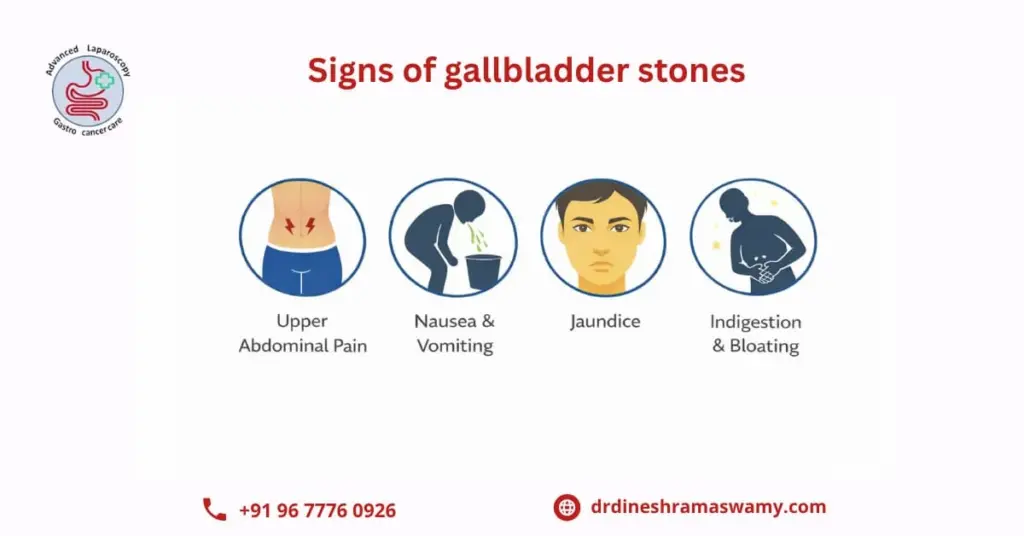
- Digestive Distress Symptoms: Frequent nausea, bloating, indigestion, and vomiting are also common symptoms in the early stages of gallbladder stones. These digestive issues occur as the gallbladder’s function is compromised by the stones.
- Asymptomatic Gallstones : In some cases, gallstones may not cause any symptoms at all. These are known as “silent gallstones.” However, they can still lead to serious complications if left untreated, which is why regular check-ups are important.
Symptoms of Gallbladder Stones
Gallbladder stones can cause a range of symptoms, some of which may be intense and require immediate medical attention. Symptoms of having stone in gallbladder vary from mild discomfort to severe pain and complications. Early recognition of these signs can help prevent further health issues and lead to timely treatment.
- Gallbladder Attack (Biliary Colic): A gallbladder attack, also known as biliary colic, is marked by sudden, severe pain in the upper right abdomen or below the breastbone. This pain often comes in waves and can last from a few minutes to several hours, triggered by fatty meals or other factors.
- Radiating Pain to Shoulder or Back: Pain from gallbladder stones can sometimes radiate to the right shoulder or between the shoulder blades. This occurs due to shared nerve pathways, causing discomfort in areas distant from the gallbladder itself.
- Digestive Upset and Discomfort: Frequent nausea, vomiting, bloating, and indigestion are common symptoms associated with gallstones. These digestive issues happen as the gallbladder struggles to properly release bile, leading to discomfort and difficulty digesting food.
- Signs of Systemic Infection: If a gallbladder stone causes an infection, symptoms like fever and chills can occur. This can indicate a serious complication, such as a gallbladder infection or bile duct obstruction, which may require immediate medical intervention.
- Yellowing of Skin and Eyes (Jaundice): Jaundice, or the yellowing of the skin and the whites of the eyes, can develop when a gallstone blocks the bile duct, preventing bile from properly draining. This can lead to a buildup of bilirubin in the blood, causing yellow discoloration.
- Changes in Stool or Urine Color: Changes in stool and urine color are also common with gallstones. Light-colored (clay-colored) stools or dark urine may indicate a blockage in the bile ducts, preventing bile from entering the intestines and causing an imbalance in the digestive process.
When Should You See a Doctor?
If you experience any of the symptoms of gallbladder stones problems, it’s important to seek medical attention. Persistent pain, especially in the upper abdomen, jaundice, or digestive disturbances, could indicate a serious issue that requires immediate care. If pain becomes severe, lasts for several hours, or is accompanied by fever, chills, or vomiting, it’s crucial to consult a doctor. Timely intervention can help prevent complications like infections, bile duct blockages, or damage to the gallbladder. If you’re unsure about your symptoms, it’s always better to err on the side of caution and schedule an appointment with a healthcare provider.
How Gallbladder Stones Are Diagnosed
- Physical Examination: Your doctor will start by reviewing your symptoms, such as pain or nausea, and conducting a physical examination of your abdomen. This helps identify any tenderness or swelling, which can indicate gallbladder problems.
- Ultrasound: Ultrasound is the most common and reliable method for diagnosing gallstones. It uses high-frequency sound waves to create detailed images of the gallbladder, allowing the doctor to visualize stones or blockages.
- CT Scan or MRI: In some cases, your doctor may recommend a CT scan or MRI for a clearer and more detailed image of the gallbladder and surrounding organs. These imaging techniques can help identify complex cases or complications from gallstones.
- Blood Tests: Blood tests are used to check for signs of infection, jaundice, or inflammation. Elevated levels of liver enzymes or bilirubin can indicate a blockage in the bile ducts or an infection related to gallstones.
Treatment Options
- Medications: In some cases, medications may be prescribed to dissolve small gallstones, although this is typically less effective than other treatments. These medications can take months or even years to work and are usually reserved for those who cannot undergo surgery.
- Non-Surgical Procedures: For certain cases, shock wave lithotripsy may be used to break up gallstones into smaller pieces that can pass more easily. However, this method is rarely used due to its limited effectiveness in treating gallstones.
- Laparoscopic Cholecystectomy: The most common and effective treatment for gallstones is laparoscopic cholecystectomy, a minimally invasive surgery to remove the gallbladder. This procedure involves small incisions and uses a camera to guide the surgeon, leading to quicker recovery and fewer complications.
- Robotic Surgery: Robotic-assisted gallbladder surgery is an advanced, minimally invasive technique that uses robotic technology to enhance precision and control during the procedure. It allows surgeons to perform complex movements with greater accuracy, resulting in smaller incisions, reduced pain, minimal scarring, and faster recovery compared to traditional methods.
- Open Surgery: In more complicated cases or when laparoscopic surgery isn’t feasible, open surgery may be required. This involves a larger incision and a longer recovery period, but it effectively removes the gallbladder and resolves gallstone issues.
- Endoscopic Retrograde Cholangiopancreatography (ERCP): ERCP is a procedure used to remove gallstones from the bile ducts. A thin tube with a camera is inserted through the mouth into the digestive system, allowing the doctor to locate and remove stones blocking the bile ducts. This is usually done when gallstones cause complications like jaundice or pancreatitis.
Conclusion
Gallbladder stones often begin with mild digestive discomfort but can escalate into severe pain and complications if untreated. Paying attention to the signs of gallbladder stones allows early diagnosis and timely treatment. If you experience persistent abdominal pain, nausea, or jaundice, seeking medical evaluation is essential. Prompt care ensures safer recovery and protects long-term digestive health.